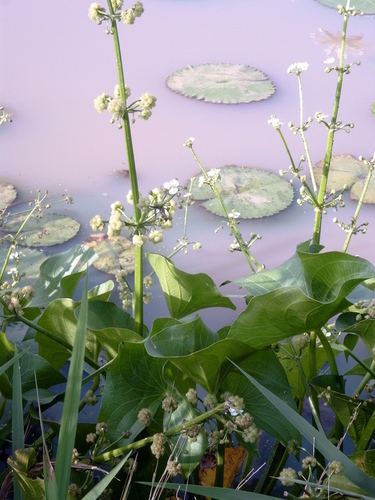
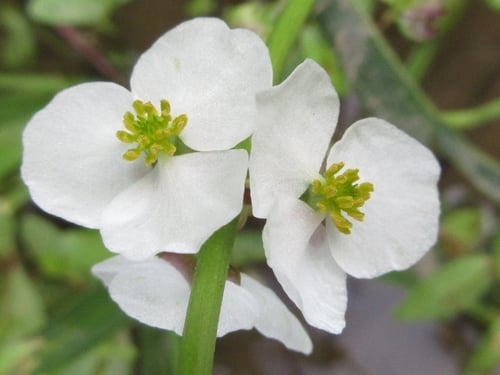
Sagittaria rigida
Pursh.
Sessilefruit Arrowhead
iNaturalist· cc-by-nc
(c) Paul Tavares, some rights reserved (CC BY-NC), uploaded by Paul Tavares
iNaturalist· cc-by-nc
(c) Séraphin Poudrier, some rights reserved (CC BY-NC)
iNaturalist· cc-by-nc
(c) Séraphin Poudrier, some rights reserved (CC BY-NC)
Summary
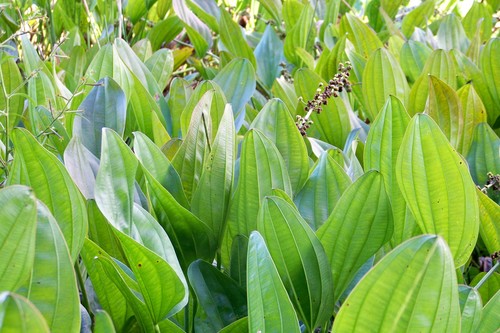
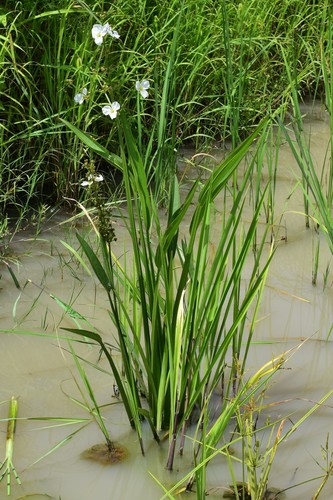
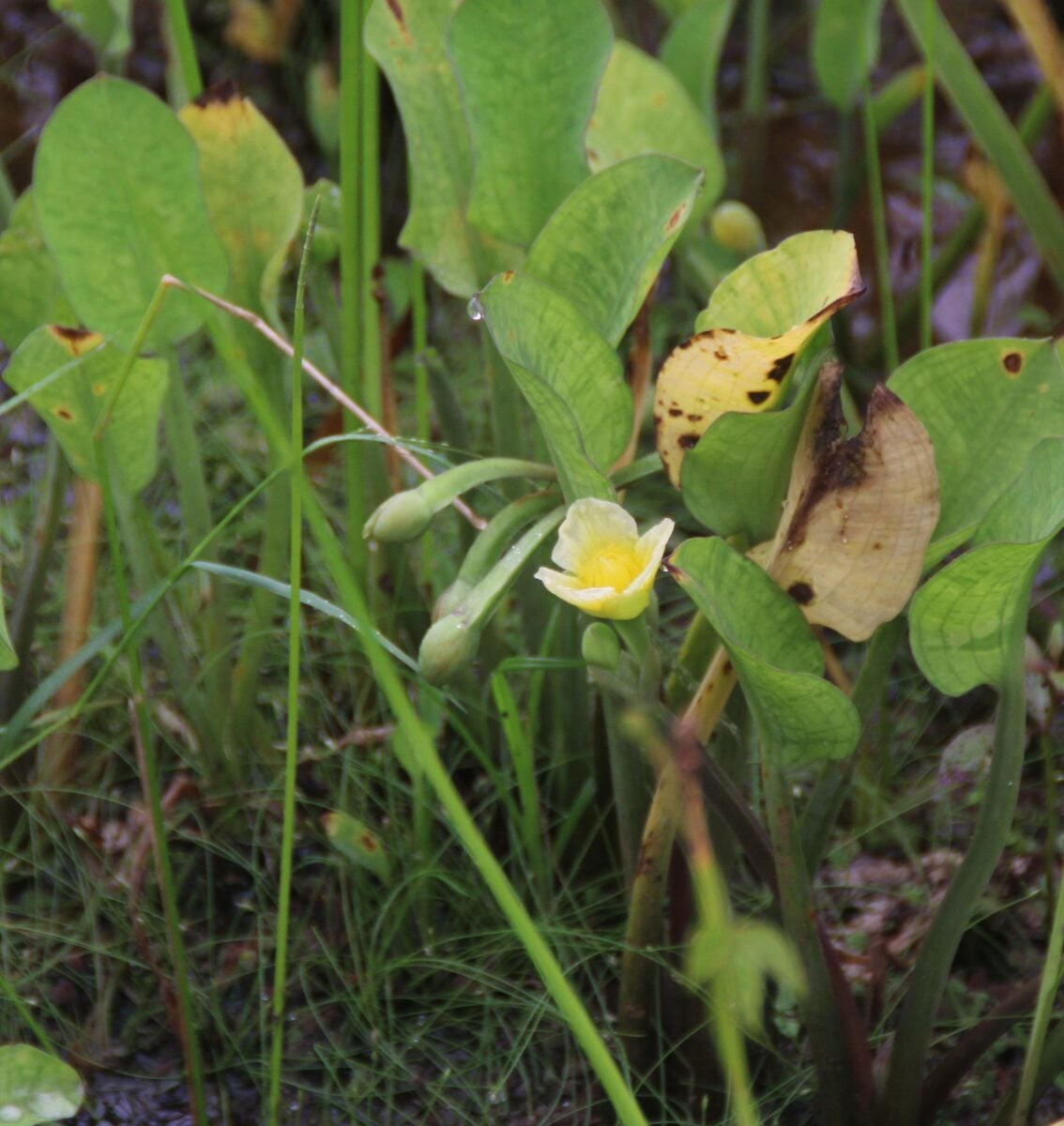
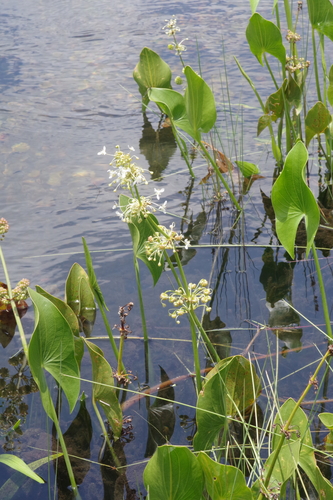
Source: WikipediaSagittaria rigida, the sessilefruit arrowhead or Canadian arrowhead, is an aquatic plant species. It has narrow oval leaves rather than the iconic arrowhead shaped leaves of species like the Sagittaria latifolia. it has sessile female flowers, from whence its name comes. Its flowers are very similar to other plants in the Sagittaria family, with three white petals. It is native to Canada and to the United States and also naturalized in Great Britain. It grows in shallow waters along the edges of ponds and streams. It produces edible potato-like tubers, but these can be dangerous if gathered from polluted water.
Description
The flower group is 10-80 cm long. There are 2-8 flowers. They are in rings up the stem. The higher flowers have stalks and are male while the lower flowers do not have stalks and are female.
Edible Uses
The root is edible when cooked and tastes like potatoes.
Traditional Uses
The tubers are boiled and eaten.
This uses section is brief — help expand it
Medicinal Uses
None known
Distribution
It is a temperate plant. It grows in the shallows of swamps and ponds.
Where It Grows
Britain, Canada, Europe, North America, USA,
Cultivation
A pond or bog garden plant, it requires a moist or wet loamy soil in a sunny position. Prefers shallow, still or slowly flowing water up to 30 - 60cm deep. Plants can succeed in deep water.
Propagation
Sow seed as soon as it is ripe in a pot standing in about 5cm of water. Prick seedlings into individual pots when large enough to handle, gradually increasing the water depth as plants grow until it reaches about 5cm above the top of the pot. Plant out in late spring or early summer of the following year. Tubers can be divided in spring or autumn — a straightforward process. Runners can be potted up at any point during the growing season.
Other Uses
None known Special Uses
Synonyms
References (4)
- Facciola, S., 1998, Cornucopia 2: a Source Book of Edible Plants. Kampong Publications, p 4
- Lim, T. K., 2015, Edible Medicinal and Non Medicinal Plants. Volume 9, Modified Stems, Roots, Bulbs. Springer p 74
- Morley, B. & Everard, B., 1970, Wild Flowers of the World. Ebury press. Plate 166
- Plants for a Future database, The Field, Penpol, Lostwithiel, Cornwall, PL22 0NG, UK. http://www.scs.leeds.ac.uk/pfaf/