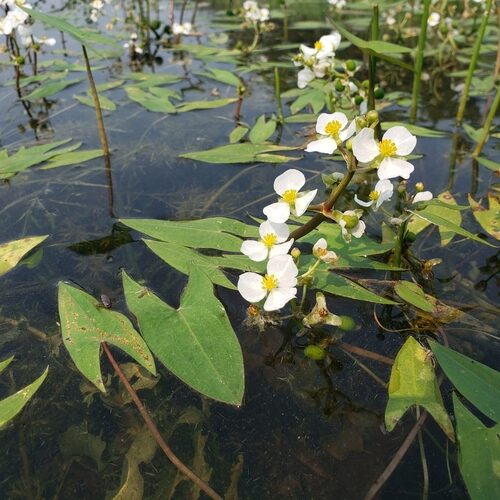
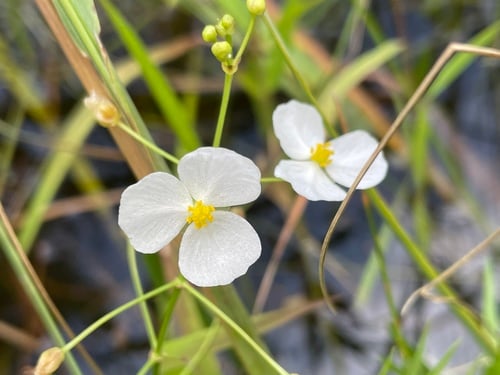
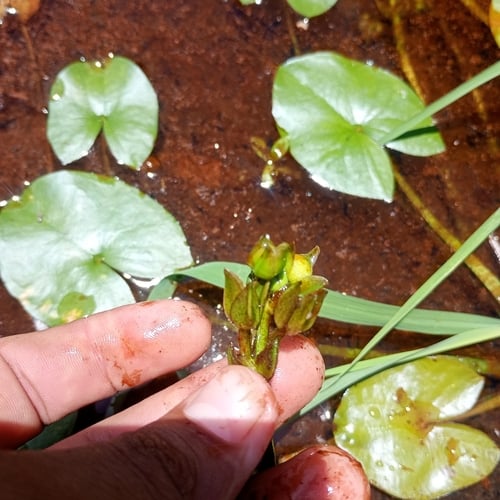
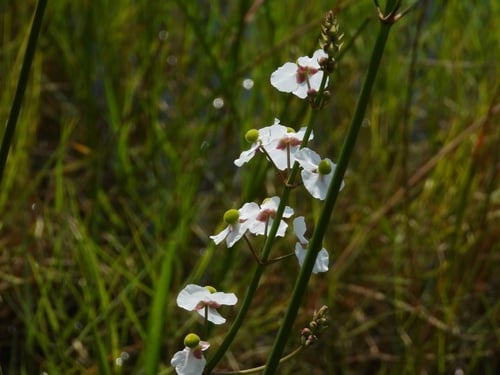
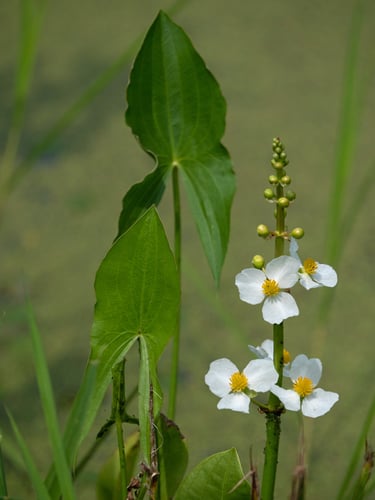
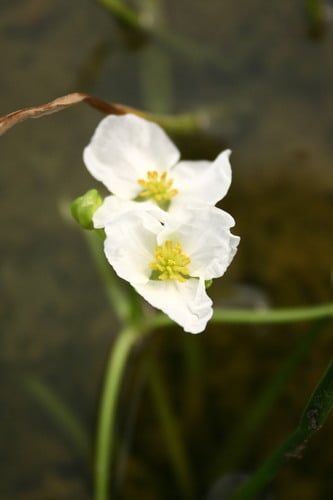
Sagittaria sagittifolia leucopetala - (Miq.)Hartog.
(Miq.)Hartog.
gbif· cc0
Conveyor Belt
gbif· cc-by
The New York Botanical Garden
gbif· cc-by
Royal Botanic Gardens, Kew
Description
Sagittaria sagittifolia leucopetala is a PERENNIAL growing to 1 m (3ft 3in). It is in flower from July to August. The species is monoecious (individual flowers are either male or female, but both sexes can be found on the same plant) and is pollinated by Insects. Suitable for: light (sandy), medium (loamy) and heavy (clay) soils. Suitable pH: mildly acid, neutral and basic (mildly alkaline) soils. It can grow in semi-shade (light woodland) or no shade. It prefers wet soil and can grow in water.
Edible Uses
Root - cooked. Excellent when roasted, the taste is somewhat like potatoes. The tubers are starchy with a distinct flavour. The tubers should not be eaten raw.The skin is rather bitter and is best removed after the tubers have been cooked. Tubers can also be dried and ground into a powder, this powder can be used as a gruel etc or be added to cereal flours and used in making bread.The roots (tubers really) are borne on the ends of slender roots, often 30cm deep in the soil and some distance from the parent plant. The tubers of wild plants are about 15cm in diameter and are best harvested in the late summer as the leaves die down. The dried root contains (per 100g) 364 calories, 17g protein, 1g fat, 76.2g carbohydrate, 3.1g fibre, 5.8g ash, 44mg calcium, 561mg phosphorus, 8.8mg iron, 2,480mg potassium, 0.54mg thiamine, 0.14mg riboflavin, 4.76mg niacin and 17mg ascorbic acid. They contain no carotene. Leaves and young stems - cooked. Somewhat acrid.
Medicinal Uses
Antiscorbutic Diuretic Galactofuge. The plant is antiscorbutic, diuretic. The leaf is used to treat a variety of skin problems. The tuber is discutient, galactofuge and may induce premature birth.
Distribution
E. Asia - China, Japan, India.
Where It Grows
Coming Soon
Cultivation
This name requires further verification - it may be no more than a synonym of S. trifolia. A pond or bog garden plant, it requires a moist or wet loamy soil in a sunny position. Prefers shallow, still or slowly flowing water up to 30 - 60cm deep. Plants are fairly cold tolerant, surviving temperatures down to at least -10°c, though the top growth is damaged once temperatures fall below zero. They grow best in warm weather and require at least a six month growing season in order to produce a crop. A polymorphic species, this sub-species is extensively cultivated for its edible bulb in China where there are many named varieties.
Propagation
Seed - best sown as soon as it is ripe in a pot standing in about 5cm of water. Prick out the seedlings into individual pots when they are large enough to handle, and gradually increase the depth of water as the plants grow until it is about 5cm above the top of the pot. Plant out in late spring or early summer of the following year. Division of the tubers in spring or autumn. Easy. Runners potted up at any time in the growing season.