Diospyros heterotricha
(Welw. ex Hiern) F. White
gbif· cc-by
GBIF
gbif· cc-by
GBIF
gbif· cc-by
GBIF
Description
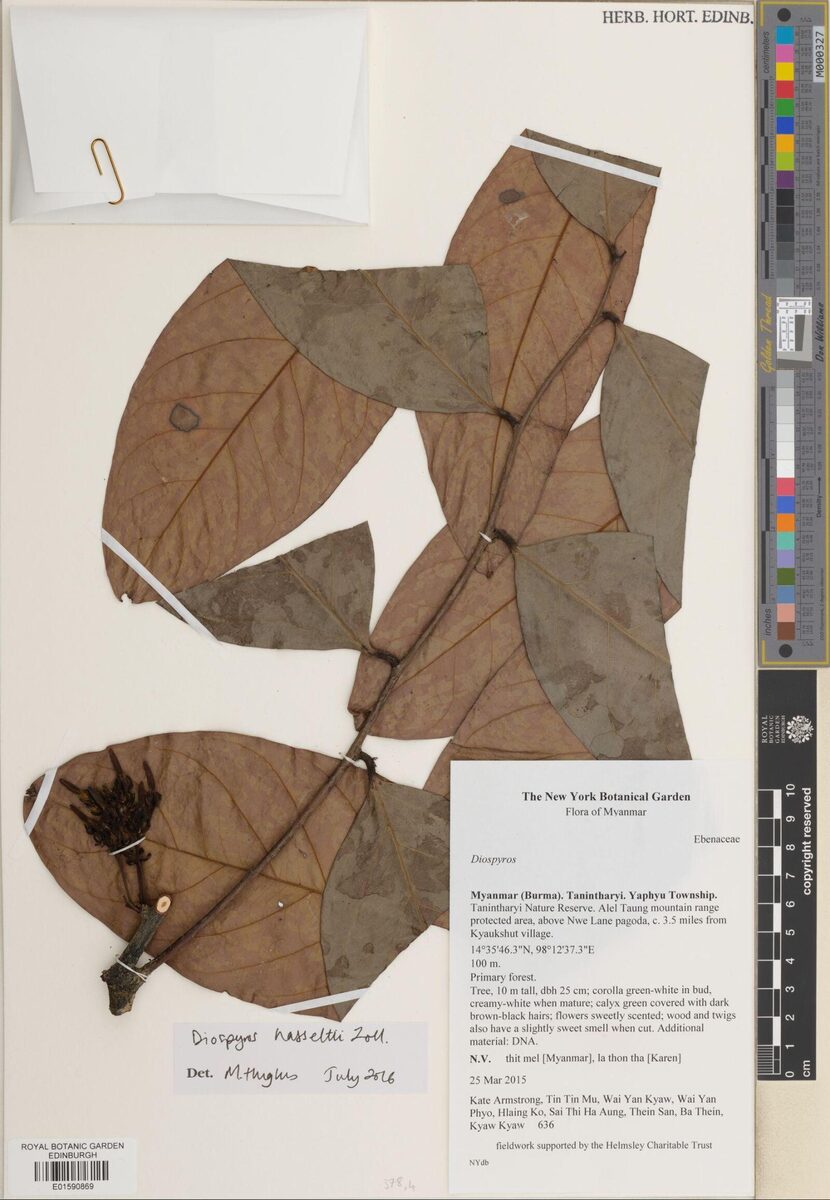
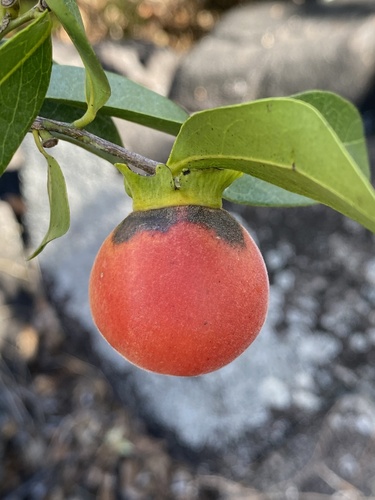
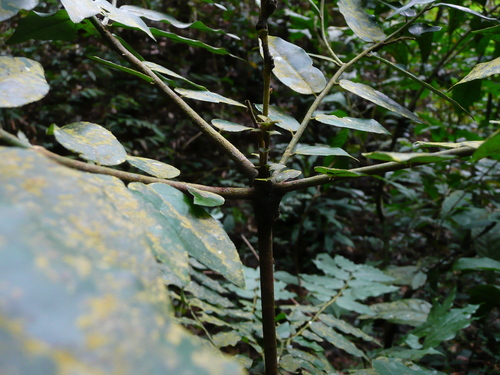
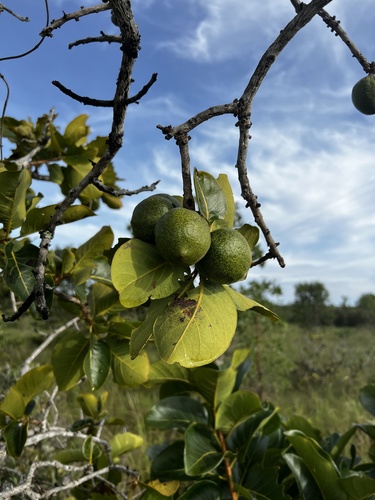
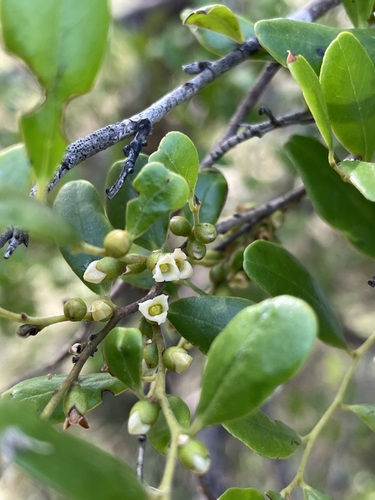
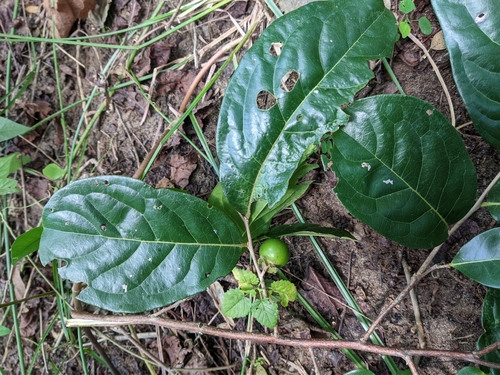
A shrub or small tree. It grows 3-8 m high. Young branches have bristle like and long hairs. The leaves are alternate and entire. They are 5-10 cm long by 2-5 cm wide. The base is rounded and they taper to the tip. Flowers are in the axils of leaves. Male flowers are in groups of 2-3 and female flowers occur singly. The fruit is an oval berry. It is 1-2 cm across. They are yellow to slightly orange. They have short hairs. There can be up to 8 seeds. The seeds are reddish-brown and 1 cm long.
Edible Uses
The fruit is eaten.
Distribution
It is a tropical plant. It grows from sea level to 500 m above sea level. It needs light to grow.
Where It Grows
Africa, Angola, Central Africa, Congo DR, West Africa,
Cultivation
A dioecious species, both male and female forms need to be grown if fruit and seed are required.
Propagation
Seed - in general the seed of Diospyros species has a very short viability and so should be sown as soon as possible. The flesh should be removed since this contains germination inhibitors. Sow the seed in a shady position in a nursery seedbed. The sowing media for ebony uses soil and fine sand at the ratio 3:1. The seed is planted horizontally or vertically with the radicle end down, with a sowing depth of 1 - 1½ times the thickness of seed. Distance between the seeds is 3 - 5cm. Seeds are very sensitive to desiccation during germination and early growth, so must be regularly watered at this time. Normally the seed will germinate after one week. As a rule fresh seeds have a high percentage of fertility. The seedlings develop long taproots at an early stage, often before any appreciable elongation of the shoot takes place. The growth of the seedling is decidedly slow .
Other Information
It is occasionally cultivated.
Synonyms
Also Known As
Lufua lua ndombe, Lufwa lundomba, Munkonki
References (5)
- Burkill, H. M., 1985, The useful plants of west tropical Africa, Vol. 2. Kew.
- Latham, P., 2004, Useful Plants of Bas-Congo province. Salvation Army & DFID p 113
- Lautenschläger, T., et al, 2018, First large-scale ethnobotanical survey in the province of Uíge, northern Angola. Journal of Ethnobiology and Ethnomedicine (2018) 14:51
- PROTA
- World Checklist of Useful Plant Species 2020. Royal Botanic Gardens, Kew