Diospyros major
(Forst. f.) Bakh.
Fijian persimmon
wikimedia· cc-by-sa
Wikimedia Commons - Tauʻolunga
gbif· cc-by-sa
Yves Burckel
Summary
Source: WikipediaDiospyros major, or the Fiji persimmon, is a tree in the family Ebenaceae that is native to Fiji, Tonga, Uvea, and Futuna. It is called 'mapa in the Tongan language.
Description
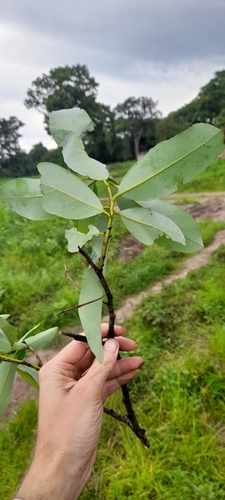
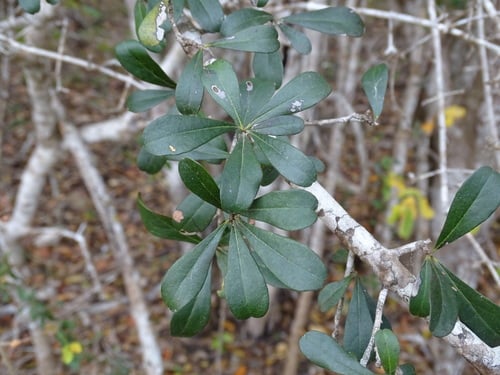
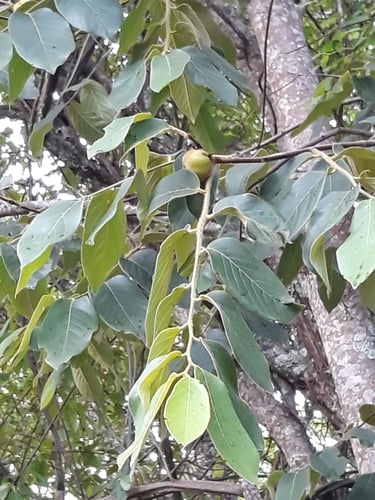
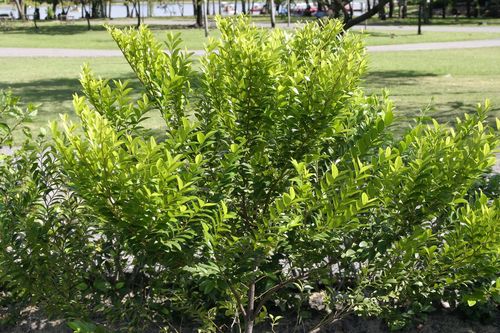
A small slender tree. It can grow 3-15 m tall. The leaves are alternate and have short leaf stalks. The leaf blades are oblong and rounded at the top and the base. The leaves are 7-21 cm long and 4-17 cm wide. The male and female flowers are separate on the same tree. The flowers are white or cream with a purple tinge. The fruit is hairy and has a sweet smell. It can be 6 cm long and 3 cm wide. It turns yellow or brown as it ripens.
Edible Uses
The fruit is eaten. The flowers and seeds are also edible.
Traditional Uses
American Samoa, Asia, Fiji, India, Pacific, Samoa, Tonga, Wallis & Futuna,
This uses section is brief — help expand it
Distribution
A tropical plant. It grows in dry or open forest. In Fiji it grows from sea level to 1,130 m altitude.
Cultivation
It is a cultivated plant.
Production
There are about 485 species of Diospyros mostly in the tropics.
Synonyms
Also Known As
'anume, Bama, Buka ni siga, Kaukauloa, Kauloa, Maba
References (10)
- Blench, R., 2004, Fruits and Arboriculture in the Indo-Pacific Region. Indo-Pacific Prehistory Association Bulletin 24. (Taipei Papers Volume 2) p 37
- Franklin, J., Keppel, G., & Whistler, W., 2008, The vegetation and flora of Lakeba, Nayau and Aiwa Islands, Central Lau Group, Fiji. Micronesica 40(1/2): 169–225, 2008
- GTZ 1996, A Guide to some Indigenous Fijian Trees. GTZ Suva. p 97
- Hedrick, U.P., 1919, (Ed.), Sturtevant's edible plants of the world. p 396 (As Maba major)
- Reis, S. V. and Lipp, F. L., 1982, New Plant Sources for Drugs and Foods from the New York Botanical Garden herbarium. Harvard. p 236
Show all 10 references Hide references
- Smith, A.C., 1981, Flora Vitiensis Nova: A New flora of Fiji, Hawai Botanical Gardens, USA Vol 2 p 738
- van Wyk, B., 2005, Food Plants of the World. An illustrated guide. Timber press. p 179
- Walter, A. & Sam C., 2002, Fruits of Oceania. ACIAR Monograph No. 85. Canberra. p 155, 279
- Williams, J.B., Harden, G.J., and McDonald, W.J.F., 1984, Trees and shrubs in rainforests of New South Wales and Southern Queensland. Univ. of New England, Armidale. p 79, 95
- Zeven, A. C. & de West, J. M. J., 1982, Dictionary of cultivated plants and their regions of diversity. Wageningen. p 36 (As Maba major)