Diospyros loureiroana
G. Don
Dye diospyros, Dye star-apple
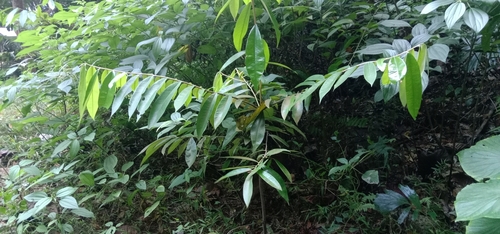
iNaturalist· cc-by-nc
(c) Graeme White, some rights reserved (CC BY-NC), uploaded by Graeme White
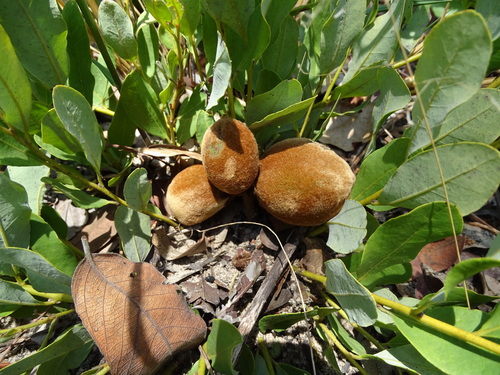
iNaturalist· cc-by-nc
(c) Athol Ferguson, some rights reserved (CC BY-NC)
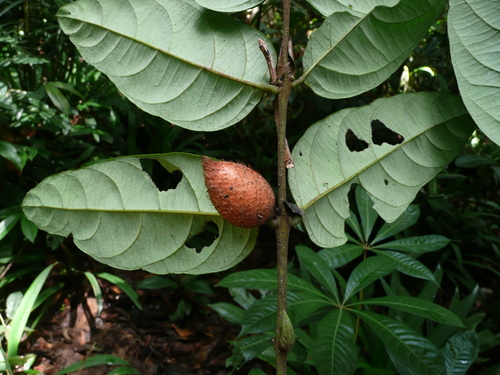
iNaturalist· cc-by-nc
(c) Athol Ferguson, some rights reserved (CC BY-NC)
Description
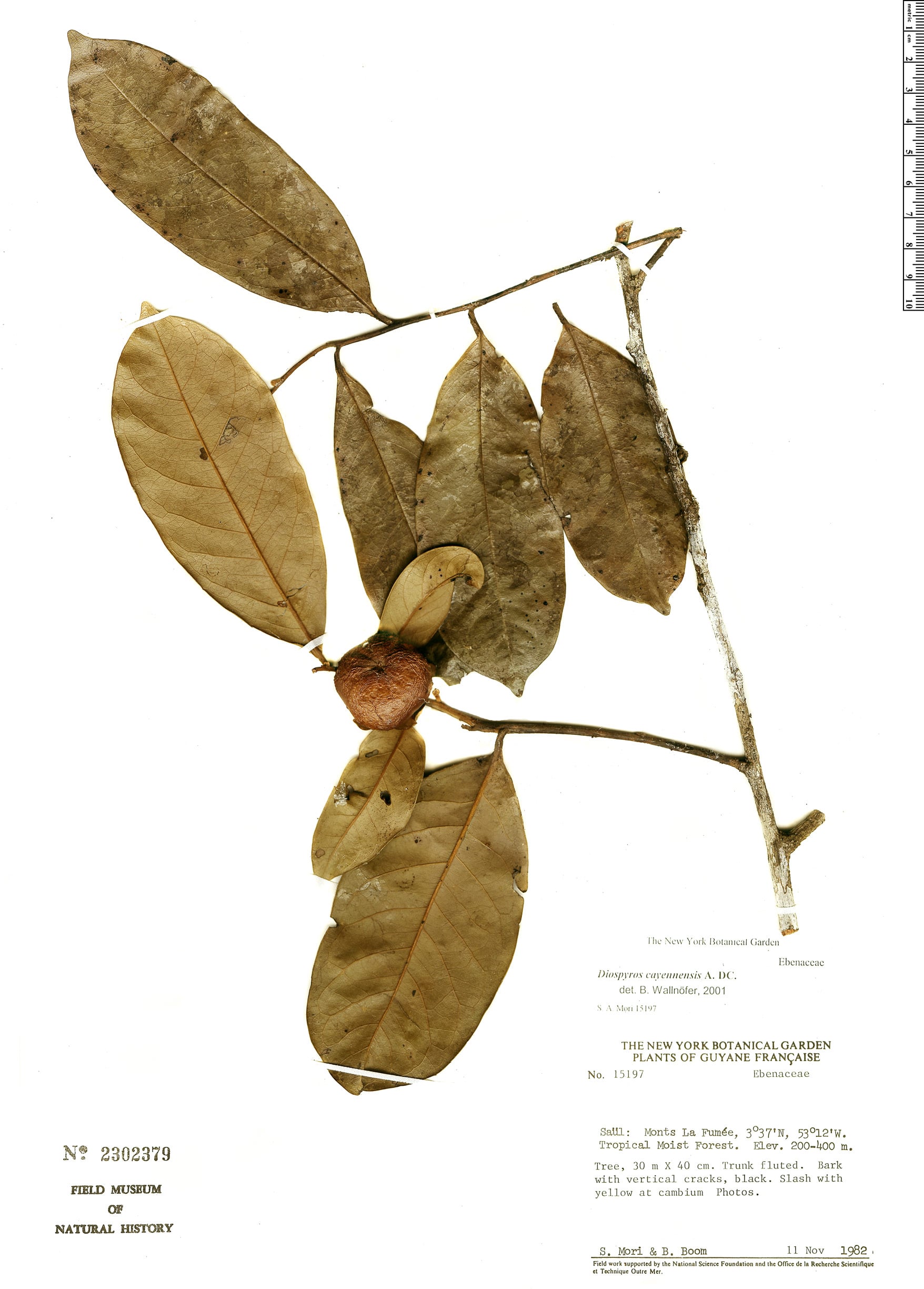
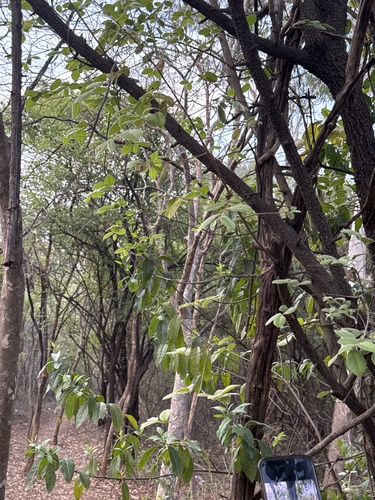
A shrub or small tree. It loses many leaves during the year. It grows 6-10 m tall. The bark is corky. It is grey and deeply cracked. The small branches are reddish and have hairs. The leaves are alternate, simple and entire. They are 1-12 cm long by 1-7 cm wide. The flowers are of one sex. The trees are separately male and female. The flowers are white and in small clusters of 3-7 in the axils of leaves. The fruit are a round berry. They are 3 cm across. They are yellow. There are about 8 seeds. They are about 1 cm long.
Edible Uses
The round yellow berries are eaten fresh.
Medicinal Uses
Chewed fresh roots and a root extract are applied externally to snakebites, or the extract is drunk. The dried, powdered root bark has fungicidal and molluscicidal properties. In bioassays it was found that 5 ppm 7-methyljuglone was lethal to Biomphalaria glabrata snails within 24 hours, and 0.025 μg was sufficient to prevent growth of the fungus Cladosporium cucumerinum. Triterpenoids (including α-amyrin, betulinic acid and various mixtures) were isolated from the leaves
Distribution
It is a tropical plant. It grows on poor soils in sunny locations. It can grow on sandy soils and in rocky locations. It grows from sea level to 750 m altitude. It grows between 20-500 m altitude in southern Africa. In the Brisbane Botanical Gardens. In Cairns Botanical gardens.
Where It Grows
Africa*, Australia, East Africa, Kenya, Malawi, Mozambique, Southern Africa, Tanzania, Zimbabwe,
Cultivation
A dioecious species, both male and female forms need to be grown if fruit and seed are required.
Propagation
Seed - it has a very short viability and so should be sown as soon as possible. The flesh should be removed since this contains germination inhibitors. Sow the seed in a shady position in a nursery seedbed. The sowing media for ebony uses soil and fine sand at the ratio 3:1. The seed is planted horizontally or vertically with the radicle end down, with a sowing depth of 1 - 1½ times the thickness of seed. Distance between the seeds is 3 - 5cm. Seeds are very sensitive to desiccation during germination and early growth, so must be regularly watered at this time. Normally the seed will germinate after one week. In one trial, fresh seed, sown one day after collection, showed 85% germination rate within 17 - 65 days. As a rule fresh seeds have a high percentage of fertility. The seedlings develop long taproots at an early stage, often before any appreciable elongation of the shoot takes place. The growth of the seedling is decidedly slow .
Other Uses
A black dye is extracted from the roots by pounding and boiling them. It is used for dyeing mats and wickerwork. The fibres to be dyed are steeped into the solution and then mordanted in black ferruginous mud, iron sulphate or iron rust dissolved in organic acid. A dark red dye, used to redden lips and teeth, is obtained by crushing the roots into a pulp. A black dye, used on raffia and cotton cloth, can be extracted from the pounded bark and applied in the same way. The dyeing properties of the bark and roots are due to a combination of naphthoquinones and naphthoquinone dimers and trimers, among which is 7-methyljuglone, a derivate of juglone, the dye present in walnut trees (Juglans spp.). The proportions of these colorants have been found to vary according to the seasons. The peeled twigs are used as chewing sticks in order to clean the teeth and maintain oral hygiene. The bark contains compounds with antimicrobial activity and is best left on the stem when chewing. The wood is hard and white and can be used for making small utensils and as firewood.
Synonyms
Also Known As
Aboba, Kikanko, Mdaa, Mpome, Nhamodema, Nhamudima, Popa
References (4)
- Jansen, P.C.M., 2005. Diospyros loureiriana G.Don. [Internet] Record from Protabase. Jansen, P.C.M. & Cardon, D. (Editors). PROTA (Plant Resources of Tropical Africa), Wageningen, Netherlands. < http://database.prota.org/search.htm>. Accessed 15 October 2009.
- Reis, S. V. and Lipp, F. L., 1982, New Plant Sources for Drugs and Foods from the New York Botanical Garden herbarium. Harvard. p 237
- White, F, 1981, Flora Zambesiaca, Vol. 7 Part 1 page 248, (As Diospyros usambarensis)
- World Checklist of Useful Plant Species 2020. Royal Botanic Gardens, Kew