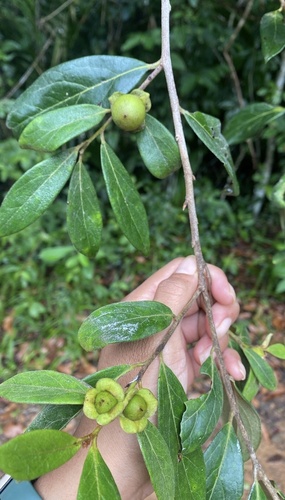
Diospyros lycioides subsp. sericea
Desf., (Bernh.) De Winter
Kalahari star-apple, Blue bush, Monkey-plum
iNaturalist· cc-by-nc
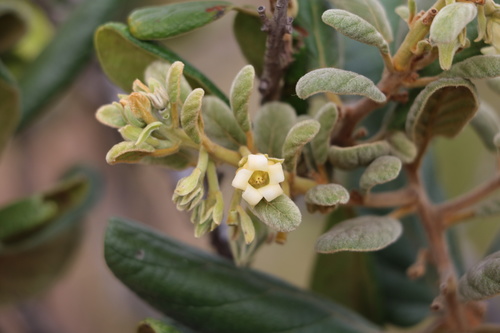
(c) petercalverley, some rights reserved (CC BY-NC), uploaded by petercalverley
iNaturalist· cc-by-nc
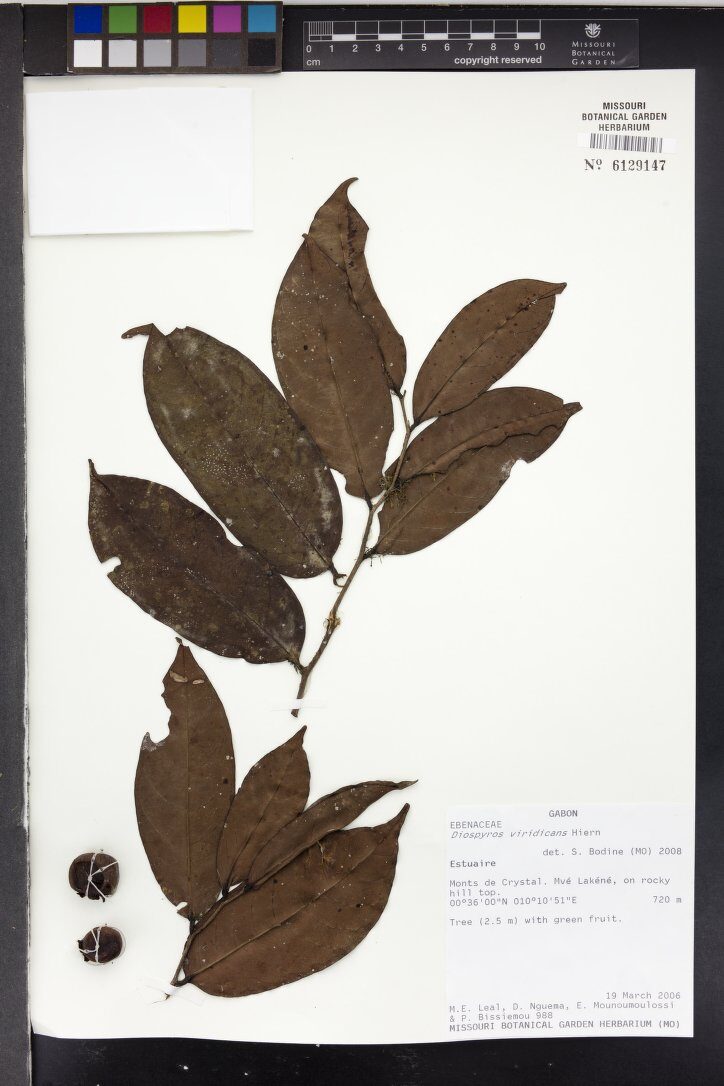
(c) James Bailey, some rights reserved (CC BY-NC), uploaded by James Bailey
iNaturalist· cc-by-nc
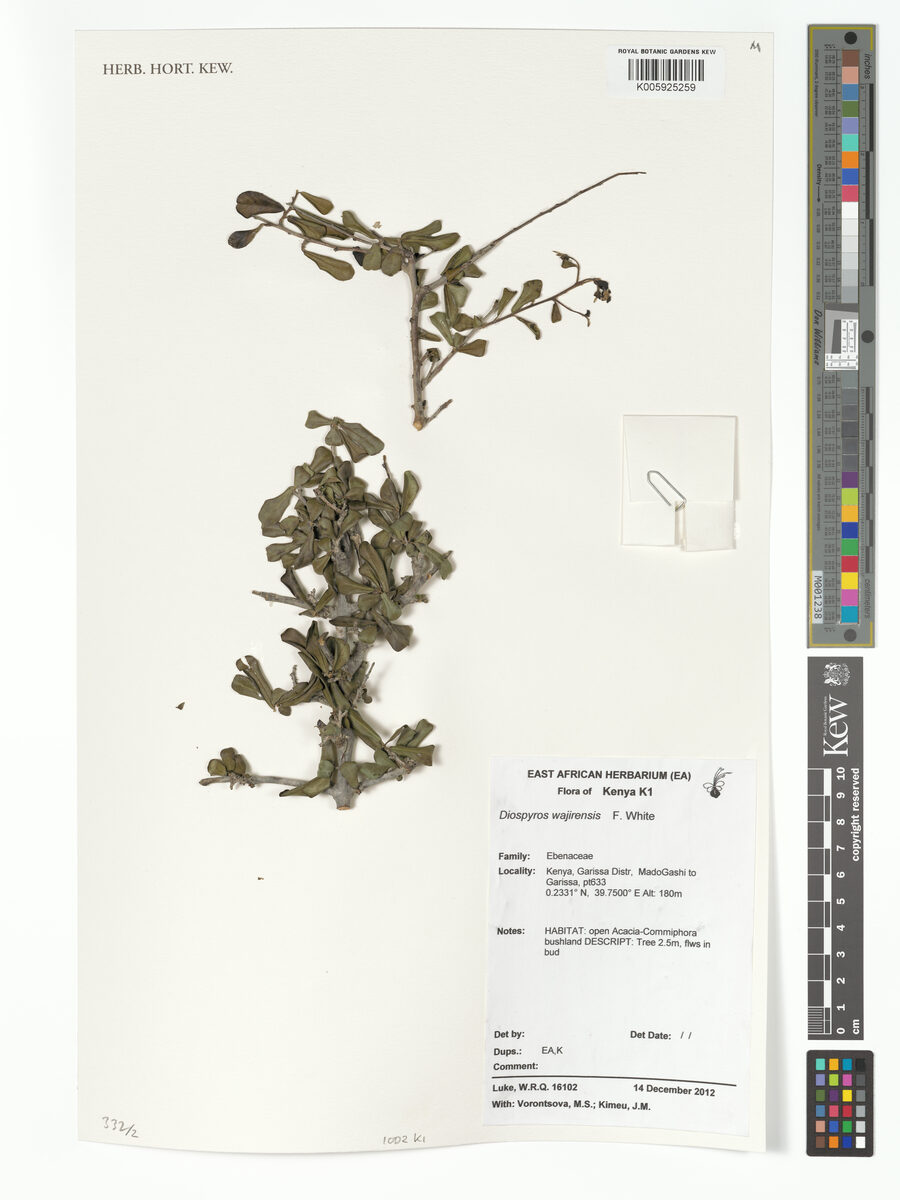
(c) Campbell Scott, some rights reserved (CC BY-NC), uploaded by Campbell Scott
Summary
Source: WikipediaDiospyros lycioides, commonly called the bushveld bluebush, is a species of African Diospyros, trees and shrubs in the family Ebenaceae. It is native to central and southern Africa, except the winter-rainfall area. It grows in Australia and is known as a weed there. Many parts of the plant are used: the wood, the roots and stems for toothbrushes, the fruits for alcoholic drinks, and the roots and bark in traditional medicine. It can form thickets, and it usually grows up to three meters high, though at its tallest it can be eight meters. It is one of twenty species of Diospyros in South Africa. It has 3-4 subspecies, including D. l. subsp. lycioides, D. l. subsp. guerkei, D. l. subsp. nitens, and D. l. subsp. sericea.
Description
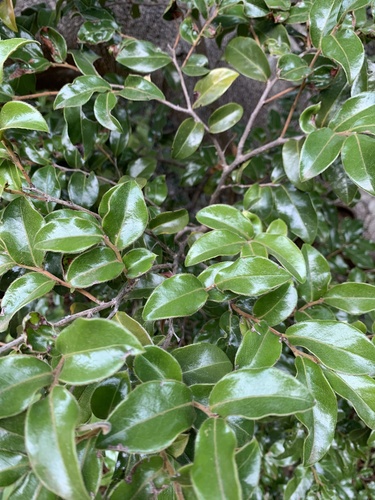
A shrub or small tree. It grows 6 m high. It loses many leaves during the year. The small branches usually point upwards. It forms thickets. The bark is dark grey and smooth. The stems are spiny. The leaves are even along their length. They are 2-3 cm long and are hairy. The leaves are clustered near the ends of branches. The flowers are creamy white. The fruit are oval and red or yellow when ripe. They are 2 cm across.
Edible Uses
Its root and stem are used as toothbrushes, and its wood is used for spoons, toys, construction, and furniture. In South Africa, its fruits are used to make beer and other alcoholic drinks, and its seeds are used as a coffee substitute. It also has many medicinal uses, including treating cold and coughs by chewing the roots, and using the powdered bark of the root as an abortifacient. Its leaves are food for the Mooi River opal butterfly (Chrysoritis lycegenes) and its flowers are attractive to many animals, namely bees and a few African birds.
Traditional Uses
The fruit are eaten fresh and also used for drinks. They are also made into alcoholic drinks. The fruit pulp is sweet.
This uses section is brief — help expand it
Distribution
It is a tropical plant. It is often along rivers and on termite mounds. It grows from 600-1,525 m altitude. It grows in areas with an annual rainfall of about 500 mm. It grows on rocky and sandy soils. It can grow in salty soils. It can grow in arid places.
Where It Grows
Africa, Angola, Botswana, Central Africa, Congo, Congo DR, East Africa, Eswatini, Lesotho, Malawi, Mozambique, Namibia, South Africa, Southern Africa, Swaziland, Zambia, Zimbabwe,
Nutrition
| Part | Moisture | kJ | kcal | Protein | Vit A | Vit C | Iron | Zinc |
|---|---|---|---|---|---|---|---|---|
| Fruit raw | 63.5 | — | — | — | — | — | — | — |
Synonyms
Also Known As
Bloubos, Chitomatomana, M'dima, Mqatuva, Mukusukusu, Mumbune, Mupumhazvuru, Musbotamhingi, Mushawa, Mushumadombo, Musuma, Quilted bluebush, Umbongisa, umCatuga, Umqathuva, Umsungampule
References (10)
- Flora Zambesiaca. http://apps.kew.org/efloras
- Food Composition Tables for use in Africa FAO http://www.fao.org/infoods/directory No. 978 (As Royena sericea)
- Fox, F. W. & Young, M. E. N., 1982, Food from the Veld. Delta Books. p 182
- Mokganya, M. G. et al, 2018, An evaluation of additional uses of some wild edible fruit plants of the Vhembe District Municipality in the Limpopo Province, South Africa. Indian Journal of Traditional Knowledge. Vol 17(2) April 2018, pp 276-281
- Roodt, V., 1998, Trees & Shrubs of the Okavango Delta. Medicinal Uses and Nutritional value. The Shell Field Guide Series: Part 1. Shell Botswana. p 194
Show all 10 references Hide references
- Royal Botanic Gardens, Kew (1999). Survey of Economic Plants for Arid and Semi-Arid Lands (SEPASAL) database. Published on the Internet; http://www.rbgkew.org.uk/ceb/sepasal/internet [Accessed 16th April 2011]
- Schmidt, E., Lotter, M., & McCleland, W., 2007, Trees and shrubs of Mpumalanga and Kruger National Park. Jacana Media p 514
- The Digital Flora of Central Africa, 2013, (Democratic Republic of Congo, Rwanda & Burundi) Botanical Garden Meise
- White, F., 1987, Flore d'Afrique Centrale (Zaire - Rwanda - Burundi): Ebenaceae p 42
- www.zimbabweflora.co.zw 2011