Diospyros lycioides
Desf.
Red star apple, Bluebush star-apple, Quilted bluebush, Karoo blue bush
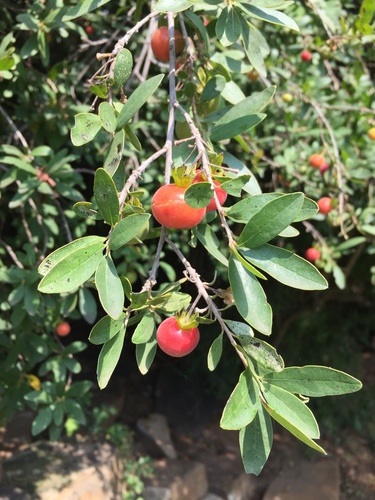
iNaturalist· cc-by-nc
(c) $.Msiyane, some rights reserved (CC BY-NC)
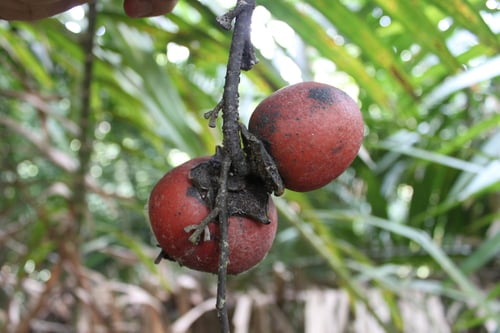
iNaturalist· cc-by-nc
(c) petercalverley, some rights reserved (CC BY-NC), uploaded by petercalverley
Summary
Source: WikipediaDiospyros lycioides, commonly called the bushveld bluebush, is a species of African Diospyros, trees and shrubs in the family Ebenaceae. It is native to central and southern Africa, except the winter-rainfall area. It grows in Australia and is known as a weed there. Many parts of the plant are used: the wood, the roots and stems for toothbrushes, the fruits for alcoholic drinks, and the roots and bark in traditional medicine. It can form thickets, and it usually grows up to three meters high, though at its tallest it can be eight meters. It is one of twenty species of Diospyros in South Africa. It has 3-4 subspecies, including D. l. subsp. lycioides, D. l. subsp. guerkei, D. l. subsp. nitens, and D. l. subsp. sericea.
Description
A shrub or small evergreen tree. It can be 3-7 m tall. The bark is dark grey and smooth. It can have several stems. There are 4 different types base on leaf shape and venation. The leaves are simple and alternate. They are leathery. They are usually crowded near the ends of branches. The flowers are bell-shaped. They are white or yellow. The flowers have a sweet smell and hand downwards. The fruit are round or oblong and 2 cm long. They are bright red and fleshy. The seeds are oblong and smooth with a groove along them. There are 2 subspecies.
Edible Uses
Its root and stem are used as toothbrushes, and its wood is used for spoons, toys, construction, and furniture. In South Africa, its fruits are used to make beer and other alcoholic drinks, and its seeds are used as a coffee substitute. It also has many medicinal uses, including treating cold and coughs by chewing the roots, and using the powdered bark of the root as an abortifacient. Its leaves are food for the Mooi River opal butterfly (Chrysoritis lycegenes) and its flowers are attractive to many animals, namely bees and a few African birds.
Traditional Uses
The fruit are eaten sometimes by children. They are bitter. The fruit are also fermented and distilled to produce brandy. The seeds are roasted for coffee.
Medicinal Uses
The roots are chewed as an effective treatment for bad colds or persistent coughing. A decoction of the root, often combined with the roots of Ximenia caffra (plus those of Gymnosporia senegalensis if there is severe pain), is used to treat chest ailments[. Applied externally, the roasted and powdered roots, mixed with mutton fat, make a thorn plaster and are also used to ease body pains.
Distribution
A tropical plant. It can tolerate drought and frost. It grows between 600-1,000 m above sea level in southern Africa, It does well in a sandy soil. It can grow in slightly salty soils. It can grow in arid places. It grows in Miombo woodland in Africa. It suits hardiness zones 9-11. Wittunga Botanical Gardens. Mt Lofty Botanical Gardens.
Where It Grows
Africa, Angola, Australia, Botswana, Central Africa, East Africa, Eswatini, Lesotho, Malawi, Mozambique, Namibia, South Africa, Southern Africa, Swaziland, Zambia, Zimbabwe,
Cultivation
Plants can be grown from seeds. Seeds germinate fairly easily. It can be cut back and will re-grow.
Propagation
Seed - it has a hard seedcoat and benefits from scarification before sowing in order to speed up and improve germination. This can usually be done by pouring a small amount of nearly boiling water on the seeds (being careful not to cook them!) and then soaking them for 12 - 24 hours in warm water. By this time they should have imbibed moisture and swollen - if they have not, then carefully make a nick in the seedcoat (being careful not to damage the embryo) and soak for a further 12 hours before sowing. As a rule fresh seeds have a high percentage of fertility. The seedlings develop long taproots at an early stage, often before any appreciable elongation of the shoot takes place. The growth of the seedling is decidedly slow . Cuttings are very difficult to root.
Other Uses
Twigs from this species are commonly used as a toothbrush and have been found to contain effective antibacterial compounds. The roots are also used - a section of the root about the thickness of a pencil is removed, one end is frayed and this is used as the brush end for cleaning the teeth. A yellowish brown dye is obtained from the roots. The bark is a source of tannins. The wood is of high quality. It is used to build huts and to make spoons. The plant can be used for hedging or as a screen.
Production
It has a fast growth rate.
Notes
There are about 485 species of Diospyros mostly in the tropics.
Nutrition
| Part | Moisture | kJ | kcal | Protein | Vit A | Vit C | Iron | Zinc |
|---|---|---|---|---|---|---|---|---|
| Fruit | 78 | 296 | 71 | 0.9 | — | 45.2 | 1 | 0.3 |
Synonyms
Also Known As
Bloubos, Blue bush, Lethlajwa, Lomhlophe, Monkey plum, Mushumadombo, Muthala, Ndima, Oshimumu, Transvaal bluebush, Umcafudane, Umchafutane limhlophe, Umchafutane, Umqathuva
References (32)
- Cheikhyoussef, A & Embashu, W., 2013, Ethnobotanical knowledge on Indigenous fruits in Ohangwena and Oshito regions in Northern Namibia. Journal of Ethnobiology and Ethnomedicine 9:34
- Cunningham, 1981,
- Etherington, K., & Imwold, D., (Eds), 2001, Botanica's Trees & Shrubs. The illustrated A-Z of over 8500 trees and shrubs. Random House, Australia. p 264
- Fowler, D. G., 2007, Zambian Plants: Their Vernacular Names and Uses. Kew. p 23
- Fox, F. W. & Young, M. E. N., 1982, Food from the Veld. Delta Books. p 182
Show all 32 references Hide references
- Gouldstone, S., 1983, Growing your own Food-bearing Plants in Australia. Macmillan p 122
- Grivetti, 1976, 1979,
- Grivetti, L. E., 1980, Agricultural development: present and potential role of edible wild plants. Part 2: Sub-Saharan Africa, Report to the Department of State Agency for International Development. p 79
- https://growwild.co.za Edible Indigenous plants
- INFOODS:FAO/INFOODS Databases
- Joffe, P., 2007, Creative Gardening with Indigenous Plants. A South African Guide. Briza. p 219
- Long, C., 2005, Swaziland's Flora - siSwati names and Uses http://www.sntc.org.sz/flora/
- Magwede, K., van Wyk, B.-E., & van Wyk, A. E., 2019, An inventory of Vhavenḓa useful plants. South African Journal of Botany 122 (2019) 57–89
- Mannheimer, C. A. & Curtis. B.A. (eds), 2009, Le Roux and Muller's Field Guide to the Trees and Shrubs of Namibia. Windhoek: Macmillan Education Namibia. p 390
- Maroyi, A., 2011, The Gathering and Consumption of Wild Edible Plants in Nhema Communal Area, Midlands Province, Zimbabwe. Ecology of Food and Nutrition 50:6, 506-525
- Maroyi, A. & Cheikhyoussef, A., 2017, Traditional knowledge of wild edible fruit in southern Africa: A comparative use patterns in Namibia and Zimbabwe. Indian Journal of Traditional Knowledge. 16(3): 385-392
- Palgrave, K.C., 1996, Trees of Southern Africa. Struik Publishers. p 747
- Palmer, E and Pitman, N., 1972, Trees of Southern Africa. Vol. 3. A.A. Balkema, Cape Town p 1805
- Peters & Maguire, 1981,
- Peters, C. R., O'Brien, E. M., and Drummond, R.B., 1992, Edible Wild plants of Sub-saharan Africa. Kew. p 105
- Rodin, 1985,
- Roodt, V., 1998, Trees & Shrubs of the Okavango Delta. Medicinal Uses and Nutritional value. The Shell Field Guide Series: Part 1. Shell Botswana. p 37
- Royal Botanic Gardens, Kew (1999). Survey of Economic Plants for Arid and Semi-Arid Lands (SEPASAL) database. Published on the Internet; http://www.rbgkew.org.uk/ceb/sepasal/internet [Accessed 16th April 2011]
- Ruiters-Welcome, A. K., 2019, Food plants of southern Africa. Ph.D. thesis. Univ. of Johannesburg p 52
- Schmidt, E., Lotter, M., & McCleland, W., 2007, Trees and shrubs of Mpumalanga and Kruger National Park. Jacana Media p 514
- Swaziland's Flora Database http://www.sntc.org.sz/flora
- Tredgold, M.H., 1986, Food Plants of Zimbabwe. Mambo Press. p 98
- van Wyk, B, van Wyk, P, and van Wyk B., 2000, Photographic guide to Trees of Southern Africa. Briza. p 118
- Wehmeyer, A. S, 1986, Edible Wild Plants of Southern Africa. Data on the Nutrient Contents of over 300 species
- Welcome, A. K. & Van Wyk, B.-E., 2019, An inventory and analysis of the food plants of southern Africa. South African Journal of Botany 122 (2019) 136–179
- World Checklist of Useful Plant Species 2020. Royal Botanic Gardens, Kew
- Youngblood, D., 2004, Identification and Quantification of Edible Plant Foods in the Upper (Nama) Karoo, South Africa. Economic Botany 58 (Supplement) :S43-S65
More from Ebenaceae
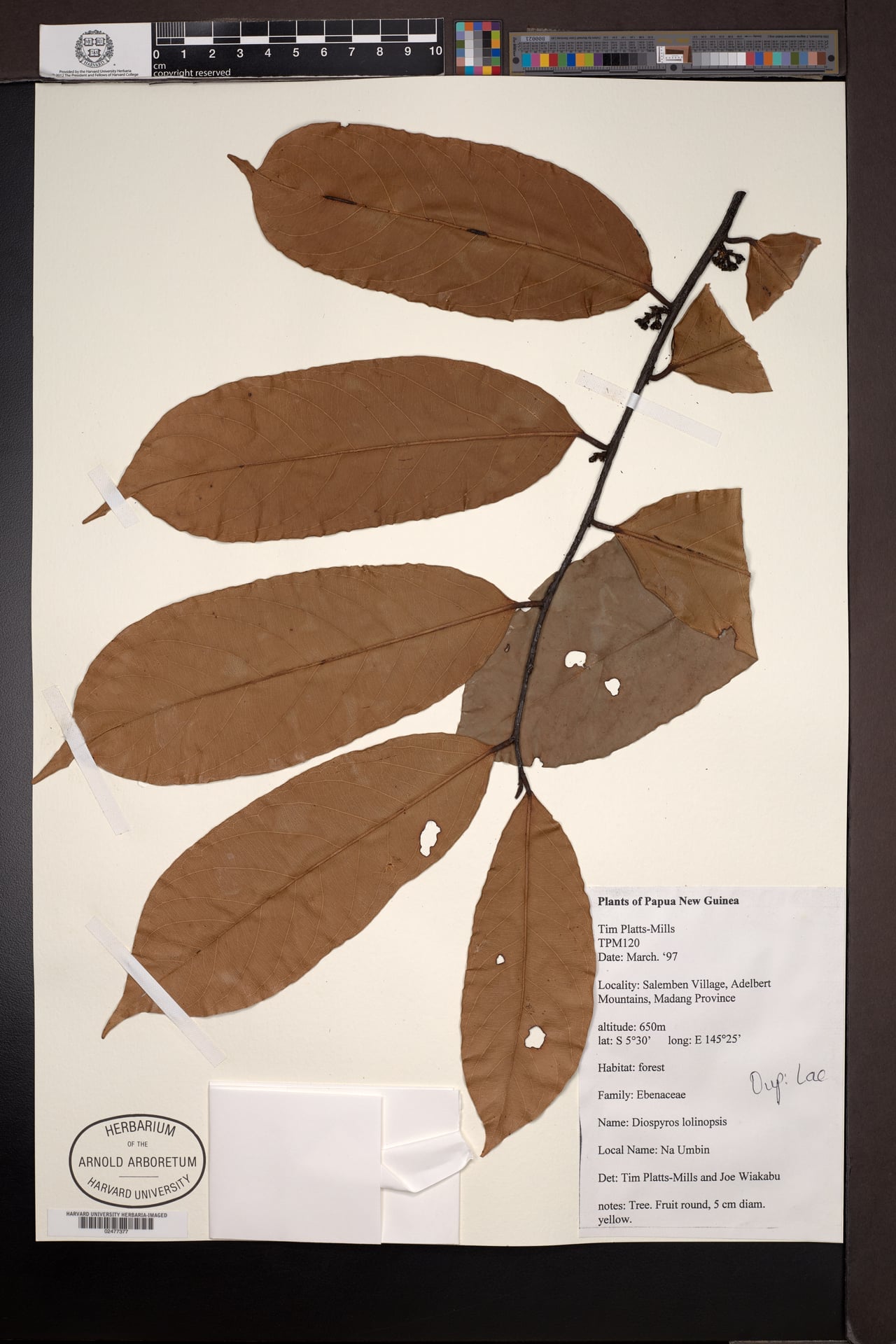
Diospyros lolinopsis
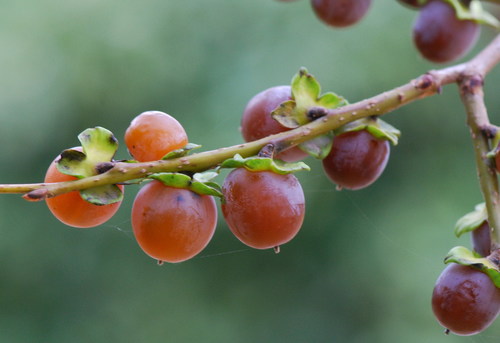
Diospyros lotus
Lotus persimmon, Date plum, Dateplum persimmon
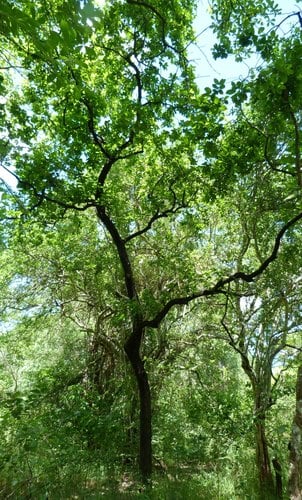
Diospyros loureiroana
Dye diospyros, Dye star-apple
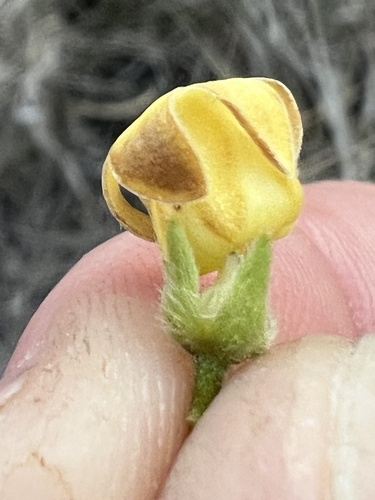
Diospyros lycioides subsp. guerkei
Quilted bluebush
Diospyros lycioides subsp. sericea
Kalahari star-apple, Blue bush, Monkey-plum
Diospyros macrophylla
Red ebony tree