Erythrococca welwitschiana
(Mull. Arg.) Prain
gbif· cc-by-nc-nd
Nicolas Texier & West & Central Africa program
gbif· cc-by-nc-nd
Nicolas Texier & West & Central Africa program
gbif· cc-by-nc-nd
Nicolas Texier & West & Central Africa program
Description
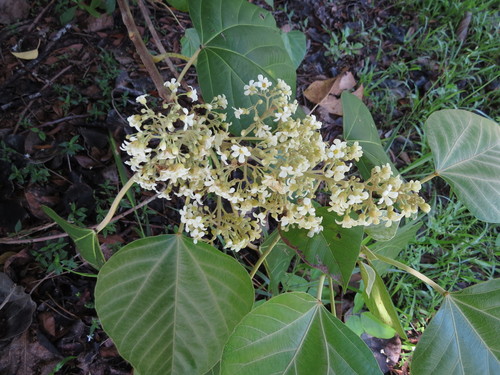
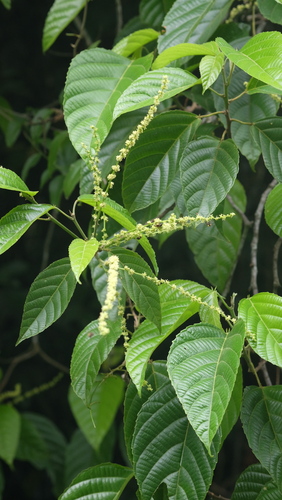
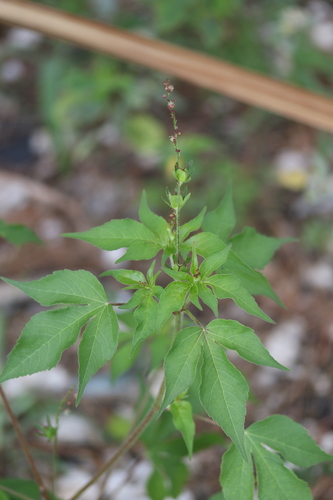
A shrub. It grows 5 m high. The leaves are alternate oval. They taper to the tip. They are 15 cm long by 7 cm wide. There are teeth along the edge.
Edible Uses
The leaves are eaten as a vegetable.
Medicinal Uses
The leaves are considered aphrodisiac and are taken as a treatment for gonorrhoea. The leaf sap is drunk as a treatment for bronchial complaints. The leaves are applied topically to heal sores and scabies. The leaf sap is applied topically to treat itch and a stiff neck. An infusion of the roots is taken to relieve stomach complaints.
Distribution
It is a tropical plant.
Where It Grows
Africa, Angola, Central Africa, Congo DR, Nigeria, West Africa,
Cultivation
A dioecious species, both male and female forms need to be grown if fruit and seed are required.
Synonyms
Also Known As
Mukombeleshwa
References (4)
- Burkill, H. M., 1985, The useful plants of west tropical Africa, Vol. 2. Kew.
- Grubben, G. J. H. and Denton, O. A. (eds), 2004, Plant Resources of Tropical Africa 2. Vegetables. PROTA, Wageningen, Netherlands. p 299
- Terashima, H., et al, 1992, Ethnobotany of the Lega in the Tropical Rainforest of Eastern Zaire (Congo): Part Two, Zone de Walikale, African Study Monographs, Suppl. 19:1-60
- World Checklist of Useful Plant Species 2020. Royal Botanic Gardens, Kew