Anthonotha macrophylla
P. Beauv.
African rosewood
iNaturalist· cc-by-nc
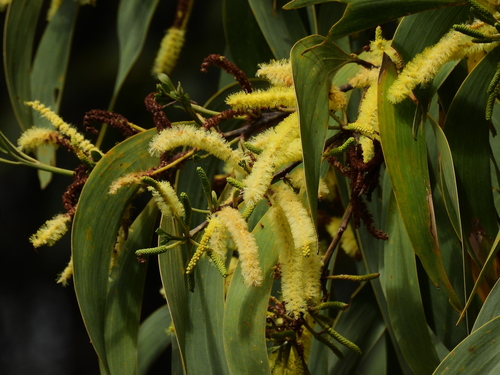
(c) Bart Wursten, some rights reserved (CC BY-NC), uploaded by Bart Wursten
iNaturalist· cc-by-nc
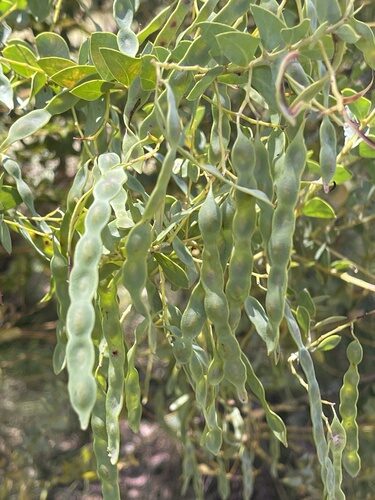
(c) Carel Jongkind, some rights reserved (CC BY-NC), uploaded by Carel Jongkind
iNaturalist· cc-by-nc
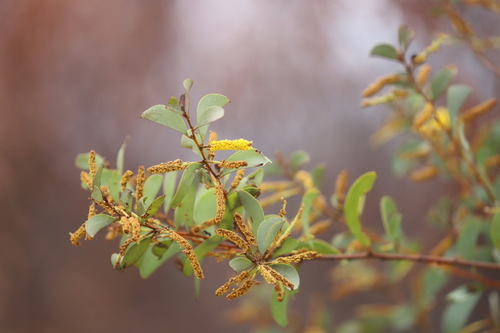
(c) Carel Jongkind, some rights reserved (CC BY-NC), uploaded by Carel Jongkind
Summary
Source: WikipediaAnthonotha macrophylla is a shrub to small understory tree within the family Fabaceae. It is endemic to the rain forest regions of West Africa and it is the most common of species within the Anthonotha genus in Africa.
Description
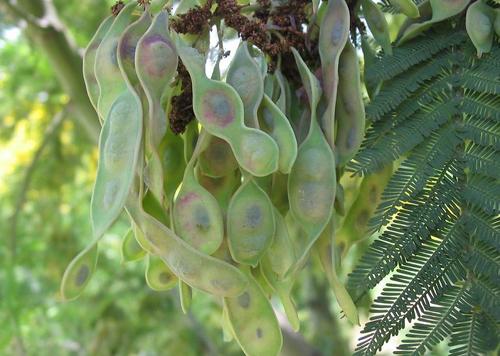
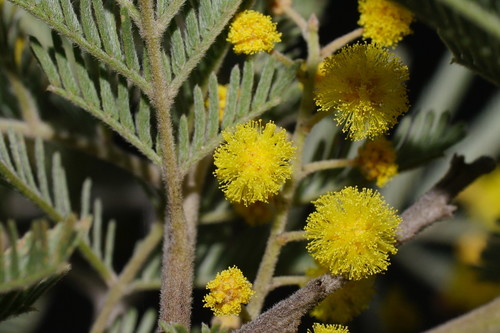
A shrub or small tree. It grows 12-20 m high. The trunk is 50 cm across. It can have several stems. The crown is spreading. The leaves are 6-30 cm long by 4-16 cm wide. The flowers are in loose groups in the axils of leaves. The flowers are white and turn yellow. The fruit is a long and often slightly curved pod. It is 15-23 cm long by 5-7 cm wide. They are pointed at the tip. They have up to 7 seeds. The seeds are oval and flattened and 3-5 cm long by 2-3 cm wide.
Edible Uses
The seeds are eaten.
Medicinal Uses
Seed is used in some food preparations, stem bark is used to treat venereal and intestinal ailments and a leaf decoction is used to teat jaundice, Stems are used as staking materials for yam and wood is obtained as firewood.
Distribution
It is a tropical plant. It grows in tall forests and along streams. In Nigeria it is recorded at 200 and 600 m above sea level.
Where It Grows
Africa, Angola, Cameroon, Central Africa, Central African Republic, CAR, Congo DR, Côte d'Ivoire, Guinea, Guinée, Ivory Coast, Liberia, Nigeria, Sierra Leone, West Africa,
Cultivation
Plants can be grown from seeds. Trees can be cut back and will re-grow.
Other Uses
The heartwood is dark brown; it is distinctly demarcated from the white sapwood. The wood is cross-grained and rather hard. The wood is used locally for posts. We have no further specific information, but trees in this genus generally hace a tough, hard wood that is suitable for local construction purposes. The tree is a shade-bearer, it protects the soil and helps to improve it484].
Production
In Central African Republic plants have been recorded flowering April to May and fruit occurring in July and November.
Synonyms
Also Known As
Emongia, Kilutia
References (3)
- Burkill, H. M., 1985, The useful plants of west tropical Africa, Vol. 3. Kew.
- Latham, P. & Mbuta, A. K., 2017, Plants of Kongo Central Province, Democratic Republic of Congo. Volume 1. 3rd ed p 60
- World Checklist of Useful Plant Species 2020. Royal Botanic Gardens, Kew