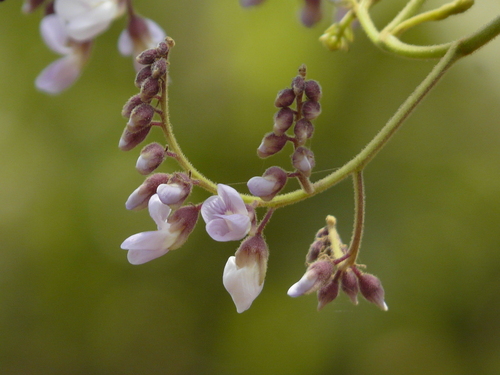
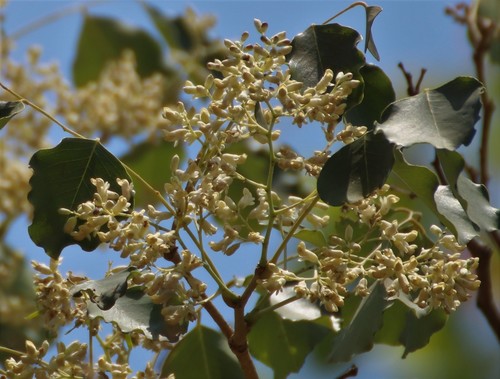
Pterodon emarginatus
Vogel
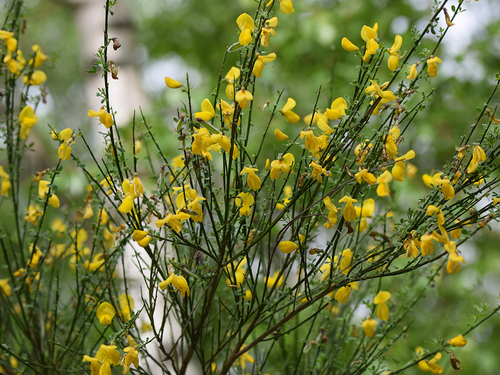
iNaturalist· cc-by-nc
(c) Nelson Wisnik, some rights reserved (CC BY-NC), uploaded by Nelson Wisnik
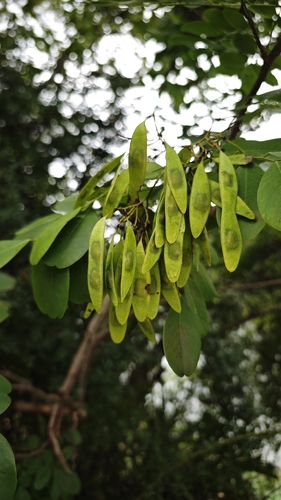
iNaturalist· cc-by-nc
(c) Paulo Robson de Souza, some rights reserved (CC BY-NC)
Summary
Source: WikipediaPterodon emarginatus (Portuguese: sucupira-branca) is a Brazilian legume of the Cerrado. Widely distributed in the west of Minas Gerais and in Goiás, Brazil, the fruit oil of this plant is used to deter skin penetration by the cercariae of Schistosoma.
Description
A tree. It loses its leaves during the year. It grows 8-16 m tall. The trunk can be 30-60 cm across.
This description is brief — help expand it
Edible Uses
No edible uses are known.
Traditional Uses
The bark is used to flavour liqueurs.
This uses section is brief — help expand it
Medicinal Uses
An essential oil extracted from the bark is applied externally to affected areas to treat rheumatism. A tuberous root swelling occasionally found on the plant, known locally as 'batata de sucupira', is used in the treatment of diabetes. The oil from the fruits has been shown to inhibit the penetration of Schistosoma cercariae — the larval stage responsible for schistosomiasis — through human skin, making it useful as a prophylactic treatment against the disease. This effect is attributed to the presence of 14,15-epoxigeranylgeraniol in the oil.
Distribution
It is a tropical plant. It grows in the savannah in dry or sandy areas.
Where It Grows
Bolivia, Brazil, South America,
Cultivation
Requires a sunny position. Prefers the drier, sandy soils in the wild, but in cultivation can tolerate a wider range of conditions so long as the soil is well-drained. Established plants are very drought tolerant. A slow-growing tree when very young, though it does speed up somewhat after 2 - 3 years. Although many species within the family Fabaceae have a symbiotic relationship with soil bacteria, this species is said to be devoid of such a relationship and therefore does not fix atmospheric nitrogen.
Propagation
The seed has a hard seedcoat and will likely benefit from scarification before sowing. Pour a small amount of near-boiling water over the seeds — taking care not to cook them — then soak in warm water for 12–24 hours. Seeds that have not visibly swollen after soaking should be carefully nicked (avoiding the embryo) and soaked for a further 12 hours before sowing. Because seedlings are very sensitive to root disturbance, sow seed as soon as it is ripe in individual containers in a partially shaded position. Untreated seed has a very low germination rate; treated seed typically sprouts within 30–50 days.
Other Uses
Although slow-growing, this species is a good candidate for native woodland restoration schemes, particularly in the drier areas of the cerrado and adjoining semideciduous forest. The wood is compact, cross-grained, heavy, very hard, difficult to split, and highly durable even in contact with soil. It is used in naval and general construction, bridge stanchions, poles, railway sleepers, and cart bodies. The wood also serves as fuel and for making charcoal.
Notes
The oil can be used to prevent schistomiasis.
Synonyms
Also Known As
Fava-de-santo-inacio, Pessoek, Sicupira, Sucupira
References (1)
- Kermath, B. M., et al, 2014, Food Plants in the Americas: A survey of the domesticated, cultivated and wild plants used for Human food in North, Central and South America and the Caribbean. On line draft. p 727