Pterolobium hexapetalum
(Roth) Santapau & Waugh
Indian redwing
iNaturalist· cc-by
(c) Lalithamba, some rights reserved (CC BY)
iNaturalist· cc-by-nc
(c) Elavarasan M, some rights reserved (CC BY-NC)
iNaturalist· cc-by-nc
(c) Vijay Anand Ismavel, some rights reserved (CC BY-NC)
Summary
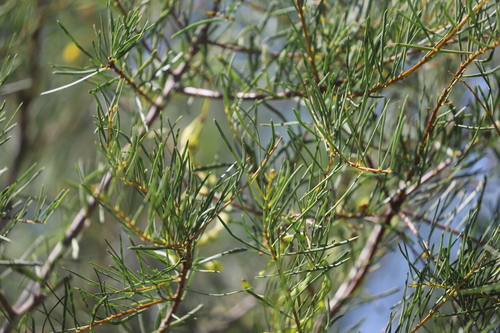
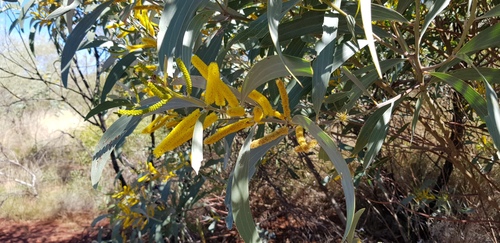
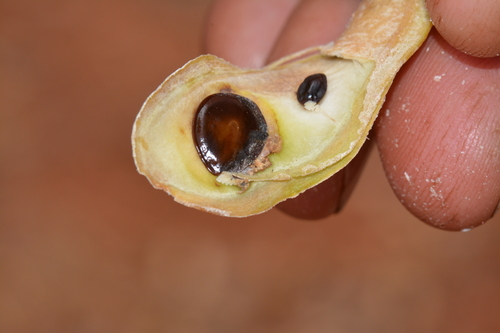
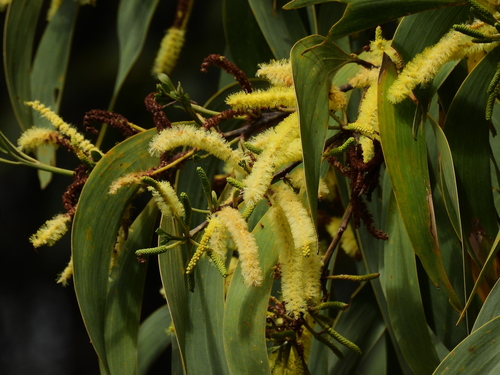
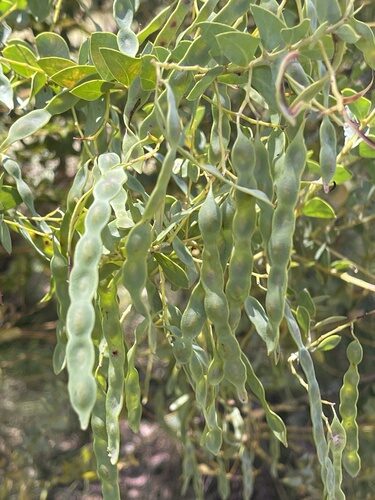
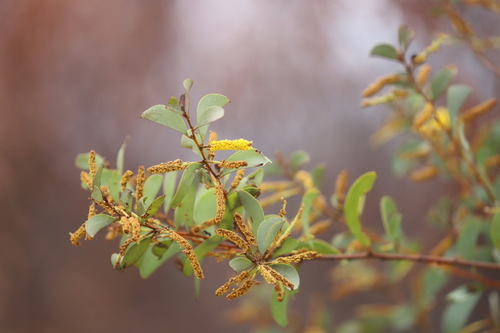
Source: WikipediaPterolobium hexapetalum, the Indian redwing, camp siege or bhoca, is a flowering plant in the legume family, Fabaceae. It is found from Burma, Bhutan and Bangladesh to southern India, where it occurs up to 1200 m altitude. They are large scrambling or climbing shrubs that grow commonly in dry deciduous forest, or as pioneer plants in open land. They carry pairs of thorns below the rachis of their bipinnate leaves, and their sprawling twigs are armed with recurved thorns. In springtime their profuse and attractive inflorescences of pinkish white flowers form a mat on tree canopies. Starting March to April, they present a major source of nectar and pollen, and are foraged on by different species of honey bee. In late summer they bear colourful samaroid fruit, containing one seed each. The young shoots are useful as cattle fodder.
Description
A scrambling shrub or climber. There are a pair of thorns near the leaves. The leaves are twice divided into leaflets. The flowers are pink to white. The fruit contains one seed.
Edible Uses
Both leaves and fruit are edible.
Distribution
It is a tropical plant. In south India it grows up to 1,200 m above sea level. It grows in dry deciduous forest.
Where It Grows
Asia, Bangladesh, Bhutan, Himalayas, India, Myanmar, SE Asia,
Synonyms
Also Known As
Seengai, Sundrase
References (3)
- Harisha, R. P. & Padmavathy, S., 2013, Knowledge and Use of Wild Edible Plants in Two Communities in Malai Madeshwara Hills, Southern India. International Journal of Botany 9(2): 64-72.
- Pradhan, R., et al, 2020, Potential Wild Edible Plants and its Significance in Livelihood of Indigenous People of Male Mahadeshwara Hills, Karnataka. Economic Affairs Vol. 64, No. 4 pp. 01-14
- Sivakumar, A. & Murugesan, M., 2005, Ethnobotanical Studies of the wild edible plants used by the tribals of the Anaimalai Hills, the Western Ghats. Ancient Science of Life. XXV(2) Oct-Dec.