Momordica cardiospermoides
Klotzsch
Bitter gourd
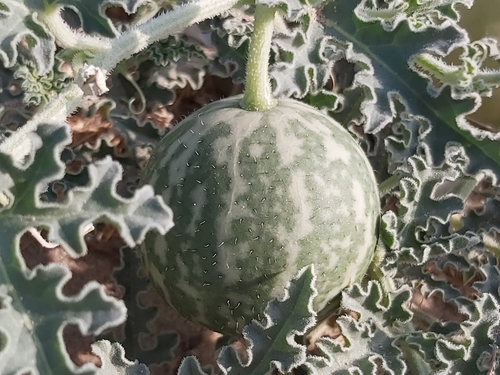
iNaturalist· cc-by-nc
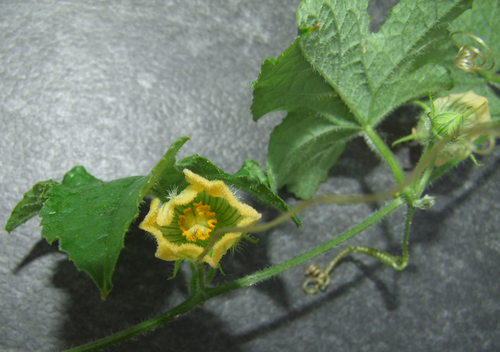
(c) Troos van der Merwe, some rights reserved (CC BY-NC), uploaded by Troos van der Merwe
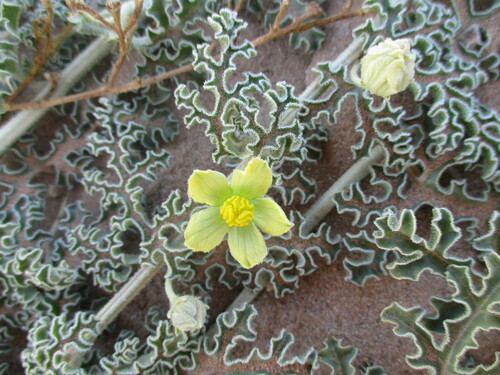
iNaturalist· cc-by-nc
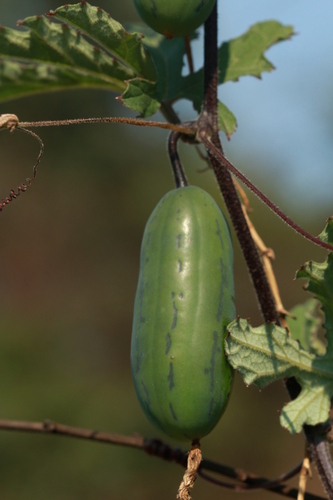
(c) Phil White, some rights reserved (CC BY-NC)
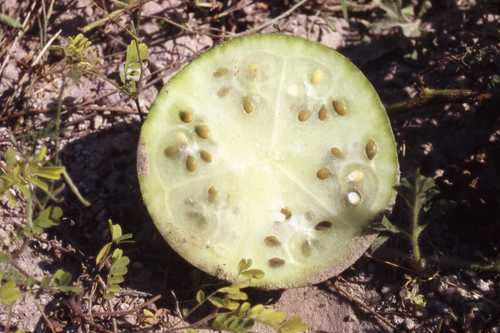
iNaturalist· cc-by-nc
(c) Phil White, some rights reserved (CC BY-NC)
Description
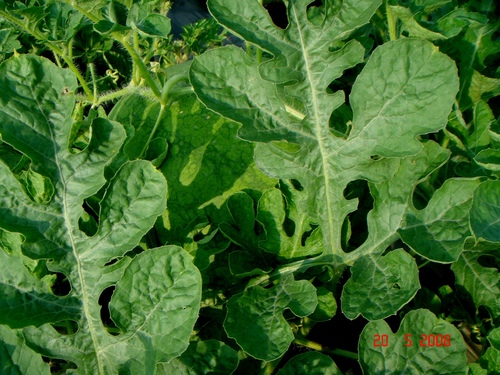
A slender climber in the pumpkin family. It has a bad smell. The stems have ribs. The stems lie along the ground. They can be 10 m long. The leaves are compound. The leaflets are in groups of 5 or 17 and have 15-17 leaflets. The leaves are opposite and with a few pairs of opposite leaflets. These are also divided. There are teeth along the edge. The flowers occur singly in the axils of leaves. Flowers are yellow. The fruit are oval and have a knobbed surface. The fruit are 7 cm long by 3 cm across. There are many flat seeds.
Edible Uses
The leaves are eaten as a vegetable.
Distribution
It is a tropical plant. It grows in wooded grassland between sea level and 1,400 m above sea level.
Where It Grows
Africa, Botswana, East Africa, Eswatini, Malawi, Mozambique, South Africa, Southern Africa, Swaziland, Tanzania, Zambia, Zimbabwe,
Synonyms
Also Known As
Inshubaba, Insubaba
References (6)
- Long, C., 2005, Swaziland's Flora - siSwati names and Uses http://www.sntc.org.sz/flora/
- Ogle & Grivetti, 1985, (As Momordica clematidea)
- Peters, C. R., O'Brien, E. M., and Drummond, R.B., 1992, Edible Wild plants of Sub-saharan Africa. Kew. p 102 (As Momordica clematidea)
- Ruiters-Welcome, A. K., 2019, Food plants of southern Africa. Ph.D. thesis. Univ. of Johannesburg p 50
- Swaziland's Flora Database http://www.sntc.org.sz/flora (As Momordica cardiospermoides)
Show all 6 references Hide references
- Welcome, A. K. & Van Wyk, B.-E., 2019, An inventory and analysis of the food plants of southern Africa. South African Journal of Botany 122 (2019) 136–179