Citrullus colocynthis
(L.) Schrader
Colocynth, Bitter Apple, Bitter Cucumber
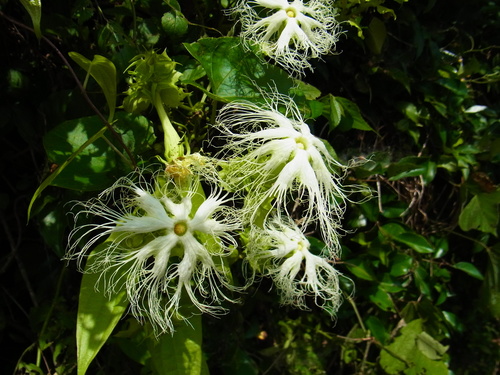
iNaturalist· cc-by-nc
(c) Mohammad Marafi, some rights reserved (CC BY-NC), uploaded by Mohammad Marafi
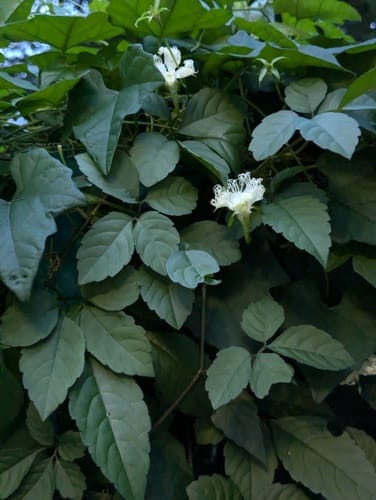
iNaturalist· cc-by-nc
(c) Ирина Бортникова, some rights reserved (CC BY-NC)
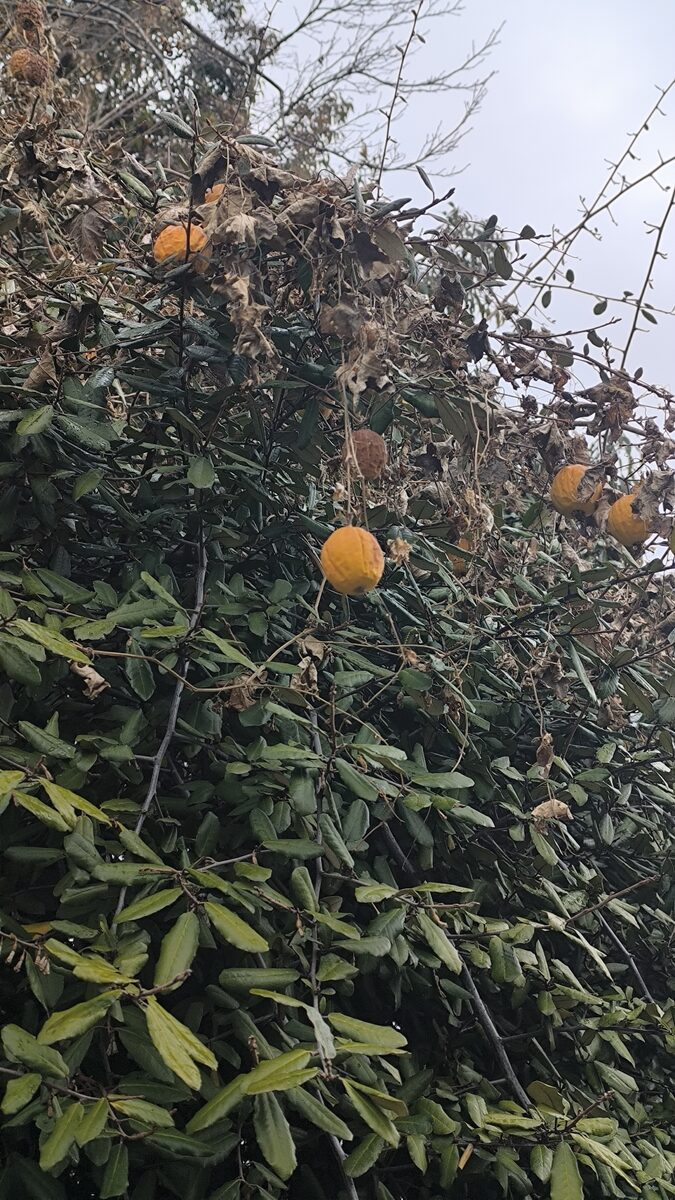
iNaturalist· cc-by-nc-sa
(c) Ahmad Fuad Morad, some rights reserved (CC BY-NC-SA)
Summary
Source: WikipediaCitrullus colocynthis, with many common names including colocynth, bitter apple, bitter cucumber, vine of Sodom, or wild gourd, is a poisonous desert viny plant native to the Mediterranean Basin and West Asia, especially the Levant, Turkey (especially in regions such as İzmir), and Nubia. It resembles a common watermelon vine but bears small, hard fruits with a bitter pulp. The plant contains cytotoxic cucurbitacins and is thus unsafe to use as an herbal medicine. It originally bore the scientific name Colocynthis citrullus.
Description
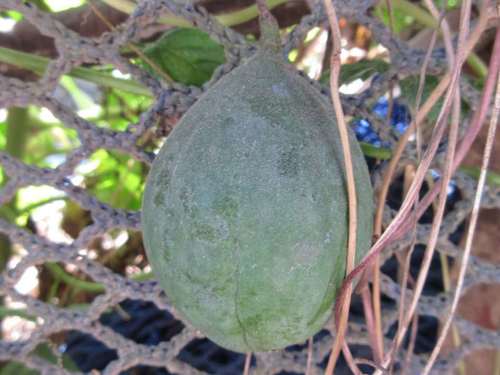
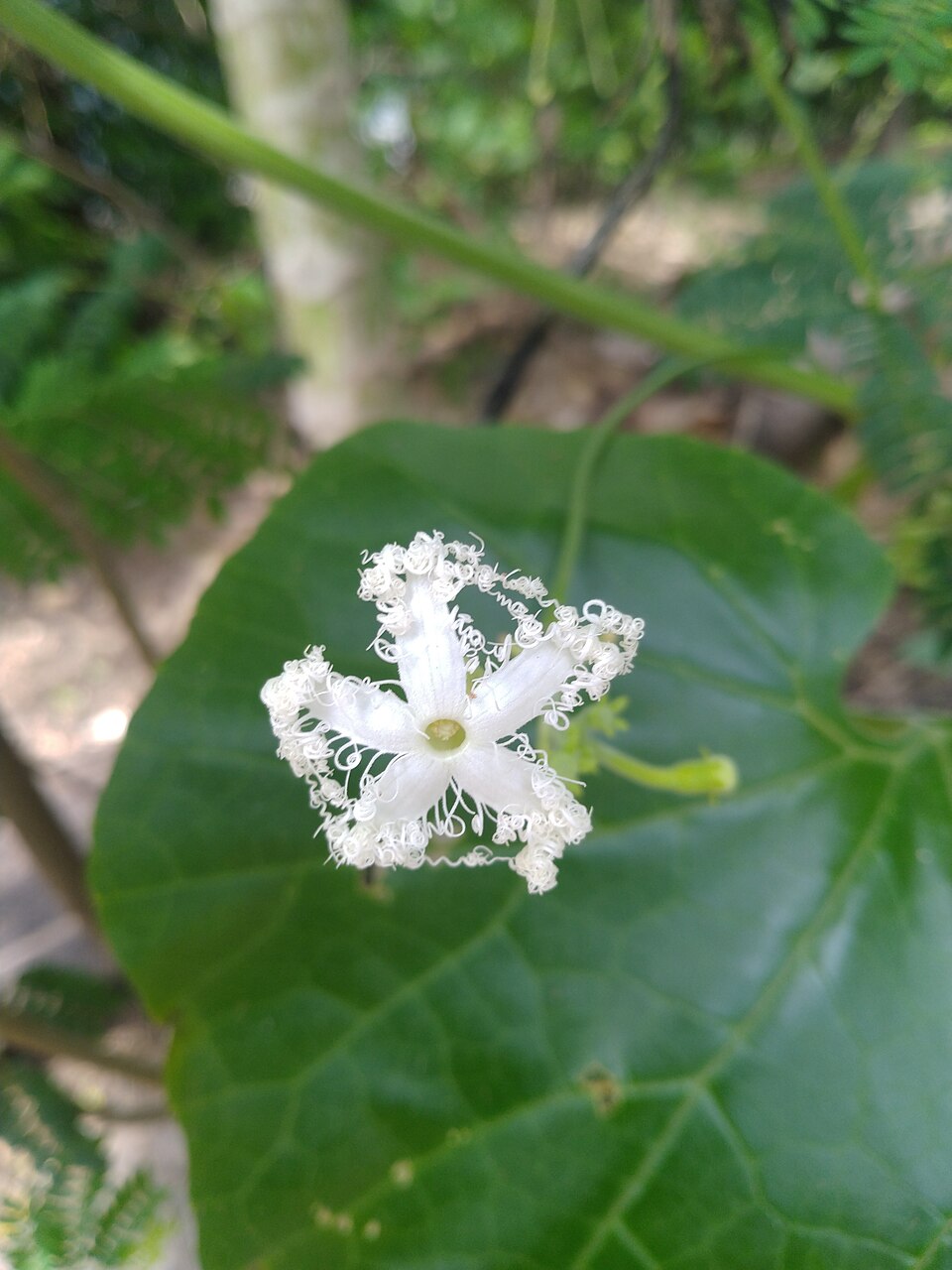
A pumpkin family plant. It is a climbing plant. It lies along the ground and keeps growing from year to year. The stems are like vines. They have soft hairs and tendrils at the nodes. Many stems arise from a stout woody taproot. The leaves are grey-green and have a long stalk. They are triangle shaped but with large rounded lobes. Both leaf surfaces have stiff hairs. The flowers have five yellow petals. The flowers occur singly on short stalks in the axils of leaves. The fruit can be 10 cm across. They have a dark and light green colour. The fruit turns yellow as it ripens. The pulp is white and bitter. Some varieties are sweet.
Edible Uses
The fruit, which is 5–8cm in diameter, must be cooked — first boiled in several changes of water to remove the bitter principle, then made into pickles and preserves. Seeds are cooked as well: they can be eaten roasted or ground into a meal for making chapattis, and desert Bedouin are said to prepare a type of bread from the ground seeds. Note that some confusion exists between this species and the closely related watermelon (Citrullus lanatus), whose seeds are used in much the same way; the name 'egusi' may refer to either or both plants, or more generically to other cucurbits, as a seed crop or as the basis of a popular West African soup. The seed flour is rich in micronutrients and could be valuable in food formulations, particularly in regions with low milk consumption such as West Africa. An edible oil is also extracted from the seeds; seed yield is approximately 6.7–10 t/ha, and with an oil content of 31–47%, oil yields can reach up to 3 t/ha.
Traditional Uses
CAUTION: The fruit is poisonous if regularly eaten. The fruit requires long boiling to remove the bitter principle. The skin is pierced before boiling. The water is changed several times. The seeds are washed with salt water many times. They are also buried with salt in sand and kept covered there for a few weeks. They are then washed and ground and made into flour. The coating is removed. The seeds are also roasted. The seeds yield an edible oil. The fruit are pickled.
Medicinal Uses
The dried, unripe fruit pulp constitutes the drug 'colocynth', a very strong laxative also used as an antirheumatic, anthelmintic, and hydrogogue, and as a remedy for skin infections. Both fruits and seeds are used in treating diabetes. The roots have purgative properties and are used to treat jaundice, rheumatism, and urinary diseases. Some caution should be employed in using this plant — see notes on toxicity.
Known Hazards
The plant contains a number of potentially toxic compounds and can be harmful if used in quantity. These compounds include elatermidine, glycosides, resin, dihydric alcohol, heltiacontane, citrullin and citrullinic acid. Taken in excess they can cause gastrointestinal pain, diarrhoea, vomiting, hypothermia, cardiac disorders, cerebral congestion and necrosis of liver and renal cells.
Distribution
A tropical plant. It is native to Tropical Africa. It grows in Mediterranean and warm temperate places. It grows on sandy soils, sand dunes and open plains. It is very drought tolerant. It produces best in dry, sunny periods. It grows in desert places. It can grow in arid places.
Where It Grows
Afghanistan, Africa, Algeria, Arabia, Argentina, Asia, Australia, Africa, Bahrain, Benin, Burkina Faso, Canary Island, Cape Verde, Central Africa, Chad, Cyprus, Egypt, Ethiopia, Europe, Gabon, Gambia, Ghana, Greece, Guinea, Guinée, Himalayas, India, Indochina, Iran, Iraq, Israel, Italy, Kenya, Libya, Madagascar, Mali, Mauritania, Mediterranean, Middle East, Morocco, Myanmar, Niger, Nigeria, North Africa, Northeastern India, Oman, Pakistan, Paraguay, Rotuma, Sahara, Sahel, Saudi Arabia, SE Asia, Socotra, Senegal, Sikkim, Somalia, South America, South Sudan, Spain, Sri Lanka, Sudan, Tunisia, Turkmenistan, Vietnam, West Africa, Yemen,
Cultivation
It can be grown from seed or root segments.
Propagation
Seed.
Other Uses
The seeds contain 30–34% of a pale yellow oil, which also contains an alkaloid, a glucoside, and a saponin.
Production
In Sikkim fruit are available September to October.
Other Information
It is a famine food. It is cultivated.
Notes
There are 3 Citrullus species.
Nutrition
| Part | Moisture | kJ | kcal | Protein | Vit A | Vit C | Iron | Zinc |
|---|---|---|---|---|---|---|---|---|
| Seed dried | 6.7 | 2324 | 556 | 23.6 | — | — | — | — |
Synonyms
Also Known As
Andrian, Bitter Gourd, Desert squash, Egushi, Egusi, Etipuchchha, Felitsikiry, Handhal, IHanzal, ndrak, Indranan Indrani, Indravana, Indrayan, Kaduvrindavana, Kaud tumbha, Kor tumma, Kwariowa, Kyi-ah, Mahendravaruni, Makal, Marghone, Murrah, Paparabudana, Payamekkekayi, Peykkumutti, Peykommutti, Pirpandyan, Shary, Sierra Leone Gourd, Tarha marha, Tastumba, Thaisim hagong, Tlang donkho, Toos, Trooh, Tumba, Tumma, umtikayi, Unuun, Verittumatti
References (55)
- Abbiw, D.K., 1990, Useful Plants of Ghana. West African uses of wild and cultivated plants. Intermediate Technology Publications and the Royal Botanic Gardens, Kew. p 40 (As Colocynthis vulgaris)
- Akubundu, E. N. T., Cherry, J. P., & Simmons, J. G., 1982, Chemical, Functional, and Nutritional Properties of Egusi (Colocynthis citrullus L.) Seed Protein Products. Journal of Food Sci., 47, pp. 829–836.
- Al-Snafi, A. E. (2016), Chemical constituents and pharmacological effects of Citrullus colocynthis - A review, IOSR Journal of Pharmacy, vol. 6, issue 3, pp. 57-64.
- Ambasta, S.P. (Ed.), 2000, The Useful Plants of India. CSIR India. p 127
- Ayantunde, A. A., et al, 2009, Uses of Local Plant Species by Agropastoralists in South-western Niger. Ethnobotany Research and Applications. Vol. 7: 53-66
Show all 55 references Hide references
- Baa-Poku, F. & Asante, I. K., 2020, Use of Neglected and Underutilized Crop Species (NUCS) in some farming communities in the Upper Afram and Upper Dayi River Basins in Ghana. International Journal of Technology and Management Research 5 (2): 48-63
- BHANDARI,
- Blamey, M and Grey-Wilson, C., 2005, Wild flowers of the Mediterranean. A & C Black London. p 148
- Bodkin, F., 1991, Encyclopedia Botanica. Cornstalk publishing, p 261
- Burkill, H. M., 1985, The useful plants of west tropical Africa, Vol. 1. Kew.
- Burkill, I.H., 1966, A Dictionary of the Economic Products of the Malay Peninsula. Ministry of Agriculture and Cooperatives, Kuala Lumpur, Malaysia. Vol 1 (A-H) p 566
- Cancilla, D., 2018, Ethnobotanical and Ethnozoological Values Desktop Assessment - Eliwana Project. p 10
- Chettri, N. & Sharma, E., Non-timber Forest Produce: Utilization, Distribution and Status in the Khangchendzonga Biosphere Reserve, Sikkim, India.
- Dalziel, J. M., 1937, The Useful plants of west tropical Africa. Crown Agents for the Colonies London.
- Dansi, A., et al, 2008, Traditional leafy vegetables and their use in the Benin Republic. Genet Resour Crop Evol (2008) 55:1239–1256
- Esquinas-Alcazar, et al, 1983, Genetic Resources of Cucurbitaceae. International Board of Plant Genetic Resources.
- Facciola, S., 1998, Cornucopia 2: a Source Book of Edible Plants. Kampong Publications, p 84
- Flora of Australia, Volume 8, Lecythidales to Batales, Australian Government Publishing Service, Canberra (1982) p 175
- Flora of Pakistan. www.eFloras.org
- Grubben, G. J. H. and Denton, O. A. (eds), 2004, Plant Resources of Tropical Africa 2. Vegetables. PROTA, Wageningen, Netherlands. p 560
- GUPTA & KANODIA,
- Hedrick, U.P., 1919, (Ed.), Sturtevant's edible plants of the world. p 194
- Hiddins, L., 1999, Explore Wild Australia with the Bush Tucker Man. Penguin Books/ABC Books. p 157
- Hussey, B.M.J., Keighery, G.J., Cousens, R.D., Dodd, J., Lloyd, S.G., 1997, Western Weeds. A guide to the weeds of Western Australia. Plant Protection Society of Western Australia. p 140
- Huxley, A. (Ed.), 1977, The Encyclopedia of the Plant Kingdom. Chartweil Books. p 64
- Igwenyi, I. O., Eze. C. A., Azoro, B. N., Offor, C. E. and Nwuke, C. P., 2011, Proximate, Mineral and Amino Acid Compositions of Irvingia gabonesis and Citrullus colocynthis Used as Soup Thickener in South Eastern Nigeria. International Journal of Biotechnology and Biochemistry. 7(4): pp. 493-498.
- Jardin, C., 1970, List of Foods Used In Africa, FAO Nutrition Information Document Series No 2.p 41
- Kiple, K.F. & Ornelas, K.C., (eds), 2000, The Cambridge World History of Food. CUP p 1770
- Lamp, C & Collet F., 1989, Field Guide to Weeds in Australia. Inkata Press. p 79
- Lazarides, M. & Hince, B., 1993, Handbook of Economic Plants of Australia, CSIRO. p 60
- Linnaea 12:414. 1838
- Lyle, S., 2006, Discovering fruit and nuts. Land Links. p 126
- Mahklouf, M. H., 2019, Ethnobotanical Study of Edible Wild Plants in Libya. European Journal of Ecology. 5(2): 30-40
- Majeed, M., et al, 2021, Gathered Wild Food Plants among Diverse Religious Groups in Jhelum District, Punjab, Pakistan. Foods 2021, 10, 594.
- Medhi, P. & Borthakur, S. K., 2012, Phytoresources from North Cachur Hills of Assam -3: Edible plants sold at Hflong market. Indian Journal or Natural Products and Resources. 3(1) pp 84-109
- Menninger, E.A., 1977, Edible Nuts of the World. Horticultural Books. Florida p 105 (As Colocynthis vulgaris)
- Mertz, O., Lykke, A. M., and Reenberg, A., 2001, Importance and Seasonality of Vegetable Consumption and Marketing in Burkina Faso. Economic Botany, 55(2):276-289
- MORTIMORE, (As Colocynthis vulgaris)
- Okigbo, B.N., Vegetables in Tropical Africa, in Opena, R.T. & Kyomo, M.L., 1990, Vegetable Research and development in SADCC countries. Asian Vegetable Research and development Centre. Taiwan. p 38 (As Colocynthis vulgaris)
- Paczkowska, G. & Chapman, A.R., 2000, The Western Australian Flora. A Descriptive Catalogue. Western Australian Herbarium. p 220
- Peters, C. R., O'Brien, E. M., and Drummond, R.B., 1992, Edible Wild plants of Sub-saharan Africa. Kew. p 98
- Pham-Hoang Ho, 1999, An Illustrated Flora of Vietnam. Nha Xuat Ban Tre. p 569
- Phillips, D.C., 1988, Wild Flowers of Bahrain. A Field Guide to Herbs, Shrubs, and Trees. Privately published. p 105
- POWER & MOORE,
- Rajamanickam, E., Gurudeeban, S., Ramanathan, T. and Satyavani, K., 2010, Evaluation of anti-inflamatory activity of Citrullus colocynthis, International Journal of Current Research, Vol. 2, pp. 67-69.
- Royal Botanic Gardens, Kew (1999). Survey of Economic Plants for Arid and Semi-Arid Lands (SEPASAL) database. Published on the Internet; http://www.rbgkew.org.uk/ceb/sepasal/internet [Accessed 15th April 2011]
- SAXENA,
- SHANKARNARAYAN & SAXENA,
- Shekhawat, G.S. & Anand, S., 1984, An Ethnobotanical Profile of Indian Desert. J. Econ. Tax. Bot. Vol.5 No.3 pp 591-598
- Sundriyal, M., et al, 2004, Dietary Use of Wild Plant Resources in the Sikkim Himalaya, India. Economic Botany 58(4) pp 626-638
- Wheeler, J.R.(ed.), 1992, Flora of the Kimberley Region. CALM, Western Australian Herbarium, p 247
- Wiersema, J. H. & Leon, B., 2013, World Economic Plants. A Standard Reference CRC Press. 2nd Ed. p 178
- World Checklist of Useful Plant Species 2020. Royal Botanic Gardens, Kew
- Zeven, A. C. & de West, J. M. J., 1982, Dictionary of cultivated plants and their regions of diversity. Wageningen. p 108
- Zon, A.P.M. van der, Grubben, G.J.H., 1976, Les legumes-feuilles spontanes et cultives du Sud-Dahomey, Communication 65, Royal Tropical Institute, Amsterdam, p 50 (As Colocynthis vulgaris)