Anthocleista grandiflora
Gilg.
Forest fever tree, Forest big-leaf
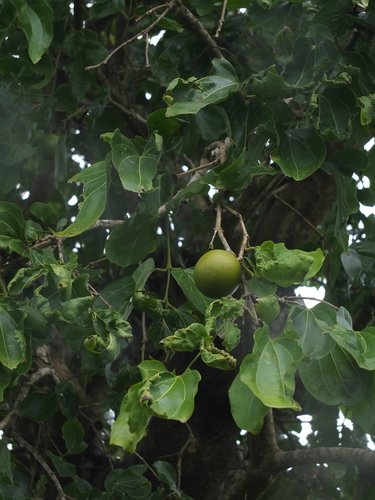
iNaturalist· cc-by-nc
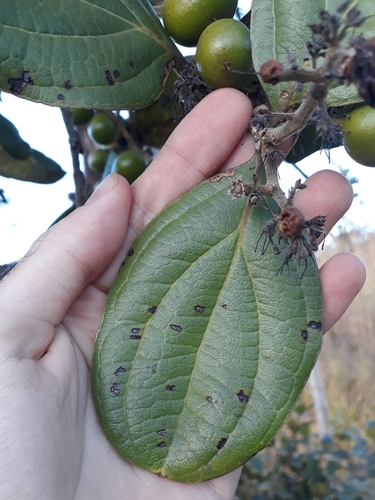
(c) Troos van der Merwe, some rights reserved (CC BY-NC), uploaded by Troos van der Merwe
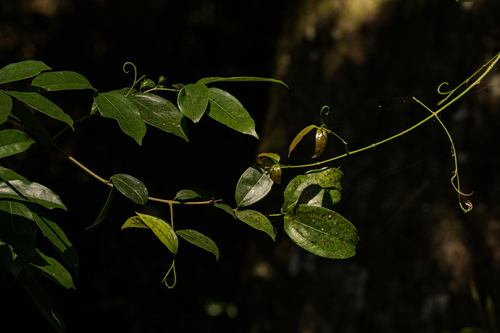
iNaturalist· cc-by-nc
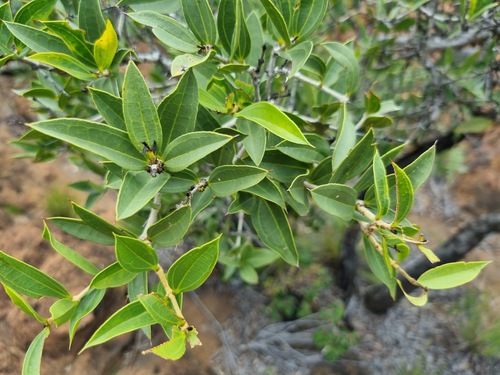
(c) Richard Gill, some rights reserved (CC BY-NC), uploaded by Richard Gill
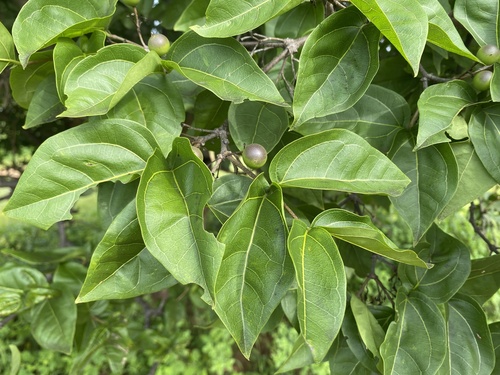
iNaturalist· cc-by-nc
(c) Shobie, some rights reserved (CC BY-NC), uploaded by Shobie
Summary
Source: WikipediaAnthocleista grandiflora is a species of flowering plant of the family Gentianaceae. Commonly referred to as the forest fever tree. It is a tall, slender tree up to 30 m with a preference for forests in high rainfall areas. The leaves are very large, up to 100 cm x 50 cm, arranged in terminal clusters.
Description
An evergreen tree. It grows 35 m high. The trunk is straight. The leaves are very large and clustered near the ends of the branches. They are 45 cm long by 20 cm wide. The leaf scars form large rings on the stems. The flowers are in branched clusters near the ends of branches. The flowers are trumpet shaped and the petals are curled back. They are creamy-white with a green tube. The fruit is fleshy and almost round and smooth.
Edible Uses
A tea is made from the bitter-tasting leaves.
Traditional Uses
A tea is made from the bitter tasting leaves.
This uses section is brief — help expand it
Distribution
It is a tropical and subtropical plant. It grows in upland areas. It grows along the edges of rivers. In Malawi it grows between 600-1,800 m altitude. In Brisbane Botanical Gardens.
Where It Grows
Africa, Australia, Central Africa, Comoros, Congo, East Africa, Eswatini, Kenya, Malawi, Mozambique, Namibia, Southern Africa, Swaziland, Uganda, Zimbabwe,
Notes
There are 14 Anthocleista species.
Synonyms
Also Known As
Cucuza, Gururu, Luvinga, Luvunga, Mecucuo, Mezame, Mugopogopo, Muyama, Umhobohobo
References (4)
- Long, C., 2005, Swaziland's Flora - siSwati names and Uses http://www.sntc.org.sz/flora/
- White, F., Dowsett-Lemaire, F. and Chapman, J. D., 2001, Evergreen Forest Flora of Malawi. Kew. p 336
- World Checklist of Useful Plant Species 2020. Royal Botanic Gardens, Kew
- www.zimbabweflora.co.zw 2011