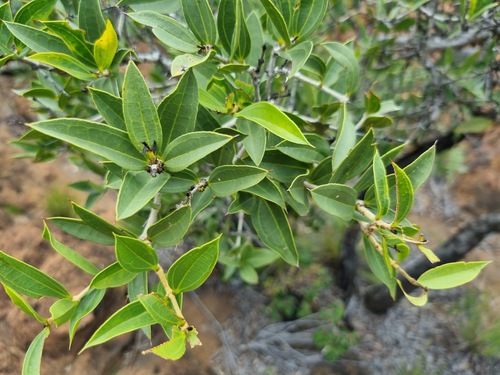
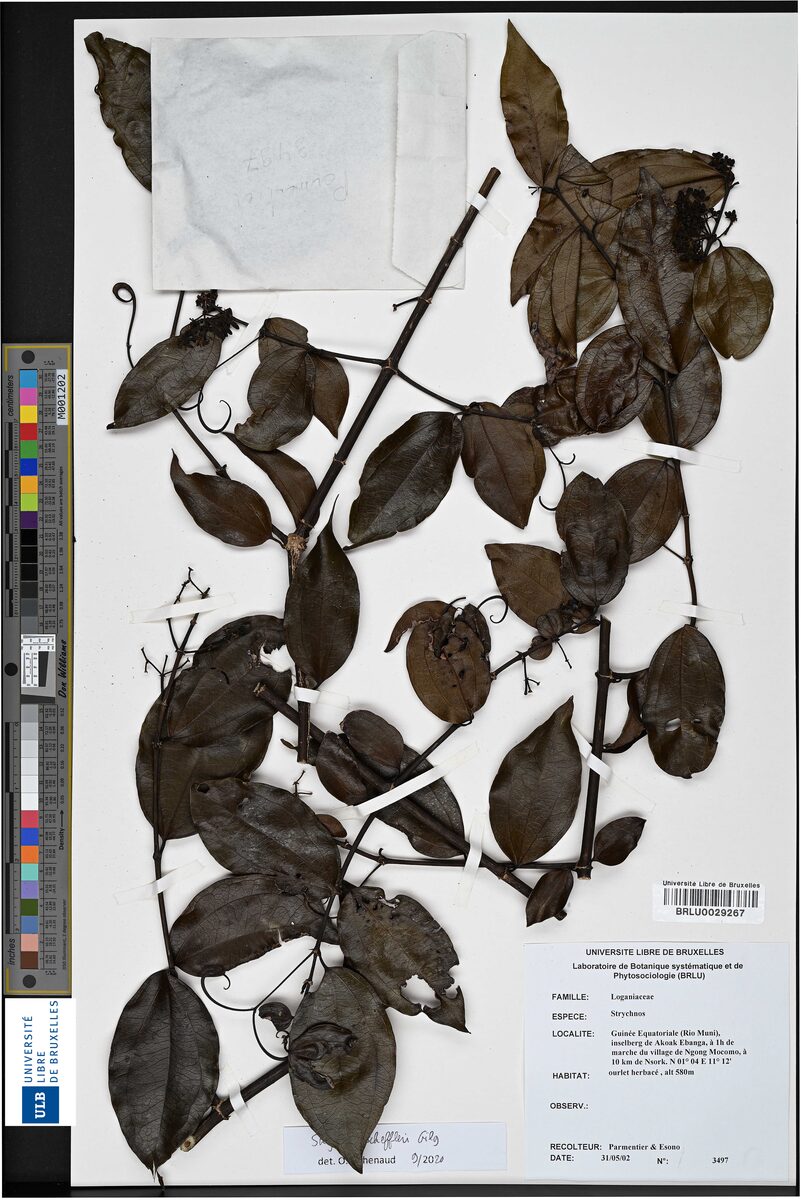
Strychnos ignatii
P. J. Bergius
Ignatius bean
iNaturalist· cc0
no rights reserved, uploaded by Al Kordesch
iNaturalist· cc0
no rights reserved
Summary
Source: WikipediaStrychnos ignatii is a tree in the family Loganiaceae, native to the Philippines, particularly in Catbalogan and parts of China. The plant was first described by the Moravian (Czech) Jesuit working in the Philippines, brother Georg Kamel who named its seeds "the beans of St. Ignatius", in honour of the founder of his religious order.
Description
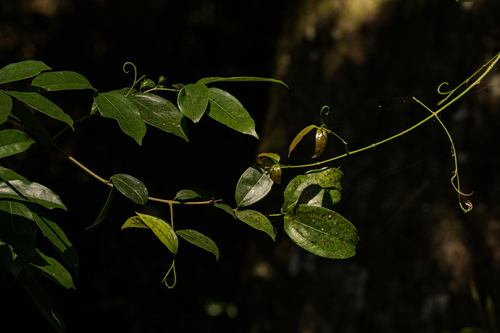
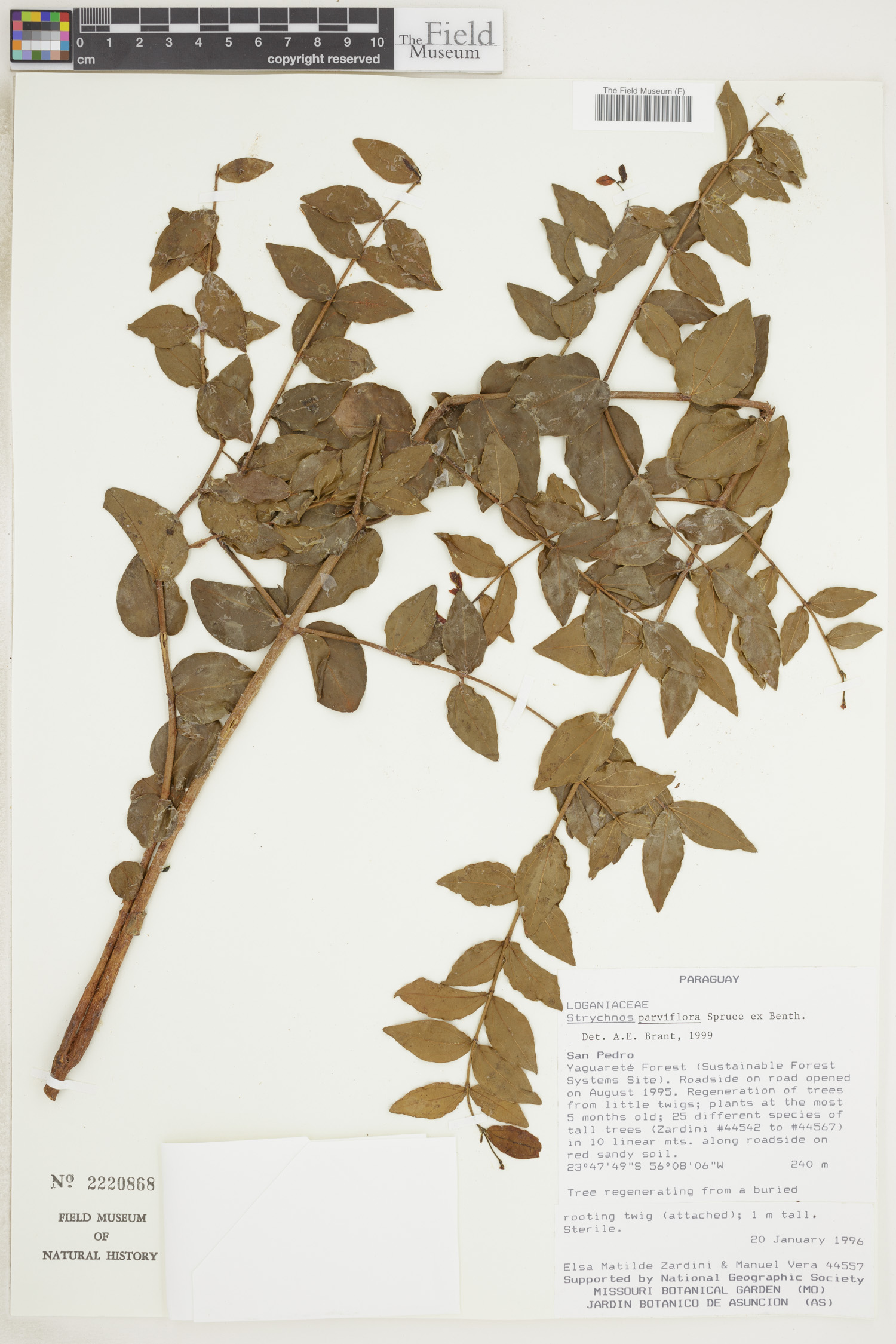
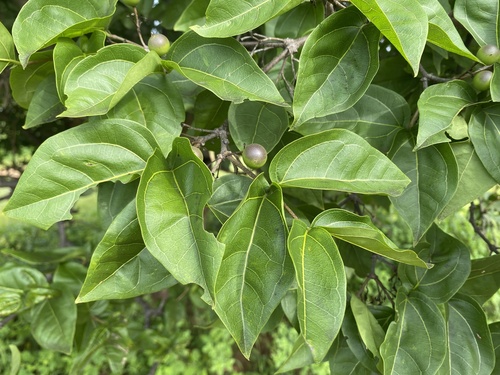
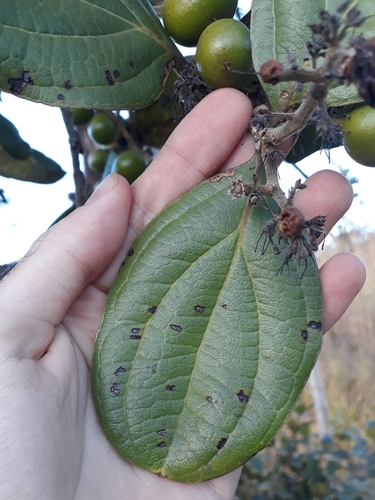
A creeper. The stems are 20 m long. The branches are greyish-brown. They have tendrils. The leaves are narrowly oval and 6-17 cm long by 4-7 cm wide. They taper to the tip. The flowers are in groups of 10-20 flowers in the axils of leaves. The flowers have 5 parts and have a scent. The fruit are round berries, yellow when ripe. They are 4-10 cm across. They have a hard woody case. There are 1-15 seeds. These are oval and flat. They are 2-2.5 cm long by 1.5-1.8 cm wide.
Edible Uses
The pulp of the fruit is said to be edible. The soft pulp has a squash-like odour. (This report does not say the fruit is edible. The pale yellowish to brown, globose fruits are 10cm or more in diameter.
Traditional Uses
Caution: The seeds are poisonous.
This uses section is brief — help expand it
Medicinal Uses
Although toxic, the plant is often used in traditional medicine and the seeds have been an officinal remedy in various pharmacopoeias. The seeds and bark have been prescribed as a stomachic, febrifuge, anticholeric and tonic. They are reported to be effective in the treatment of some forms of paralysis. In Thailand, the seeds, roots and the wood are used as a stomachic, febrifuge and to treat malaria. In India, the seeds have been used to treat obstinate vomiting, cholera, asthma, dropsy and rheumatism, and as a tonic and vermifuge. Combined with aromatics, they are used in the treatment of colic. The seeds are commercially traded as a source of strychnine. The leaves are used to treat diabetes. The leaves are used as a poultice on sloughing wounds and ulcers, especially in cases where maggots are present. The root bark is ground up into a fine paste with lime juice and made into pills which are said to be an effective treatment for cholera. The wood is used in the treatment of dysentery, fevers and dyspepsia.
Known Hazards
Various parts of Strychnos plants, especially the seeds and bark, contain toxic alkaloids such as strychnine and brucine. The fleshy pulp of the ripe fruits, however, is often edible. The roots are used in Indonesia and Malaysia as arrow poison, and sometimes as a fish poison.
Distribution
It is a tropical plant. It grows between 400-800 m above sea level. It can grow up to 1,500 m above sea level.
Where It Grows
Asia, China, Indonesia, Malaysia, Philippines, SE Asia, Thailand, Vietnam,
Cultivation
A plant of the tropics, where it is found at elevations up to 1,500 metres. Grows best on sandy soils.