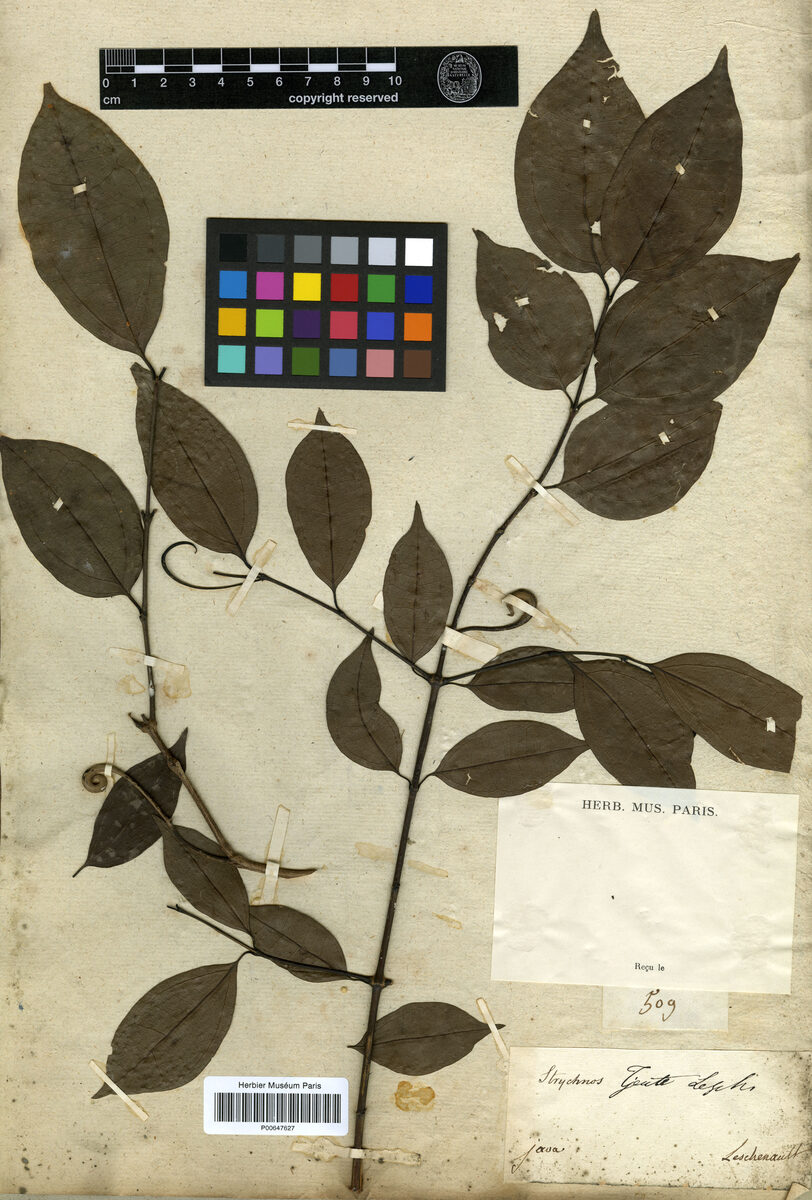
Strychnos decussata
(Pappe) Gilg
Cape teak, Chaka's wood
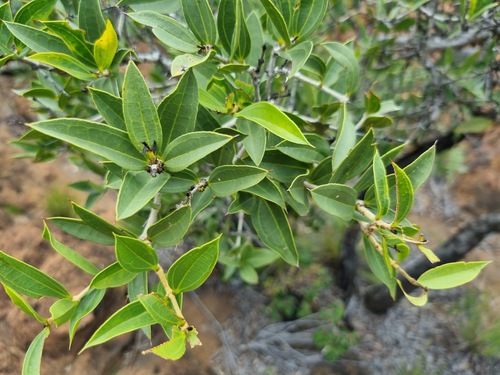
iNaturalist· cc-by-nc
(c) Troos van der Merwe, some rights reserved (CC BY-NC), uploaded by Troos van der Merwe
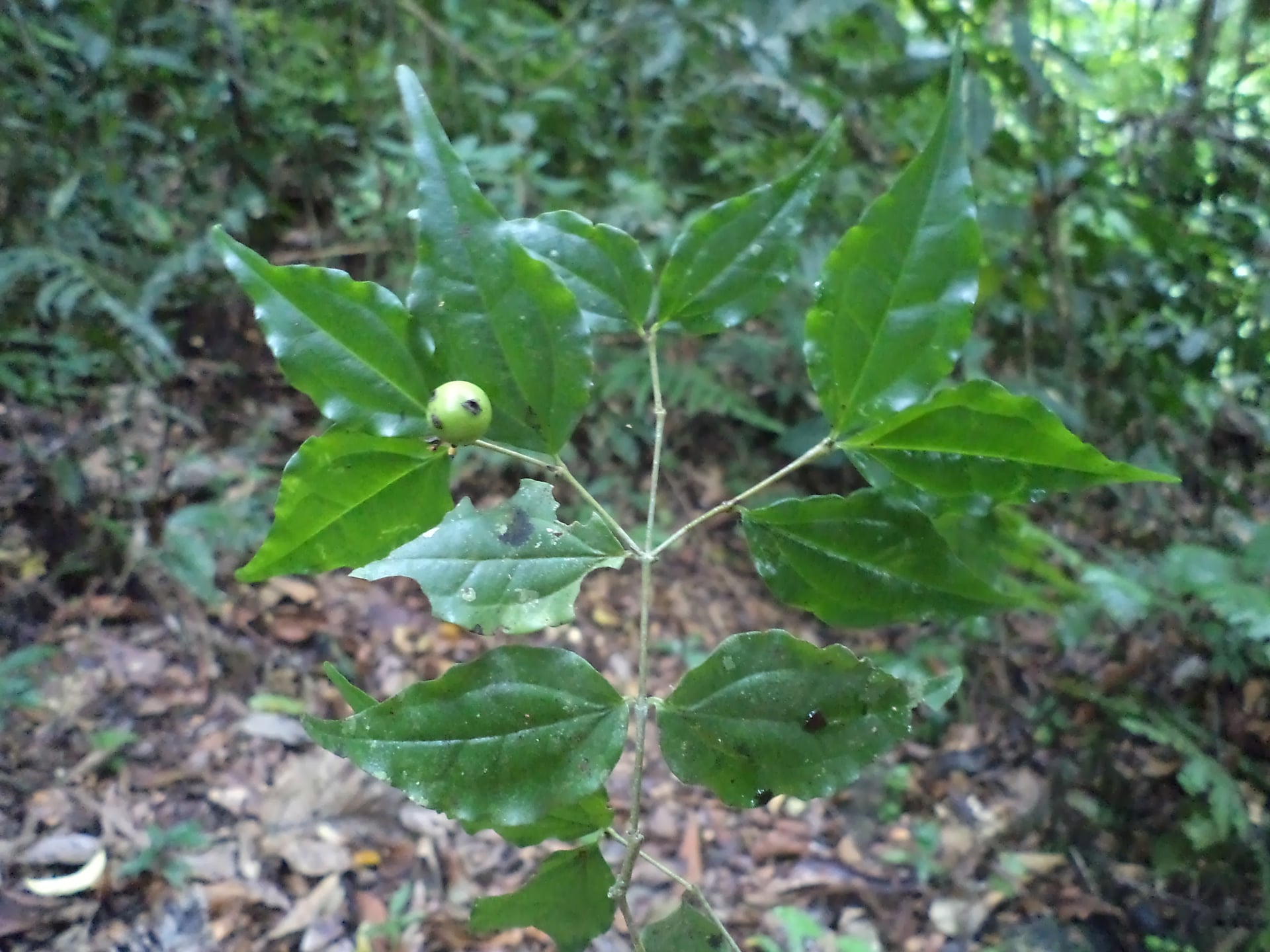
iNaturalist· cc-by-nc
(c) Troos van der Merwe, some rights reserved (CC BY-NC), uploaded by Troos van der Merwe
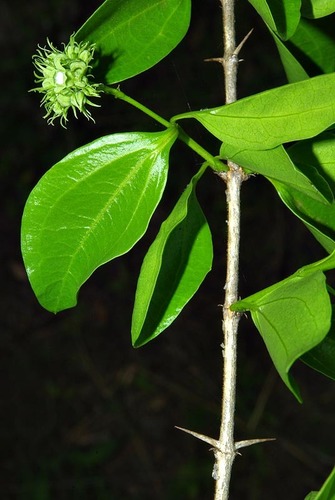
iNaturalist· cc-by-nc
(c) magdastlucia, some rights reserved (CC BY-NC), uploaded by magdastlucia
Description
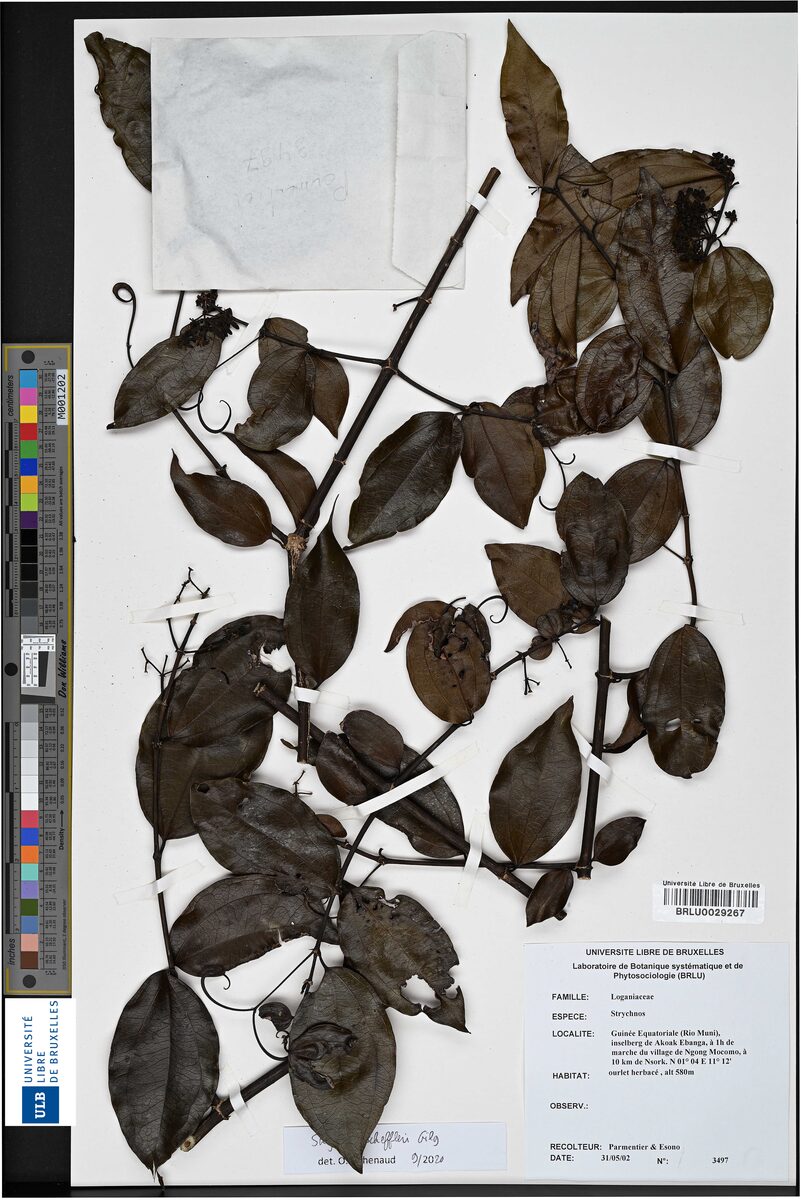
A small slender tree. It grows 3-12 m high. The branches are very leafy and droop downwards. The bark is dark grey and rather smooth. It has light brown dots. The leaves are oval and broadest above the middle. They are 1.5-5 cm long by 1-3 cm wide. They are leathery. They are glossy green. The base tapers. The flowers are small and white or greenish. They have a scent. They are in loose heads 3.5 cm long by 2 cm wide. They occur in the axils of leaves or on old wood. The fruit are almost round. They are fleshy with a crusty rind. They are about 1.5 cm across. They are orange or red when mature. They contain 1 or 2 smooth seeds.
Edible Uses
The ripe fruit are eaten.
Traditional Uses
The green fruit are considered poisonous. The ripe fruit are eaten. CAUTION: Many Loganiaceae are very poisonous.
This uses section is brief — help expand it
Medicinal Uses
Although toxic, the roots and bark are used in traditional medicine as a treatment for stomach problems.
Known Hazards
Various parts of Strychnos plants, especially the seeds and bark, contain toxic alkaloids such as strychnine and brucine. The fleshy pulp of the ripe fruits, however, is often edible. The bark and fruits are poisonous, especially when green.
Distribution
A tropical plant. It is native to S Africa. They grow at low altitudes and along rocky dry watercourses. It grows from sea level to 1,500 m above sea level. It can grow in the lowlands. It suits hardiness zones 10-12.
Where It Grows
Africa, Australia, East Africa, Eswatini, Kenya, Madagascar, Malawi, Mozambique, South Africa, Southern Africa, Swaziland, Zambia, Zimbabwe,
Cultivation
Established plants are drought tolerant.
Other Uses
The reddish-brown wood is rather coarse-grained, hard, heavy, strong, moderately elastic and tough. The wood is not durable, as it is liable to dry rot and gets worm-eaten. It is used for rural utensils, staves for coppers' works etc.
Also Known As
Ampeny, Dangoa, Hazomby, Hapeny, Mdolongwe, Mebuebue, Mutolongwe, Umpathawenk, Vakampeny
References (17)
- Barwick, M., 2004, Tropical and Subtropical Trees. A Worldwide Encyclopedic Guide. Thames and Hudson p 387
- Bot. Jahrb. Syst. 28:121. 1901
- Cundall, P., (ed.), 2004, Gardening Australia: flora: the gardener's bible. ABC Books. p 1380
- Dale, I. R. and Greenway, P. J., 1961, Kenya Trees and Shrubs. Nairobi. p 253
- Fox, F. W. & Young, M. E. N., 1982, Food from the Veld. Delta Books. p 260
Show all 17 references Hide references
- Jardin, C., 1970, List of Foods Used In Africa, FAO Nutrition Information Document Series No 2.p 163
- JSTOR Global Plants edible
- Long, C., 2005, Swaziland's Flora - siSwati names and Uses http://www.sntc.org.sz/flora/
- Mutie, F. G., 2020, Conservation of Wild Food Plants and Their Potential for Combatting Food Insecurity in Kenya as Exemplified by the Drylands of Kitui County. Plants 2020, 9, 1017
- Mutie, F. M., et al, 2023, Important Medicinal and Food Taxa (Orders and Families) in Kenya, Based on Three Quantitative Approaches. Plants 2023, 12, 1145
- Palgrave, K.C., 1996, Trees of Southern Africa. Struik Publishers. p 765
- Reitveld, S., 2013, The Animals and Plants of the Zazamalala Forest in Western Madagascar. p 99
- Ruiters-Welcome, A. K., 2019, Food plants of southern Africa. Ph.D. thesis. Univ. of Johannesburg p 73
- van Wyk, B, van Wyk, P, and van Wyk B., 2000, Photographic guide to Trees of Southern Africa. Briza. p 296
- von Breitenbach, F., 1985, Southern Cape Tree Guide. Department of Environment Affairs, Forestry Branch. Pamphlet 360 Pretoria p 27
- Welcome, A. K. & Van Wyk, B.-E., 2019, An inventory and analysis of the food plants of southern Africa. South African Journal of Botany 122 (2019) 136–179
- World Checklist of Useful Plant Species 2020. Royal Botanic Gardens, Kew