Strychnos cocculoides
Baker
Kaffir orange, Caper orange
iNaturalist· cc-by-nc
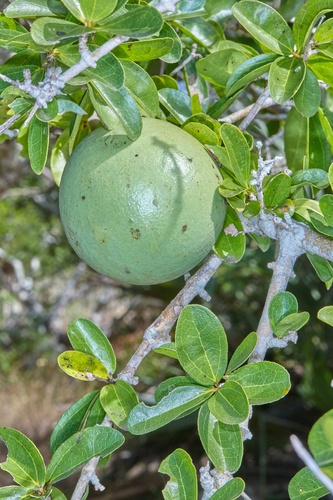
(c) Grant Reed, some rights reserved (CC BY-NC), uploaded by Grant Reed
iNaturalist· cc-by-nc
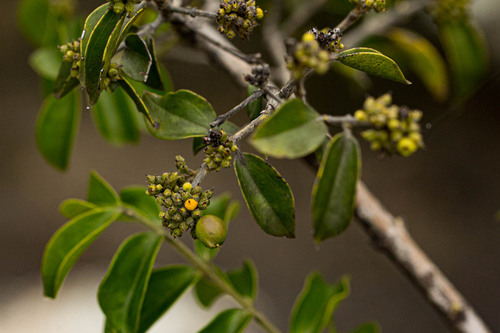
(c) Grant Reed, some rights reserved (CC BY-NC)
Summary
Source: WikipediaStrychnos cocculoides, also known as the corky-bark monkey orange tree, or Ntonga, and suurklapper in Afrikaans, is a fruiting tree of Southern Africa. It produces a "large, pleasant flavored fruit" (the monkey orange) that is sometimes hard to find in shops but easy to handle. The flavorful fruit is considered a good prospect for further agricultural and economic development in the region.
Description
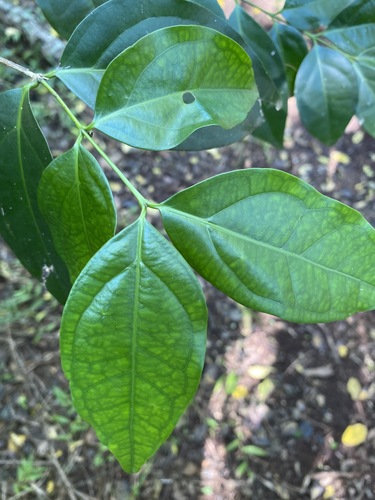
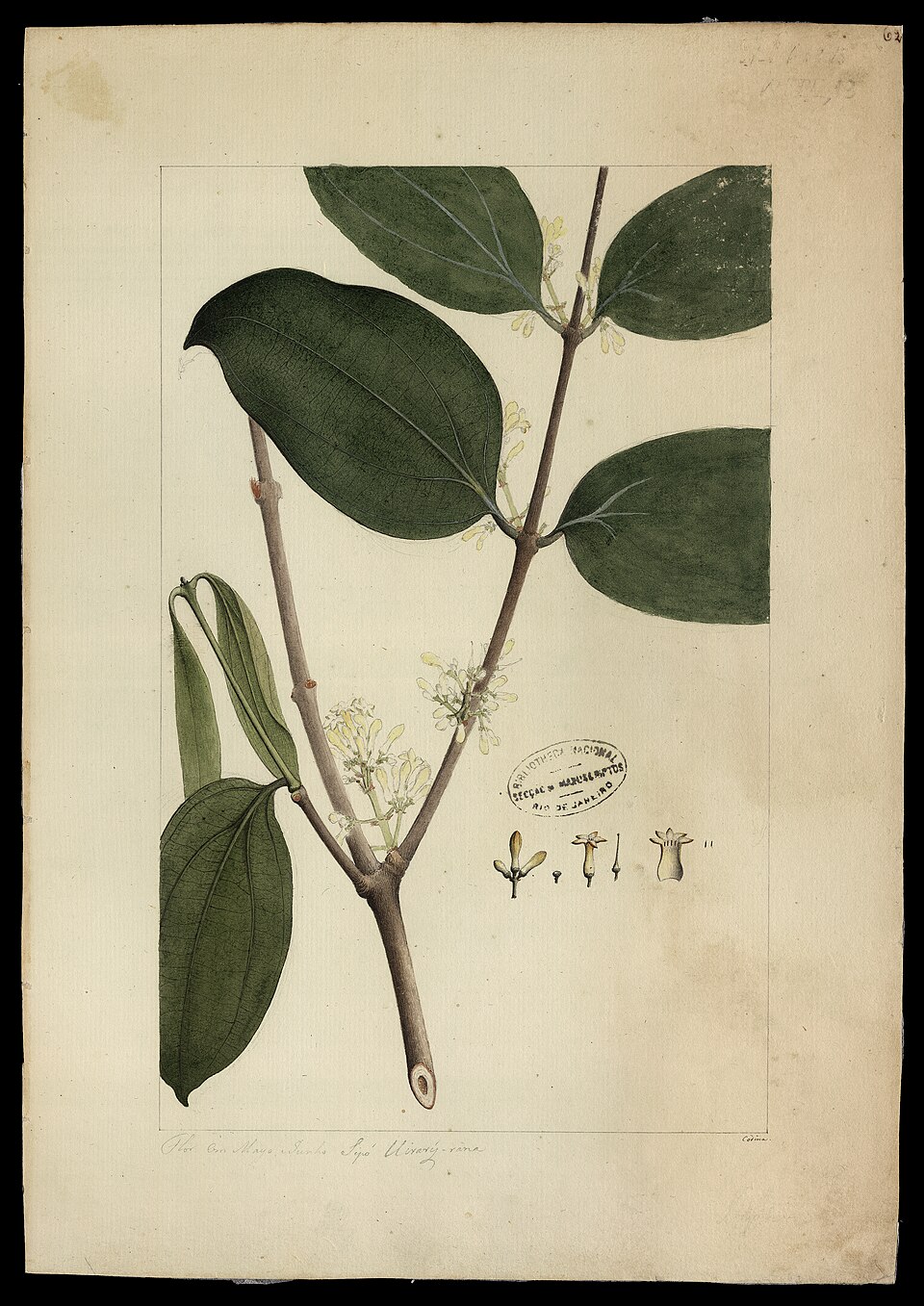
A shrub or small tree up to 6 m tall. It is evergreen and thornless. The stem can be 23 cm across. The leaves are simple and opposite. They are leathery. They are dark green above and lighter below. They are 5-12 cm long by 2.5-6 cm wide. The base is narrowed. The edges roll inwards. The flowers are in dense clusters in the axils of leaves. The flowers are tubular and with 5 white star like petals. These can be 1.9 cm across. The berries are plum like and 2.5 cm long. They are red and turn purplish-black. The have 1 or 2 oval flat seeds. The fruit are edible.
Edible Uses
The ripe fruit are eaten fresh and have a good flavour; they are also used to make jams, jellies, and drinks. The fruit pulp can be buried in the ground until it becomes liquid and is then consumed as a beverage or used to make alcoholic drinks.
Traditional Uses
The ripe fruit are eaten and have a good flavour. They are also used for jams and jellies. The fruit are also buried in the ground until the fruit pulp becomes liquid and then used as a drink. The fruit are also used for alcoholic drinks. Caution: Alcohol is a cause of cancer. CAUTION: These are considered POISONOUS. The fruit and leaves can kill. The seeds may be poisonous. They contain strychnine. The seeds are also reported as being eaten.
Medicinal Uses
The fruit is mixed with honey or sugar and used to treat coughing. The fruit is used in making eardrops for treating ear complaints. The root can be chewed to alleviate stomach disorders, eczema and sores on the skin. It is also an alleged cure for gonorrhoea. The leaves are pounded and applied as a poultice on sores. The roots, leaves and bark are used in treating disorders of the male organs.
Known Hazards
The fruit and leaves are considered poisonous and can be fatal. The seeds contain strychnine and are poisonous, though they are also reported as being eaten. Consuming alcohol made from the fruit presents a cancer risk.
Distribution
A tropical plant. It grows in bushveld and usually on sandy soils or in rocky places. It grows between 400-2,000 m above sea level. It can grow in acid soils. It grows in areas with an annual rainfall between 600-1,200 mm. It can grow in arid places. It grows in Miombo woodland.
Where It Grows
Africa, Angola, Botswana, Central Africa, Congo DR, East Africa, Kenya, Malawi, Mozambique, Namibia, South Africa, Southern Africa, Tanzania, Uganda, Zambia, Zimbabwe,
Cultivation
Plants can be grown from seeds. It can be cut back and will re-grow.
Propagation
The seed is hard to germinate because it has a hard seed coat that requires pre-treatment. It is recommended that the fresh seed is used where possible and that it be soaked in hot water for 24 - 48 hours prior to sowing. The optimum temperature for the germination of the seed is 23.5°c, with a germination range of 11.8 - 36°c. The seed has a short viability of 2 months at the most when stored at room temperature. Root suckers. These can be encouraged to develop by wounding the tree.
Other Uses
A dye obtained from the fruit is used to colour trays and containers. It also provides protection from insect attacks. The fruit can be used as a soap for washing clothes. The hard shell of the fruit is used for making rattles - the shell is dried, a small hole is made into it and then hard, dry seeds are placed within. The wood is white and tough, rather soft, and pliable. It is used primarily for building materials and tool handles. The wood is used for fuel. The tree is sometimes planted along boundaries and near home compounds.
Production
In Tanzania fruit are collected from July to December. Ripe fruit can be stored in the shade for about 2 weeks.
Other Information
The fruit are eaten especially by children. It is one of the most important wild fruit trees in Tanzania. It is sold in local markets.
Notes
There are about 170 Strychnos species. They grow in the tropics and subtropics. Some are very poisonous and others have edible fruit. It is the seeds that contain strychnine that are poisonous. These have also been put in the family Strychnaceae.
Nutrition
| Part | Moisture | kJ | kcal | Protein | Vit A | Vit C | Iron | Zinc |
|---|---|---|---|---|---|---|---|---|
| Fruit | 79.2 | 1382 | 331 | 0.3 | — | — | — | — |
| Fruit | 80.4 | 308 | 64 | 0.7 | — | 6.7 | 0.2 | 0.1 |
Synonyms
Also Known As
Corky monkey-apple, Danikavi, Eguni, Ikome, Kala nkonki, Kahole, Kasangole, Lidongansanga, Litungawai, Maboque, Mabumi, Mahuluhulu, Maninkave, Mnjichi, Mntonga, Mogwaragwarane, Monkey orange, Mtonga, Mtongatonga, Mukudubu, Mungono, Munungi, Musayi, Mutamba, Muzumwi, Polopopo, Suurklapper, Tengombale
References (57)
- Akinnifesi, F. K., et al, 2006, Towards the development of Miombo fruit trees as commercial crops in Southern Africa. Forests, Trees and Livelihoods. Vol. 16 pp 1-3-121
- Ann. Mus. Congo Belge, Bot. ser. 5, 1:177. 1904 (As Strychnos suberosa)
- Awodoyin, R.O., Olubode, O.S., Ogbu, J.U., Balogun, R.B., Nwawuisi, J.U. and Orji, K.O., 2015, Indigenous Fruit Trees of Tropical Africa: Status, Opportunity for Development and Biodiversity Management. Agricultural Sciences, 6, 31-41
- Baidu-Forson, J.J., et al ,2014,. Assessment of agrobiodiversity resources in the Borotse flood plain, Zambia. CGIAR Research Program on Aquatic Agricultural Systems. Penang, Malaysia. Working Paper: AAS-2014-12.
- Burkill, I.H., 1966, A Dictionary of the Economic Products of the Malay Peninsula. Ministry of Agriculture and Cooperatives, Kuala Lumpur, Malaysia. Vol 2 (I-Z) p 2129
Show all 57 references Hide references
- Bvenura, C. & Sivakumar, D., 2017, The role of wild fruits and vegetables in delivering a balanced and healthy diet. Food Research International 99 (2017) 15–30
- Campbell, B. M., 1987, The Use of Wild Fruits in Zimbabwe. Economic Botany 41(3): 375-385
- Facciola, S., 1998, Cornucopia 2: a Source Book of Edible Plants. Kampong Publications, p 240
- FAO. 1983, Food and fruit-bearing forest species 1: Examples from Eastern Africa. FAO Food and Forestry Paper 44/1 p 99
- Food Composition Tables for use in Africa FAO http://www.fao.org/infoods/directory No. 951
- Fowler, D. G., 2007, Zambian Plants: Their Vernacular Names and Uses. Kew. p 61
- Fox, F. W. & Young, M. E. N., 1982, Food from the Veld. Delta Books. p 260
- Grivetti, 1976, 1979,
- Grivetti, L. E., 1980, Agricultural development: present and potential role of edible wild plants. Part 2: Sub-Saharan Africa, Report to the Department of State Agency for International Development. p 80
- Heywood, V.H., Brummitt, R.K., Culham, A., and Seberg, O. 2007, Flowering Plant Families of the World. Royal Botanical Gardens, Kew. p 195 (Genus)
- http://www.fao.org/forestry/25323-096344a3de335832e8f363c3ac5184a66.pdf (As Strychnos schumanniana)
- INFOODS:FAO/INFOODS Databases
- Jardin, C., 1970, List of Foods Used In Africa, FAO Nutrition Information Document Series No 2.p 163 (Also as Strychnos schumanniana and Strychnos suberosa)
- JSTOR Global Plants edible
- Kakeya, 1976,
- Latham, P., 2004, Useful Plants of Bas-Congo province. Salvation Army & DFID p 266
- Lautenschläger, T., et al, 2018, First large-scale ethnobotanical survey in the province of Uíge, northern Angola. Journal of Ethnobiology and Ethnomedicine (2018) 14:51
- Leger, S., 1997, A Description of Today's Use of Plants in West Bushmanland (Namibia). German Development Service. PO Box 220035, 14061 Berlin, Germany. http://www.sigridleger.de/book/
- Maguire, 1978,
- Magwede, K., van Wyk, B.-E., & van Wyk, A. E., 2019, An inventory of Vhavenḓa useful plants. South African Journal of Botany 122 (2019) 57–89
- Malaisse, F., 1997, Se nourrir en floret claire africaine. Approche ecologique et nutritionnelle. CTA., p 69
- Mannheimer, C. A. & Curtis. B.A. (eds), 2009, Le Roux and Muller's Field Guide to the Trees and Shrubs of Namibia. Windhoek: Macmillan Education Namibia. p 398
- Maroyi, A., 2011, The Gathering and Consumption of Wild Edible Plants in Nhema Communal Area, Midlands Province, Zimbabwe. Ecology of Food and Nutrition 50:6, 506-525
- Maroyi, A. & Cheikhyoussef, A., 2017, Traditional knowledge of wild edible fruit in southern Africa: A comparative use patterns in Namibia and Zimbabwe. Indian Journal of Traditional Knowledge. 16(3): 385-392
- Marshall, 1976,
- Martin, F.W. & Ruberte, R.M., 1979, Edible Leaves of the Tropics. Antillian College Press, Mayaguez, Puerto Rico. p 202 (As Strychnos suberosa)
- Mawunu, M., et al, 2020, First Survey of the Edible Non-Wood Forest Products Sold in Uige Province, Northern Angola. European Journal of Agriculture and Food Sciences. Vol. 2, No. 6
- Mawunu, M., et al, 2022, Ethnobotanical uses of wild edible plants of Mucuba municipality, Angola. Natural Resources for Human Health. 2022, 0:1-10
- Mbuya, L.P., Msanga, H.P., Ruffo, C.K., Birnie, A & Tengnas, B., 1994, Useful Trees and Shrubs for Tanzania. Regional Soil Conservation Unit. Technical Handbook No 6. p 454
- Motlhanka, D. M. T., et al, 2008, Edible Indigenous Fruit Plants of Eastern Botswana. International Journal of Poultry Science. 7(5): 457-460
- Mpasiwakomu, R. A., 2017, The Diversity and Utilization of Wild Edible and Medicinal Plant Species found in Uvinza Miombo Woodlands, Tanzania. M. Sc. thesis University of Tanzania.
- Njana, M. A., et al, 2013, Are miombo woodlands vital to livelihoods of rural households? Evidence from Urumwa and surrounding communities, Tabora, Tanzania. Forests, Trees and Livelihoods, 22:2, 124-140
- Palgrave, K.C., 1996, Trees of Southern Africa. Struik Publishers. p 764
- Peters, C. R., O'Brien, E. M., and Drummond, R.B., 1992, Edible Wild plants of Sub-saharan Africa. Kew. p 141
- Rodin, 1985,
- Roodt, V., 1998, Trees & Shrubs of the Okavango Delta. Medicinal Uses and Nutritional value. The Shell Field Guide Series: Part 1. Shell Botswana. p 195
- Royal Botanic Gardens, Kew (1999). Survey of Economic Plants for Arid and Semi-Arid Lands (SEPASAL) database. Published on the Internet; http://www.rbgkew.org.uk/ceb/sepasal/internet [Accessed 1st May 2011]
- Ruffo, C. K., Birnie, A. & Tengnas, B., 2002, Edible Wild Plants of Tanzania. RELMA p 632
- Ruiters-Welcome, A. K., 2019, Food plants of southern Africa. Ph.D. thesis. Univ. of Johannesburg p 73
- Schmidt, E., Lotter, M., & McCleland, W., 2007, Trees and shrubs of Mpumalanga and Kruger National Park. Jacana Media p 540
- Silberbauer, 1965, 1981,
- Story, 1958,
- The Digital Flora of Central Africa, 2013, (Democratic Republic of Congo, Rwanda & Burundi) Botanical Garden Meise
- Tredgold, M.H., 1986, Food Plants of Zimbabwe. Mambo Press. p 123
- van Wyk, Be., & Gericke, N., 2007, People's plants. A Guide to Useful Plants of Southern Africa. Briza. p 58
- van Wyk, B, van Wyk, P, and van Wyk B., 2000, Photographic guide to Trees of Southern Africa. Briza. p 295
- van Wyk, B-E., 2011, The potential of South African plants in the development of new food and beverage products. South African Journal of Botany 77 (2011) 857–868
- Wehmeyer, A. S, 1986, Edible Wild Plants of Southern Africa. Data on the Nutrient Contents of over 300 species
- Welcome, A. K. & Van Wyk, B.-E., 2019, An inventory and analysis of the food plants of southern Africa. South African Journal of Botany 122 (2019) 136–179
- Wiersema, J. H. & Leon, B., 2013, World Economic Plants. A Standard Reference CRC Press. 2nd Ed. p 665
- World Checklist of Useful Plant Species 2020. Royal Botanic Gardens, Kew
- www.worldagroforestrycentre.org/treedb/