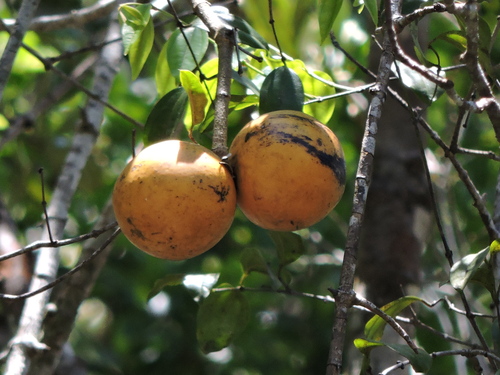
Strychnos congolana
Gilg.
Description
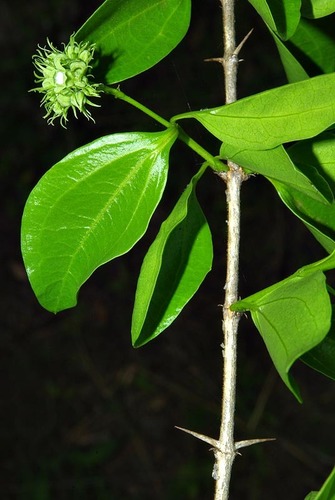
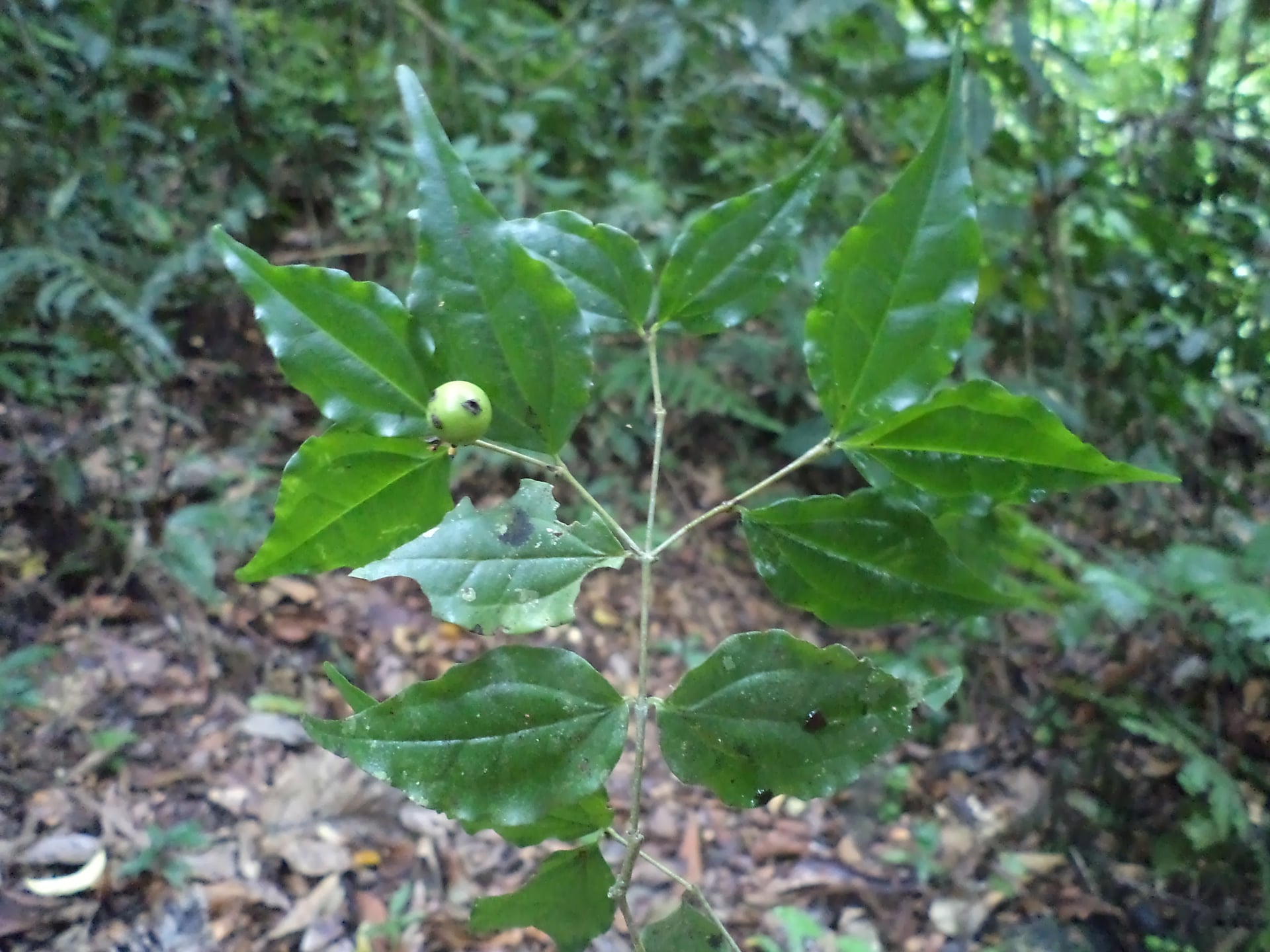
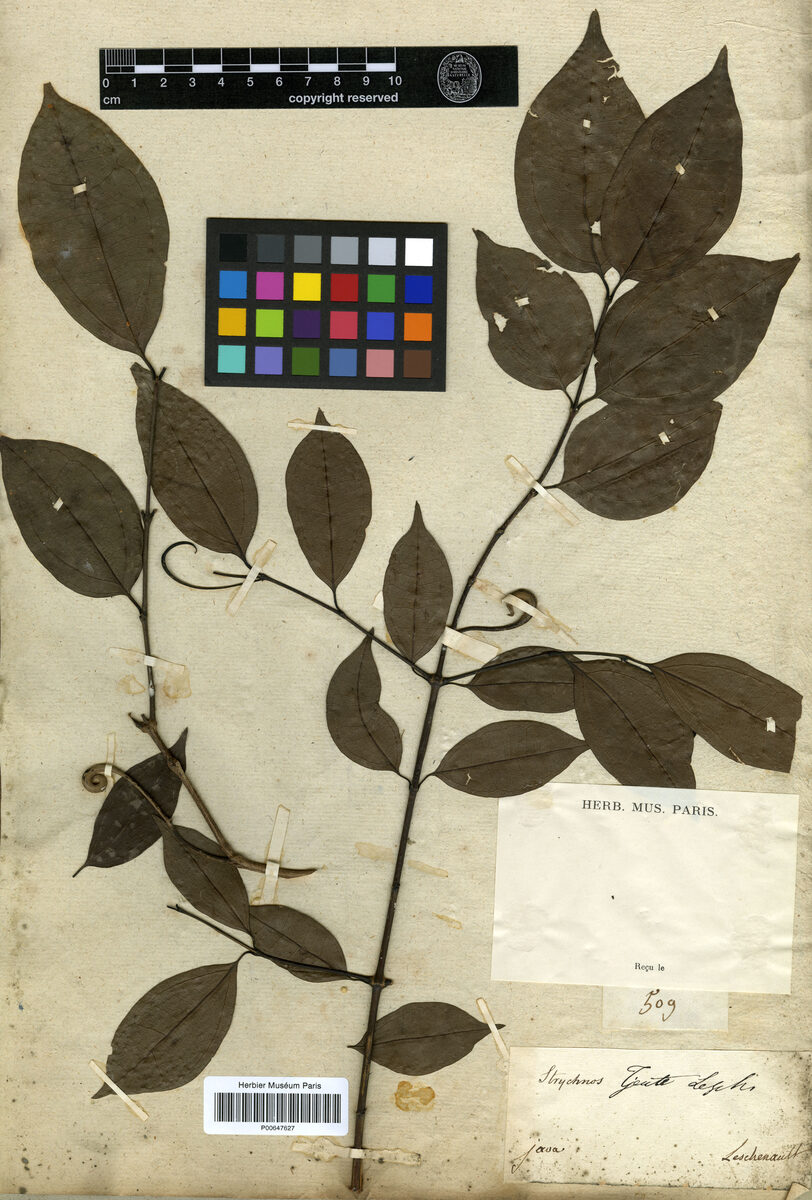
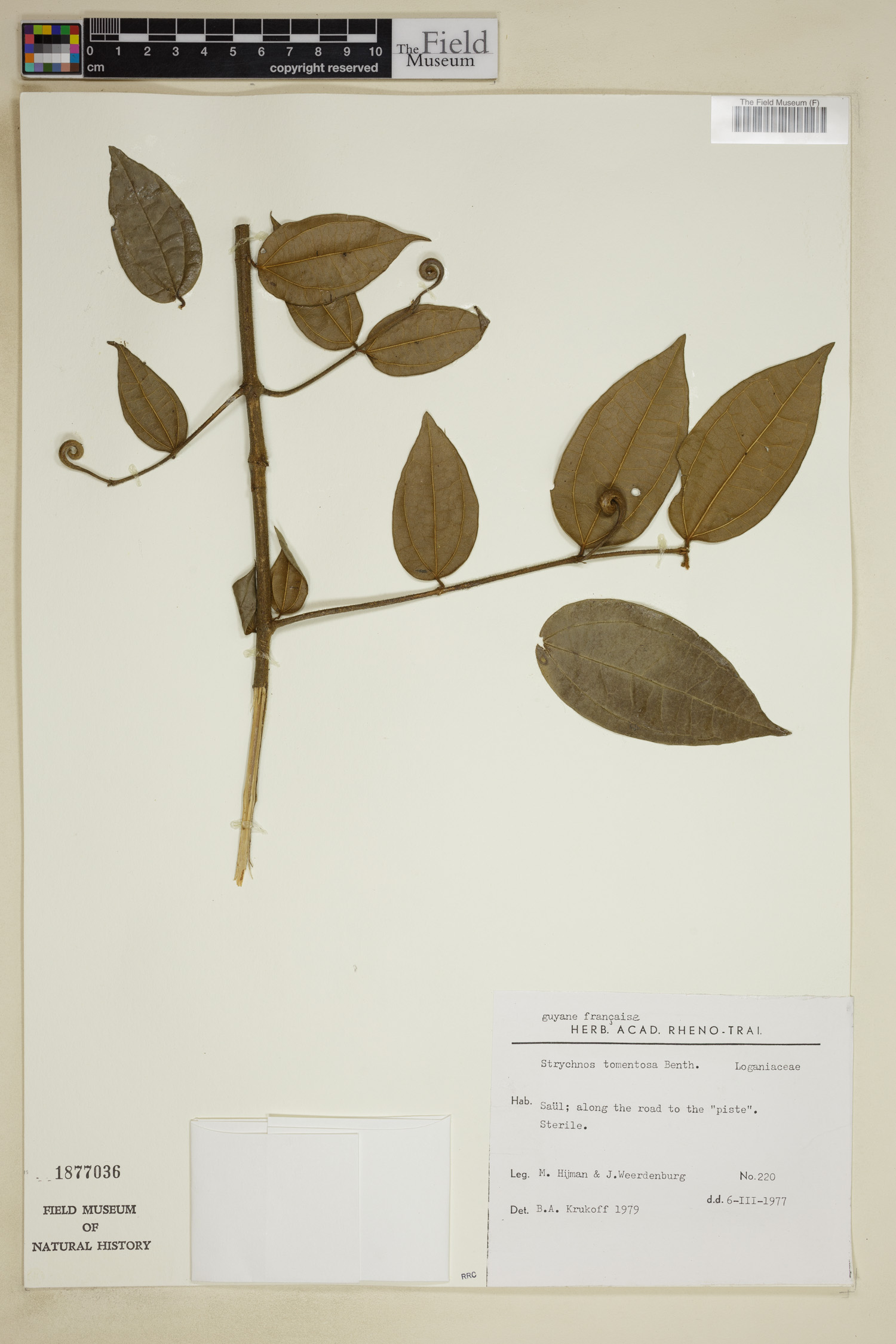
A woody creeper or climber. It grows 20-30 m long. The stem can be 3-10 cm across.
This description is brief — help expand it
Edible Uses
The fruit is edible.
Medicinal Uses
The leaves are pulped and applied topically as a poultice to treat venomous stings, snakebites etc. The dried and powdered roots, combined with the seeds of Aframomum melegueta, are made into a paste and administered as a suppository to treat dysmenorrhoea. The paste is also used as an aphrodisiac.
Known Hazards
Various parts of Strychnos plants, especially the seeds and bark, contain toxic alkaloids such as strychnine and brucine. The fleshy pulp of the ripe fruits, however, is often edible.
Distribution
It is a tropical plant. It grows in closed forest and secondary jungle. It can be along river banks and on the edges of mangroves.
Where It Grows
Africa, Burkina Faso, Central Africa, Congo, Côte d'Ivoire, East Africa, Guinea, Guinée, Guinea-Bissau, Ivory Coast, Nigeria, Sierra Leone, West Africa,
Synonyms
Also Known As
Anoatigna, Uss predj
References (2)
- Burkill, H. M., 1985, The useful plants of west tropical Africa, Vol. 3. Kew.
- World Checklist of Useful Plant Species 2020. Royal Botanic Gardens, Kew