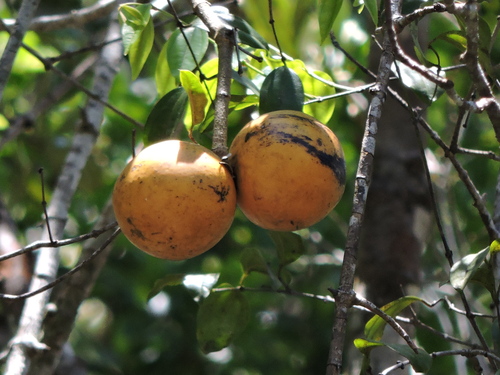
Strychnos icaja
Baill.
Wikipedia· cc-by-sa
Wikimedia Commons - Strychnos_unguacha_40342.jpg
Summary
Source: WikipediaStrychnos icaja is a species belonging to the plant family Loganiaceae, native to West Tropical Africa. It is a very large, tropical rainforest liana which may attain a length of 100 m (330 ft).
Description
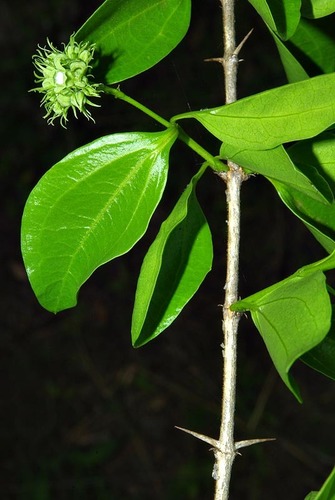
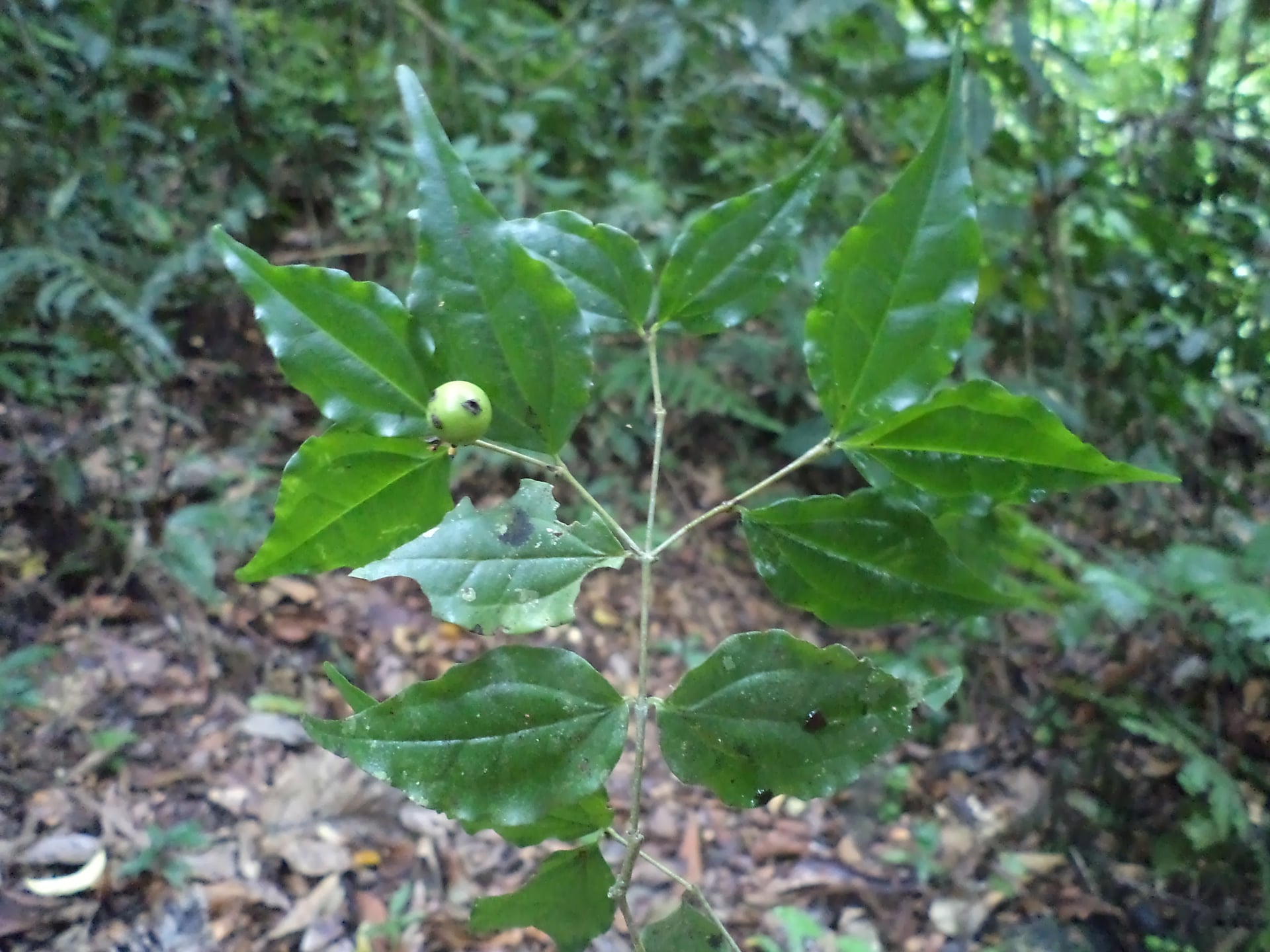
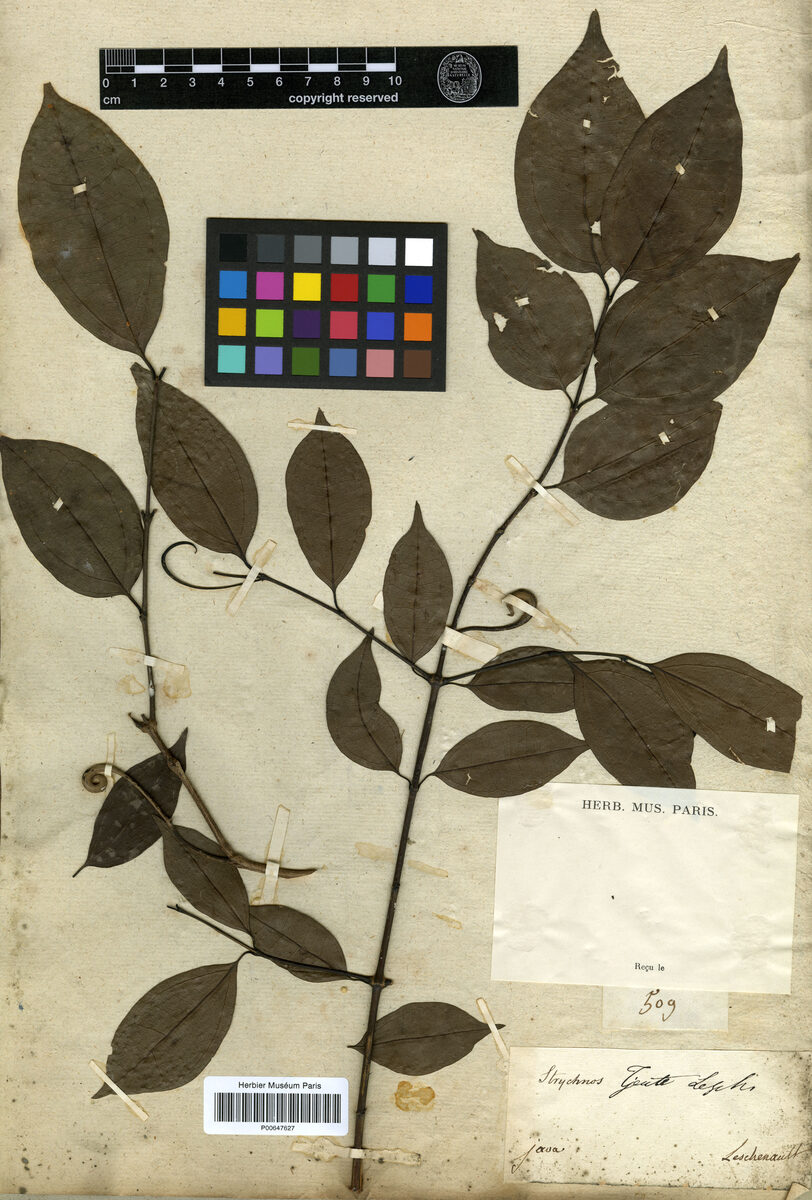
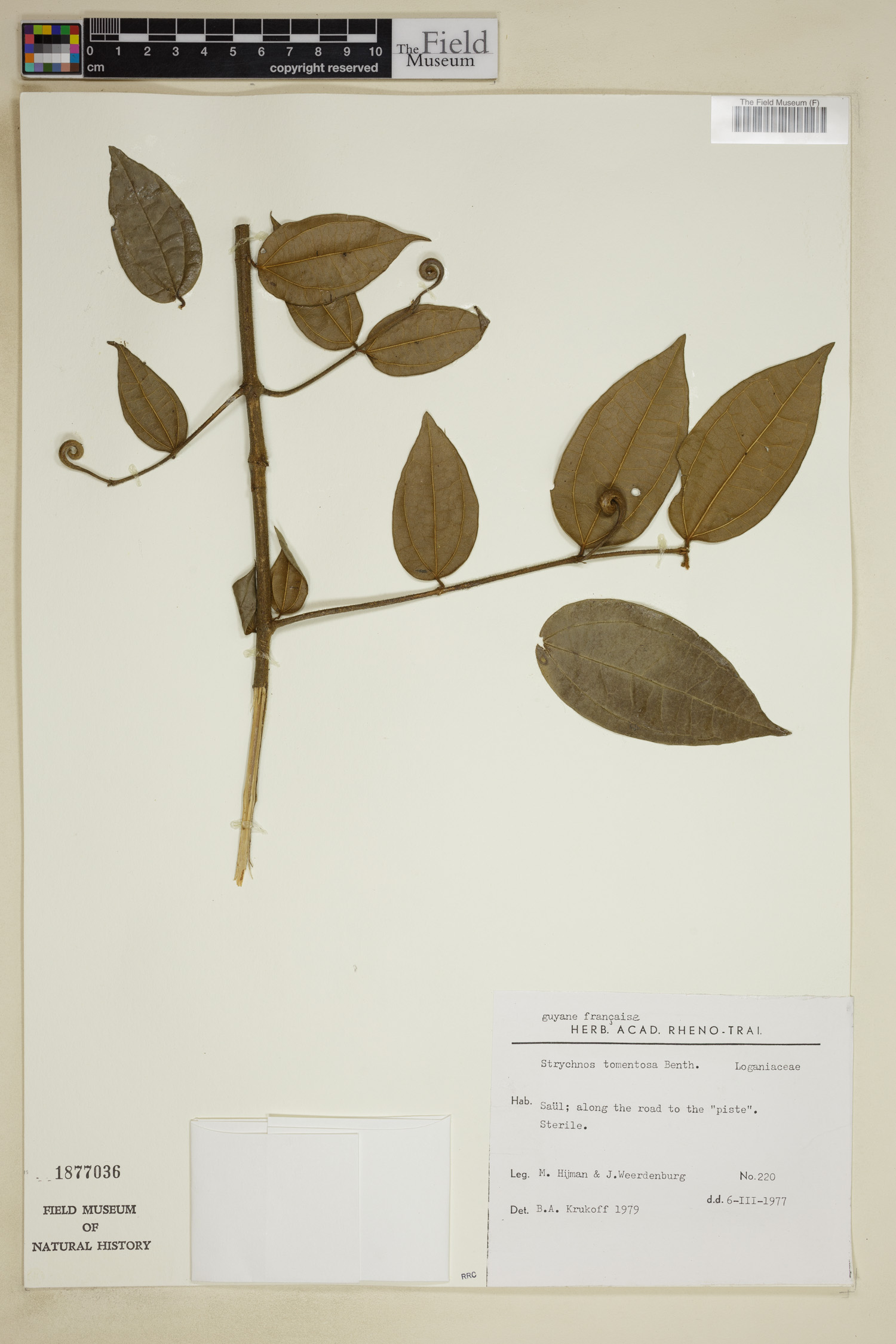
A stout creeper or climbing shrub. The branches can be 100 m long and 15 cm across. They can climbing into trees. The small branches have single tendrils. The flowers are small and on open groups in the axils of leaves. The fruit are round.
Edible Uses
The pulp of the ripe fruit is eaten raw. The dark yellow, globose fruit is around 25 - 30mm in diameter, containing a single seed.
Traditional Uses
CAUTION: Many Loganiaceae are very poisonous. The fruit are possibly only used as medicine.
This uses section is brief — help expand it
Medicinal Uses
Strychnos icaja is used in traditional medicine; however, because of its toxicity the plant is usually only administered under the supervision of a traditional medicine man. In Ghana, an alcoholic extract of stem bark is taken for haemorrhoids. In the Central African Republic, the body is rubbed with a root bark maceration as a snake repellent. A very small dose of a maceration of the root bark is taken as an abortifacient and as an anthelmintic. In Gabon, a root decoction is taken as a diuretic or as an intoxicating drink. In Congo, a cold infusion of the root in palm wine is taken for gastrointestinal complaints and hernia. In the Democratic Republic of Congo, a preparation of the ground root bark mixed with palm oil is applied for skin diseases and itch. The ash of burnt twigs or roots is rubbed into scarifications of the forehead to treat insanity and malaria. A maceration of ground roots is used as an enema to treat sterility.
Known Hazards
The earliest reliable account of the use of the plant as both poison and entheogen is to be found in a short paper by Aubry-Lecomte of 1864, predating the publication of its scientific name by 15 years. The relevant passage runs as follows: Monsieur Duchaillu has already spoken ( in a work well-received by those who have travelled in the interior of Gabon - despite its measure of exaggeration) of the effects of the poison M'boundou; the notes and specimens lately brought back from that country by Monsieur Griffon du Bellay, naval surgeon first class, confirm, on the whole, the description given by this traveller [Duchaillu]. The plant M'boundou belongs to the genus Strychnos of the family Loganiaceae, and the infusion of the reddish bark of its root is held by the natives of Cape Lopez to confer (upon him who does not die after having drunk it) the power of divination. Taken in small doses, it is said to be intoxicating and diuretic; but at a dose of half a bowl of grated root infused for half an hour in a bowl of water, it almost always proves lethal. However, the Ogangas (native healers) are considered to be immune to its effects; although they take care, it is true, to gulp down palm oil before drinking M'boundou , which attenuates the violence of the poison and facilitates its excretion via the urinary ducts; it is doubtless from accounts of this precaution that there derives the assertion of Monsieur Duchaillu that the surest sign that one undergoing the ordeal will survive it, is a frequent and involuntary passing of urine. The M'boundou of Cape Lopez is known in Gabon under the name of casa or icaja; but since the French occupation, it [the poison] is no longer administered to natives suspected of a crime, save in the most remote settlements and in the depths of the forests, where our authority can have no influence.[Translated from the original French] Chevalier's 1951 account of the use of S. icaja in the forests of the Ubangi River (Oubangui River) region provides additional information concerning the harvesting of the plant and an antidote employed in cases of poisoning by it: The most famous ordeal poison of the dense forest is the Loganiaceous liana known to science as Strychnos icaja Baillon. It is found in the dense forests of the Oubangui (Lobaye basin) but is absent from the gallery forests and savannas of the region. Everything which we have related concerning the use of this plant in Gabon applies equally in Oubangui...It is above all young plants 1-2 m in height by 1-2 cm in diameter at the base which are used, the bark stripped from the stem a few cm above the juncture of stem and root and 10 cm of the root below it being macerated to be used as an ordeal poison or criminal poison. The [emetic] plant Kopi (Tetrorchidium didymostemon (Baill.) Pax & K. Hoffm., family Euphorbiaceae) serves as an antidote.[Translated from the original French] The plant has been used in divination and to prepare ordeal poisons and arrow poisons. Throughout Central Africa, a root or root bark infusion, or more rarely a stem bark extract, has been used as ordeal poison. Often roots of young plants were used, which seem to have a lower toxicity than those of mature plants. The root bark is an ingredient in arrow poison. In Côte d'Ivoire, Nigeria, and the Democratic Republic of Congo, whole plants, root bark, and fruits are used as a fish poison.
Distribution
A tropical plant.
Where It Grows
Africa, Angola, Central Africa, Central African Republic, CAR, Congo DR, Guinea, Guinée, Nigeria, West Africa,
Cultivation
Plants can grow from seeds or suckers.
Propagation
Seed - Suckers.
Synonyms
References (2)
- Jardin, C., 1970, List of Foods Used In Africa, FAO Nutrition Information Document Series No 2.p 163 (As Strychnos dewevrei)
- World Checklist of Useful Plant Species 2020. Royal Botanic Gardens, Kew