Brosimum alicastrum
Swartz
Maya breadnut
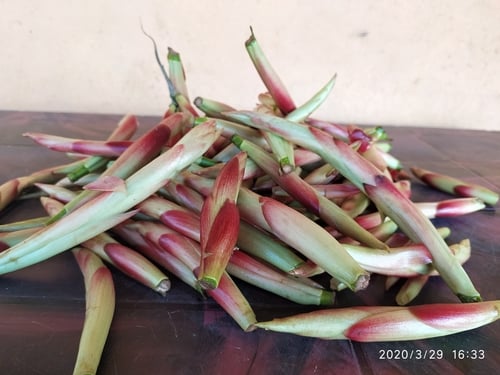
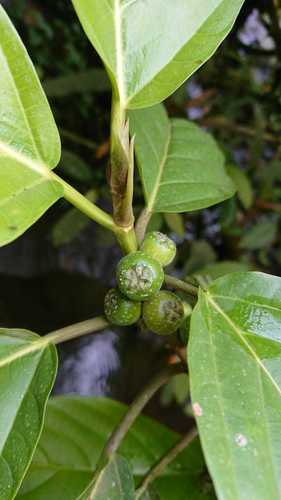
iNaturalist· cc-by-nc
(c) Silvano LG, some rights reserved (CC BY-NC), uploaded by Silvano LG
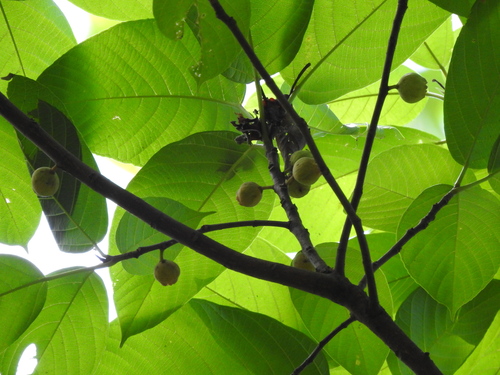
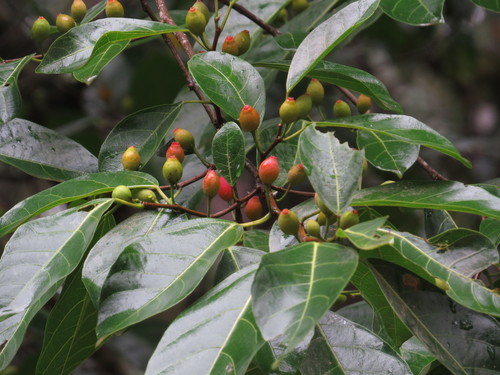
iNaturalist· cc-by-nc
(c) timendez, some rights reserved (CC BY-NC), uploaded by timendez
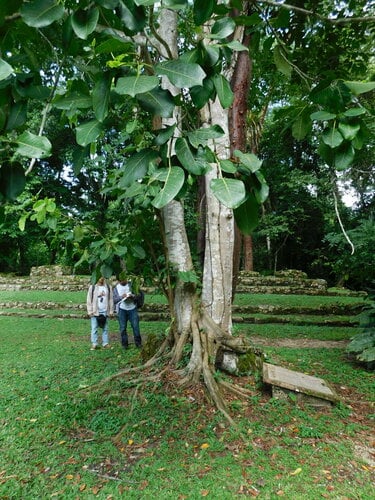
iNaturalist· cc-by-nc
(c) Miguel Vásquez Bolaños, some rights reserved (CC BY-NC), uploaded by Miguel Vásquez Bolaños
Summary
Source: WikipediaBrosimum alicastrum, commonly known as breadnut, Maya nut or ramon, and many others, is a tree species in the family Moraceae of flowering plants, whose other genera include figs and mulberries. Two subspecies are commonly recognized: B. a. alicastrum B. a. bolivarense (Pittier) C.C.Berg
Description
A large evergreen tree. It grows to 25-30 m high. It has a dense wide crown of leaves. It has narrow buttresses. The bark is grey. The leaves are simple and dark green. They are 17 cm long by 6 cm wide. There can be teeth along the edge and often the edge is wavy. The flowers are in a round head. Most are male with a female flowers in the centre. The fruit is small, round and golden orange. The tree has small roundish yellow or brown seeds about 2 cm across. They occur singly or sometimes two in a thin paper-like shell. It has a smooth but granular surface.
Edible Uses
Edible Parts: Fruit Seed Edible Uses: Coffee Drink Gum Milk Seed - raw or cooked. The raw seed has some bitterness, whilst the roasted seed develops a nutty, cacao-like flavour. An agreeable and nourishing food with a flavour similar to hazel nuts. The seed can also be boiled and mashed like potatoes, or made into juice and marmalade. The ground up seeds can be made into a mash to mix with corn when making tortillas. When steeped in water, the seeds make a coffee-like beverage. The seed is the size of a small chestnut. The seed is produced inside a yellow fruit about 25mm in diameter - each fruit contains one seed. The yellow or orange fruit has a sweet, thin edible flesh surrounding the large seed. A sweet, agreeable flavour. The globose fruit is 15 - 20mm in diameter. The milky latex, which flows freely when the trunk is cut, resembles cream and when diluted with water is said to afford a substitute for cow's milk. The latex is also mixed with chicle.
Traditional Uses
The chestnut like seeds are eaten but only after cooking by roasting or boiling. They are also ground and mixed with corn in tortillas. They are made into a drink with milk and sugar. The seeds are also used for a coffee like drink. The latex from the tree is used as a drink. The young shoots and leaves are edible. The fruit are also ground and then made into flat bread. They are also boiled and eaten with fish.
Medicinal Uses
Antitussive Mouthwash There is a belief in Yucatan that if the seeds are eaten by nursing women the flow of milk is increased. The latex is mixed with water, warmed and drunk as a treatment for dry coughs and for itchy sore throat. The latex is applied directly on sores in the mouth and other parts of the body for healing.
Distribution
A tropical plant. It is native to Central America. It is suited to tropical lowland areas. It is best in a humid climate with a seasonal dry period. It is drought resistant. It can grow on shallow limestone soils. It can tolerate occasional flooding. In Costa Rica it grows to 1,000 m altitude.
Where It Grows
Amazon, Asia, Belize, Bolivia, Brazil, Caribbean, Central America*, Colombia, Costa Rica, Cuba, Ecuador, El Salvador, Guatemala, Guiana, Guianas, Guyana, Honduras, Jamaica, Mexico, Nicaragua, North America*, Pacific, Panama, Papua New Guinea, PNG, Peru, South America*, Sri Lanka, Suriname, Trinidad & Tobago, USA, Venezuela, West Indies,
Cultivation
The plant grows naturally lowland areas of hot, humid, tropical climates with a seasonal dry period. It grows best in areas where annual daytime temperatures are within the range 18 - 25c, but can tolerate 12 - 35c. When established, it can tolerate occasional, short-lived, light frosts. It prefers a mean annual rainfall in the range 600 - 4,000mm, but tolerates 500 - 5,000mm. Of easy culture, it grows best in a humus-rich, fertile, moisture-retentive soil in full sun or light shade. Very tolerant of shallow, calcareous soils. Established plants are very drought tolerant and also tolerate seasonal flooding. Plants can escape from cultivation and become weedy in some tropical areas. Trees can commence producing fruit in 5 - 6 years from seed. Plants flower intermittently throughout the year and can produce two or three harvests.
Propagation
Seed - best sown as soon as it is ripe. Greenwood cuttings.
Other Uses
Fodder Furniture Gum Latex Shelterbelt Wood Design: An imposing tree with broad, dense, deep green crown and narrow buttresses trunk; good for: Large shade tree. Street Tree. Public open space. Xerophytic. Bee nectar. A good forage plant for domestic animals. Leaves and branches cut for fodder for horses and mules. Often the only fodder available during the dry season. Agroforestry Uses: The tree provides good shade and reduces the impact of strong winds. Other Uses: A latex is obtained from the stems. It is sometimes mixed with chicle to make chewing gum. The heartwood is a yellowish to dark brown, tinged with red around knots and other defects; the thick band of sapwood is yellowish to nearly white. The texture is fine to medium; grain is straight to irregular and shallowly interlocked; luster is low; without distinctive odour or taste. The wood is hard, heavy, very strong, tough, not very durable, being particularly vulnerable to insect attack. Because of its high density and silica content, the wood requires appropriate tools, when it becomes easy to moderately difficult to work, taking a good polish. It is used for general construction,carpentry, flooring, furniture, cabinet making etc. Special Uses Carbon Farming Coppice Food Forest
Production
A fast growing tree. It produces fruit is 5-6 years. There are 2 or 3 fruiting periods during the year.
Other Information
A South American tree established in the Lae Botanical Gardens in Papua New Guinea. It is not known if it is used for food in Papua New Guinea.
Notes
There are 6 Brosimum species in Costa Rica.
Nutrition
| Part | Moisture | kJ | kcal | Protein | Vit A | Vit C | Iron | Zinc |
|---|---|---|---|---|---|---|---|---|
| Seed | 45 | 908 | 217 | 6 | 25 | 27.4 | 2.09 | 1.13 |
| Fruit | 0 | — | — | 9.3 | — | — | — | — |
| Leaves | — | — | — | — | — | — | — | — |
| Sap | — | — | — | — | — | — | — | — |
Synonyms
Also Known As
A-agi, Apoma, Apomo, Ash, Ax, Berba, Bere, Breadnut, Bread nut, Cacique, Campo, Capomo, Capono, Charo, Charo macho, Congona, Guaimaro, Hairi, Hichoso, Huje, Huji, Janita, Laredo, Lechoso, Manchinga, Maseco, Masica, Masicaran, Masico, Moho, Mojo, Mojote, Muiratinga, Nazareno, Nuez de pan, Ocoxiltli, Ojite, Ojoche, Ojuxte, Osh, Oxitle, Palo leche, Pisma, Ramon, Ramon tree, Samaritano, Sande, Snakewood, Talcoite, Tillo, Tsakaya, Ujushte, Ujuxte
References (43)
- Barwick, M., 2004, Tropical and Subtropical Trees. A Worldwide Encyclopedic Guide. Thames and Hudson p 60
- Bircher, A. G. & Bircher, W. H., 2000, Encyclopedia of Fruit Trees and Edible Flowering Plants in Egypt and the Subtropics. AUC Press. p 67
- Brechu-Franco, A. E., et al, 2021, Morphology, structure, and histochemistry of the inflorescences, fruit, and seed of the Ramón nut, Brosimum alicastrum Sw. subsp. alicastrum CC Berg (Moraceae). Brazilian Journal of Botany. Springer.
- Burkill, I.H., 1966, A Dictionary of the Economic Products of the Malay Peninsula. Ministry of Agriculture and Cooperatives, Kuala Lumpur, Malaysia. Vol 1 (A-H) p 372
- Chizmar Fernandez, C., et al, 2009, Plantas comestibles de Centroamerica. Instituto de Biodiversidad, Costa Rica. p 237
Show all 43 references Hide references
- Condit, R., et al, 2011, Trees of Panama and Costa Rica. Princeton Field Guides. p 322
- D'Ambrosio, U., & Puri, R. K., 2016, Foodways in transition: food plants, diet and local perceptions of change in a Costa Rican Ngäbe community. Journal of Ethnobiology and Ethnomedicine (2016) 12:3 p 26
- Facciola, S., 1998, Cornucopia 2: a Source Book of Edible Plants. Kampong Publications, p 154
- FAO, 1993, Valor Nutritivo Y Usis en Alimantacion humana de Algunis Cultivos Autoctonos Subexplotados de Mesoamerica. FAO, Santiago, Chile. p 32
- FAO, 2012, Forest Genetic Resources Situation in Mexico. Final Report of Project TCP/ 3301 p 286
- French, B.R., 1986, Food Plants of Papua New Guinea, A Compendium. Asia Pacific Science Foundation p 186
- Grandtner, M. M. & Chevrette, J., 2013, Dictionary of Trees, Volume 2: South America: Nomenclature, Taxonomy and Ecology. Academic Press p 72
- Hedrick, U.P., 1919, (Ed.), Sturtevant's edible plants of the world. p 137
- Hermandez Bermejo, J.E., and Leon, J. (Eds.), 1994, Neglected Crops. 1492 from a different perspective. FAO Plant Production and Protection Series No 26. FAO, Rome. p16
- Ibarra-Manriquez, G., et al, 1997, Useful Plants of the Los Tuxtlas Rain Forest (Veracruz, Mexico): Considerations of their Market Potential. Economic Botany, Vol. 51, No. 4, pp. 362-376
- Kiple, K.F. & Ornelas, K.C., (eds), 2000, The Cambridge World History of Food. CUP p 1737
- Lentz, D. L., 1993, Medicinal and Other Economic Plants of the Paya of Honduras. Economic Botany, Vol. 47, No. 4, pp. 358-370
- Lopez-Diago, D. & Garcia, N., 2021, Wild edible fruits of Colombia. Biota ColomBiana 22 (2) p 43
- Mapes, C. & Basurto, F., 2016, Biodiversity and Edible Plants of Mexico. Chapter 5 in R. Lira, et al. (eds.), Ethnobotany of Mexico, Ethnobiology, Springer. p 93
- Martin, F.W. & Ruberte, R.M., 1979, Edible Leaves of the Tropics. Antillian College Press, Mayaguez, Puerto Rico. p 205
- Martin, F. W., et al, 1987, Perennial Edible Fruits of the Tropics. USDA Handbook 642 p 37
- Meerman, J. C., 1993, Provisional Annonated Checklist of the Flora of the Shipstern Nature Reserve. Occasional Papers of The Belizean Natural History. Vol.2, Nos. 1-11 p 29
- Menninger, E.A., 1977, Edible Nuts of the World. Horticultural Books. Florida p 74
- Miguel, E., et al, 1989, A checklist of the cultivated plants of Cuba. Kulturpflanze 37. 1989, 211-357
- Mutchnick, P. A. and McCarthy, B. C., 1997, An Ethnobotanical Analysis of the Tree Species Common to the Subtropical Moist Forests of the Peten, Guatemala. Economic Botany, Vol. 51, No. 2, pp. 158-183
- Philips, O., 1992, The potential for harvesting fruits in tropical rainforests: new data from Amazonian Peru. Biodiversity and Conservation 2, 18-38
- Piedra-Malagón, E. M., et al, 2022, Edible native plants of the Gulf of Mexico Province. Biodiversity Data Journal 10: e80565 p 25
- Prodr. 12. 1788
- Purseglove, J.W., 1968, Tropical Crops Dicotyledons, Longmans. p 377
- Roa, J. A. G. & Boada, D. S. G., 2018, Fundación para el Fortalecimiento de la Fruticultura y Plantas Alimenticias no Convencionales en Colombia.
- Segura, S., et al, 2018, The edible fruit species in Mexico. Genet Resour Crop Evol (2018) 65:1767–1793
- Smith, N., Mori, S.A., et al, 2004, Flowering Plants of the Neotropics. Princeton. p 256
- Standley, P. C. & Record, S. J., 1936, The Forests and Flora of British Honduras. (Belize). p 110
- Terra, G.J.A., 1973, Tropical Vegetables. Communication 54e Royal Tropical Institute, Amsterdam, p 33
- Torre, de la, L., et al, 2008, Enciclopedia de las Plantas Útiles del Ecuador. Herbario QCA. Pontificia Universidad Católica del Ecuador. p 446
- Turreira-Garcia, N., et al, 2015, Wild edible plant knowledge, distribution and transmission: a case study of the Achi Mayans of Guatemala. Journal of Ethnobiology and Ethnomedicine. 11:52
- USDA, ARS, National Genetic Resources Program. Germplasm Resources Information Network - (GRIN). [Online Database] National Germplasm Resources Laboratory, Beltsville, Maryland. Available: www.ars-grin.gov/cgi-bin/npgs/html/econ.pl (10 April 2000)
- van Roosmalen, M.G.M., 1985, Fruits of the Guianan Flora. Utrecht Univ. & Wageningen Univ. p 297 (Subsp. bolivarense)
- Wickens, G.E., 1995, Edible Nuts. FAO Non-wood forest products. FAO, Rome. p144
- Wiersema, J. H. & Leon, B., 2013, World Economic Plants. A Standard Reference CRC Press. 2nd Ed. p 120
- World Checklist of Useful Plant Species 2020. Royal Botanic Gardens, Kew
- www.worldagroforestrycentre.org/treedb/
- Zuchowski W., 2007, Tropical Plants of Costa Rica. A Zona Tropical Publication, Comstock Publishing. p 276