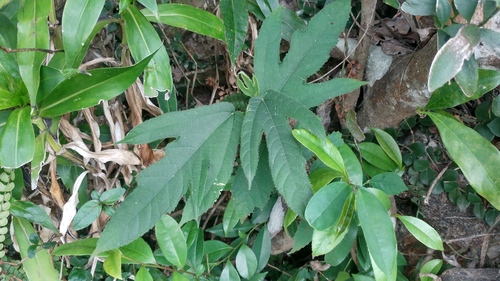
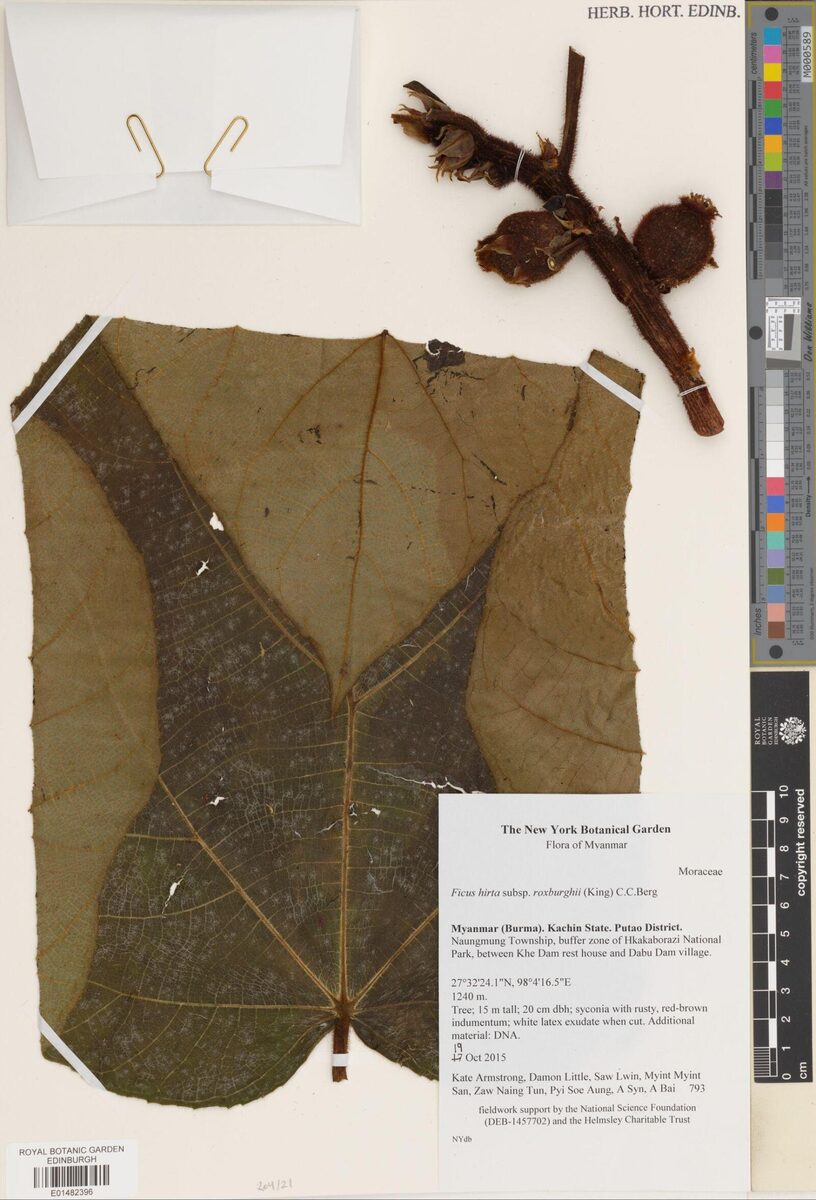
Brosimum guianense
(Aubl.) Huber
Bere, Leopard-wood, Snakewood
iNaturalist· cc-by
(c) Eduardo Chacón Madrigal, some rights reserved (CC BY), uploaded by Eduardo Chacón Madrigal
iNaturalist· cc-by-nc
(c) Robin Heymans, some rights reserved (CC BY-NC), uploaded by Robin Heymans
iNaturalist· cc-by-nc
(c) Marvin López M., some rights reserved (CC BY-NC), uploaded by Marvin López M.
Summary
Source: WikipediaBrosimum guianense, called snakewood, letterwood, leopardwood, and amourette, is a species of flowering plant in the genus Brosimum, native to southern Mexico, Central America, Trinidad, and tropical South America. A tree reaching 40 m (130 ft), its heartwood can command a price of $30 per kg.
Description
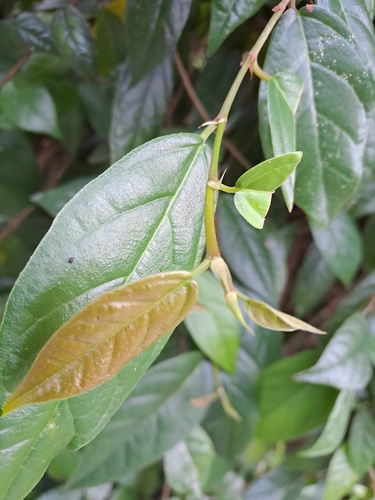
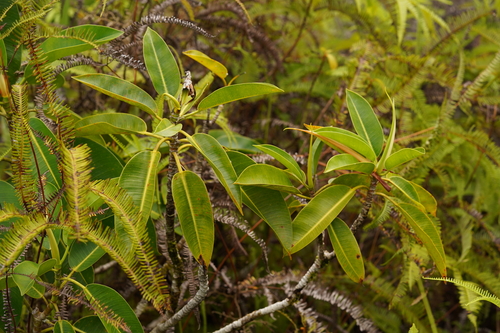
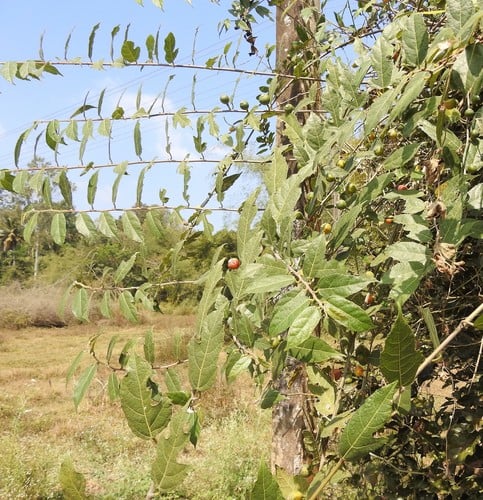
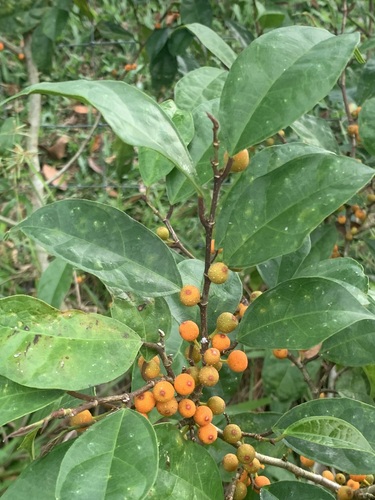
A tall tree. It grows 30 m tall. The trunk is 85 cm across. It has large buttresses. The small branches have round scars where the stipules fell off. The leaves are simple and alternate. They are 5-9 cm long by 2-6 cm wide. They have a pointed tip. The leaves are dark green above and paler underneath. The veins are yellow underneath. Broken leaves and twigs drip white latex. The flowers are yellow on small disk shaped heads.
Edible Uses
Edible Parts: Fruit Edible Uses: Edible portion: Fruit. The fruit pulp is eaten raw.
Traditional Uses
The fruit pulp is eaten raw.
This uses section is brief — help expand it
Medicinal Uses
Analgesic Anthelmintic Antiasthmatic Bitter The macerated bark is warmed and used as an analgesic. The latex is anthelmintic, bitter and caustic. It is mixed with dairy milk and then drunk as a remedy for internal ulcers. It is drunk as a treatment for asthma and colds.
Distribution
It is a tropical plant. It grows in the lowland wet forest.
Where It Grows
Amazon, Belize, Bolivia, Brazil, Central America, Colombia, Costa Rica, Ecuador, French Guiana, Guatemala, Guianas, Guyana, Honduras, Mexico, Nicaragua, North America, Panama, Peru, South America, Suriname, Venezuela,
Cultivation
A plant of the lowland tropics, where it is found in dry to very humid regions. Succeeds in a sunny to semi-shaded position. Plants are at least somewhat drought resistant. Young plants normally establish well and grow away quickly. Plants flower and fruit throughout the year. A monoecious species, but male and female forms need to be grown if fruit and seed is required.
Propagation
Seed - best sown as soon as it is ripe in individual pots or a nursery bed in a sunny position. Germination rates are usually above 50%, with sprouting occurring in a few weeks. Plants grow away quickly. Root cuttings.
Other Uses
Furniture Latex Wood Other uses rating: Very High (5/5). Other Uses: A thick, sticky, white latex is obtained from the bark. The plant is exploited from the wild for its wood, which is highly sought after for specialist uses. It is one of the most expensive of woods, often sold by weight. The tree is slow in forming heartwood, which is the only part used commercially. A tree of 35cm diameter may, on occasions, have only 2 - 10cm of heartwood, while a 50cm tree will ordinarily have not more than 18cm. The amount of heartwood is reported to vary according to location. Certain areas produce timber with considerable heartwood, while in other areas even large trees may not be worth felling The heartwood is dark red to reddish-brown or brown, with black markings that resemble letters or hieroglyphs - the distinctiveness of these markings is reduced as the colour of the backgrounds is darkened by exposure; it is not clearly demarcated from the light, yellow to nearly white sapwood. The texture is medium; the grain is straight; lustre medium; there is no distinctive odour or taste. The wood is extremely hard, extremely heavy, strong, very durable, resistant to dry wood termites. Because of its hardness, the wood is worked with considerable difficulty, being difficult to cut and taking nails poorly, however, it finishes smoothly and takes a beautiful polish. Because of the limited supply, small size, and high cost, the wood is best suited for speciality items that capitalize on its unusual beauty, hardness, and density. It is therefore mainly used for purposes such as inlay work, furniture, drum sticks, umbrella handles, fishing rods, fancy articles, violin bows, cabinetwork etc. Special Uses
Synonyms
Also Known As
Amourette, Azulillo, Breadnut, Coquillo, Gatea, Granadillo, Inhare-mole, Machinga, Mariabe, Mishochaqui, Muira pinima, Tamamuri, Yema de huevo.
References (16)
- Bendezu, Y. F., 2018, Arboles nativos de lad Region Ucayali. Instituto Nacional de Innovacion Agraria. p 219
- Berg, C. C. 2001. Moreae, Arocarpeae, and Dorstenia (Moraceae) with introductions to the family and Ficus and with additions and corrections to Flora Neotropica Monograph 7. In: Organization for Flora Neotropica, ed., Fl. Neotrop. Monogr. 83:235.
- Bircher, A. G. & Bircher, W. H., 2000, Encyclopedia of Fruit Trees and Edible Flowering Plants in Egypt and the Subtropics. AUC Press. p 67 (As Brosimum aubletii)
- Castaneda, H., & Stepp, J. R., 2007, Ecosystems as Sources of Useful Plants for the Guaymi People of Costa Rica. Ethnobotany Journal. 5:249-257
- Condit, R., et al, 2011, Trees of Panama and Costa Rica. Princeton Field Guides. p 322
Show all 16 references Hide references
- Etkin, N.L. (Ed.), 1994, Eating on the Wild Side, Univ. of Arizona. p 136 (As Brosimum aubletii)
- Grandtner, M. M. & Chevrette, J., 2013, Dictionary of Trees, Volume 2: South America: Nomenclature, Taxonomy and Ecology. Academic Press p 73
- Langlois, H. C., 2004, Ethnobotanical analysis of different successional stages as sources of wild edible plants for the Guaymi people in Costa Rica. M. Sc. thesis University of Florida.
- Lopez-Diago, D. & Garcia, N., 2021, Wild edible fruits of Colombia. Biota ColomBiana 22 (2) p 43
- Macbride, J. F., 1937, Flora of Peru, Part 2, No. 2. Field Museum of Natural History. Vol. 13, p 317 (As Brosimum aubletii)
- Nov. gen. sp. pl. 34, t. 148. 1838
- Philips, O., 1992, The potential for harvesting fruits in tropical rainforests: new data from Amazonian Peru. Biodiversity and Conservation 2, 18-38
- Reis, S. V. and Lipp, F. L., 1982, New Plant Sources for Drugs and Foods from the New York Botanical Garden herbarium. Harvard. p 40
- Roa, J. A. G. & Boada, D. S. G., 2018, Fundación para el Fortalecimiento de la Fruticultura y Plantas Alimenticias no Convencionales en Colombia.
- Vasquez, R. and Gentry, A. H., 1989, Use and Misuse of Forest-harvested Fruits in the Iquitos Area. Conservation Biology 3(4): 350f
- Zambrana, P, et al, 2017, Traditional knowledge hiding in plain sight – twenty-first century ethnobotany of the Chácobo in Beni, Bolivia. Journal of Ethnobiology and Ethnomedicine (2017) 13:57