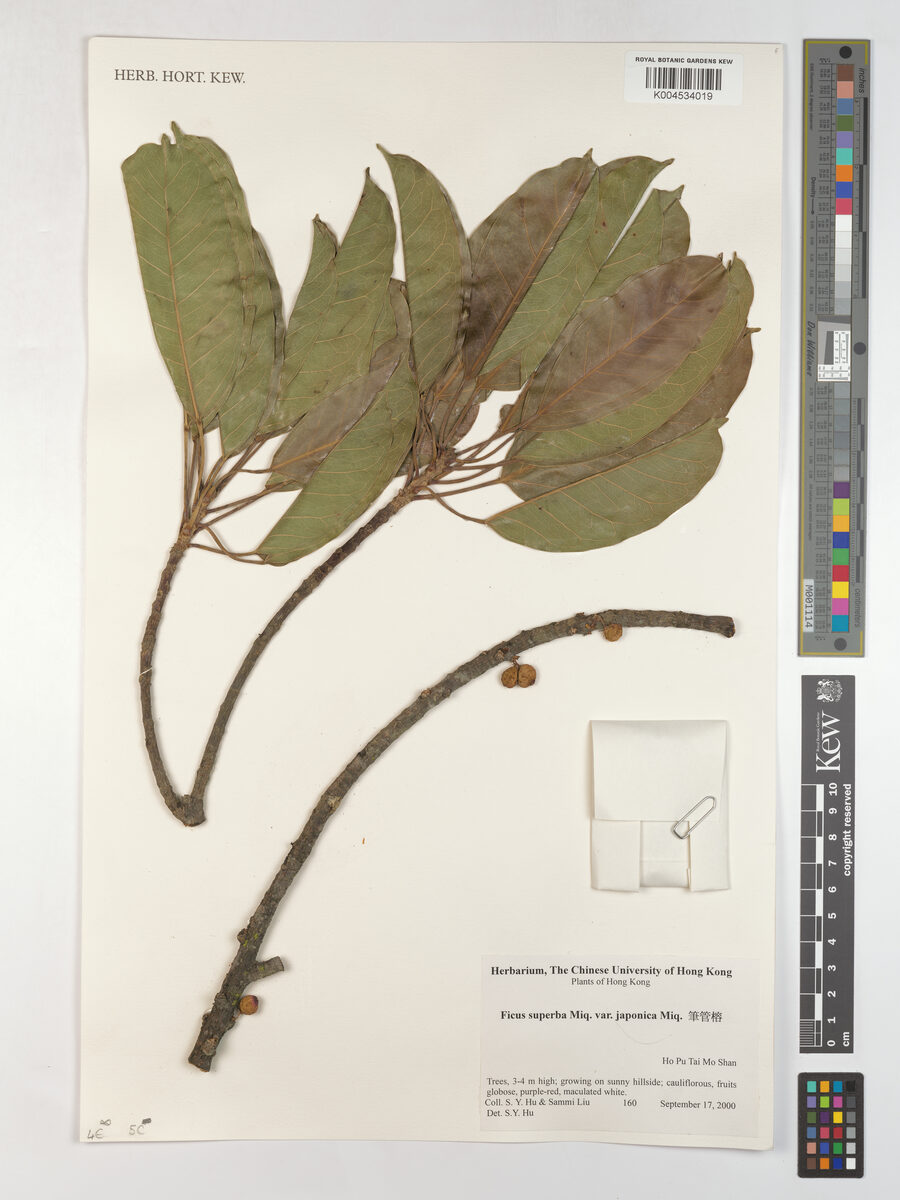
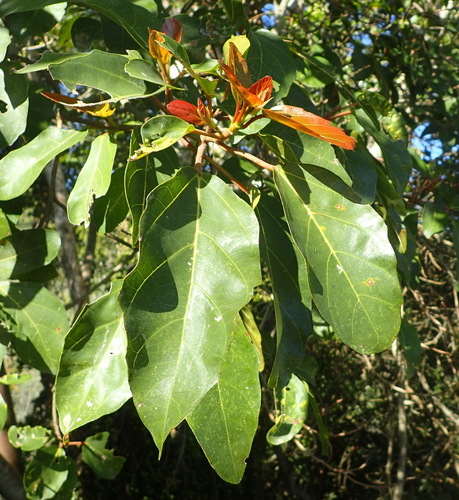
Brosimum alicastrum subsp. bolivarense
(Pittier) C. C. Berg.
Bolivar ramon breadnut tree
gbif· cc-by-nc-sa
MBG
gbif· cc-by
Royal Botanic Gardens, Kew
gbif· cc-by
Royal Botanic Gardens, Kew
Summary
Source: WikipediaBrosimum alicastrum, commonly known as breadnut, Maya nut or ramon, and many others, is a tree species in the family Moraceae of flowering plants, whose other genera include figs and mulberries. Two subspecies are commonly recognized: B. a. alicastrum B. a. bolivarense (Pittier) C.C.Berg
Description
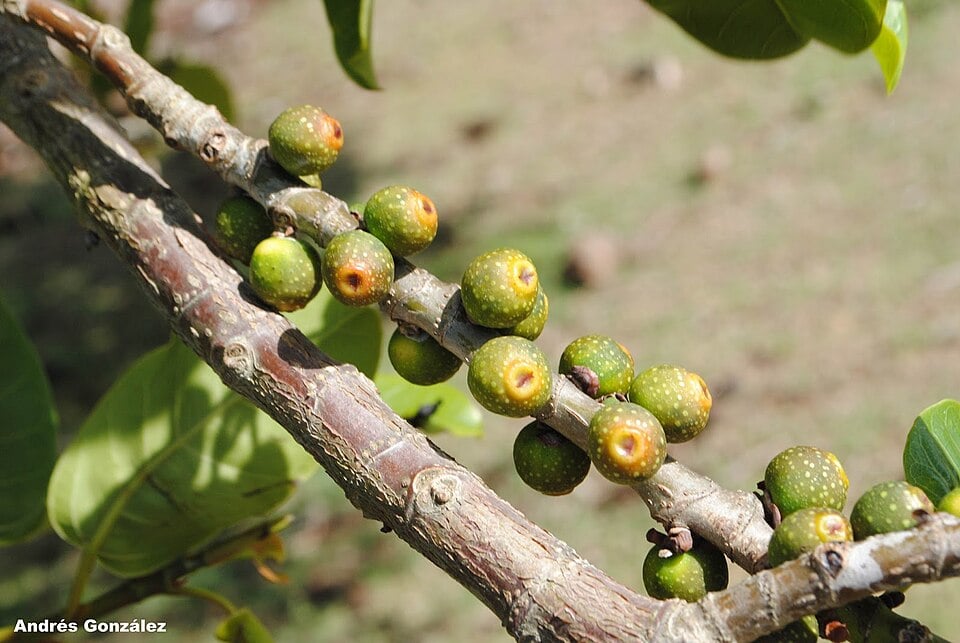
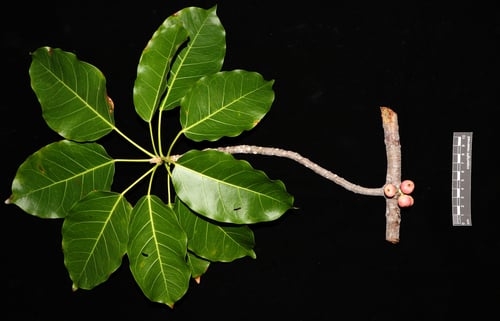
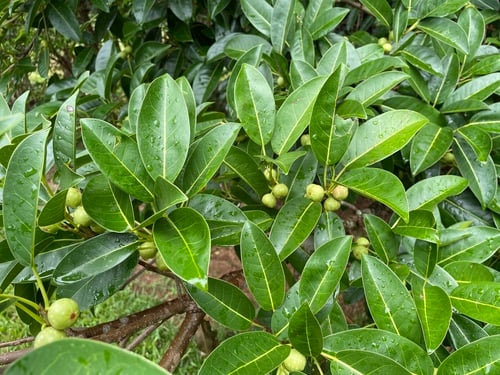
A tree. It grows 35 m tall. The small branches can have a few hairs. The leaves are narrowly oval and 4-18 cm long by 2-7 cm wide. The fruit are almost round and 1.5-2 cm across. They are yellow to orange when ripe.
Edible Uses
The Maya nut is high in fiber, calcium, potassium, iron, zinc, protein and B vitamins. It has a low glycemic index (<50) and is very high in antioxidants and prebiotic fiber. The fresh seeds can be cooked and eaten or can be set out to dry in the sun and roasted and milled into a chocolatey tasting powder. Stewed, the nut tastes like mashed potato; roasted, it tastes like chocolate or coffee. It can be prepared in numerous other dishes. In Petén, Guatemala, the breadnut is cultivated for exportation and local consumption as powder, for hot beverages, and bread. The large seed is edible and can be boiled or dried and ground into a meal for porridge or flatbread.
Distribution
It is a tropical plant.
Where It Grows
Amazon, Bolivia, Brazil, Central America, Colombia, Costa Rica, Ecuador, Guyana, Panama, Peru, South America, Suriname, Venezuela,
Synonyms
Also Known As
Berba, Chara, Charo, Congona, Guiamaro, Mondogo, Sala, Seque, Tillo, Tsakaya, Urpay manchinga
References (4)
- Bendezu, Y. F., 2018, Arboles nativos de lad Region Ucayali. Instituto Nacional de Innovacion Agraria. p 219
- Grandtner, M. M. & Chevrette, J., 2013, Dictionary of Trees, Volume 2: South America: Nomenclature, Taxonomy and Ecology. Academic Press p 72
- Reis, S. V. and Lipp, F. L., 1982, New Plant Sources for Drugs and Foods from the New York Botanical Garden herbarium. Harvard. p 40 (As Brosimum bernadetteae)
- Wiersema, J. H. & Leon, B., 2013, World Economic Plants. A Standard Reference CRC Press. 2nd Ed. p 120