Bagassa guianensis
Aubl.
Cow-wood
iNaturalist· cc-by-nc
(c) coqwallon, some rights reserved (CC BY-NC), uploaded by coqwallon
iNaturalist· cc-by-nc
(c) Nils Servientis - Bivouac Naturaliste, some rights reserved (CC BY-NC)
iNaturalist· cc-by-nc
(c) Nils Servientis - Bivouac Naturaliste, some rights reserved (CC BY-NC)
Description
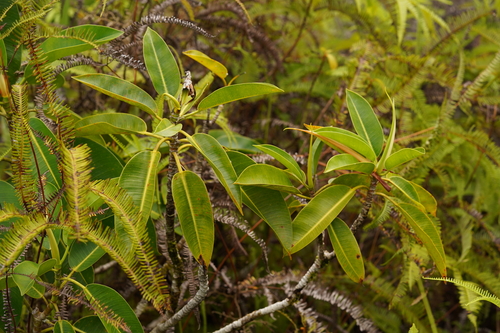
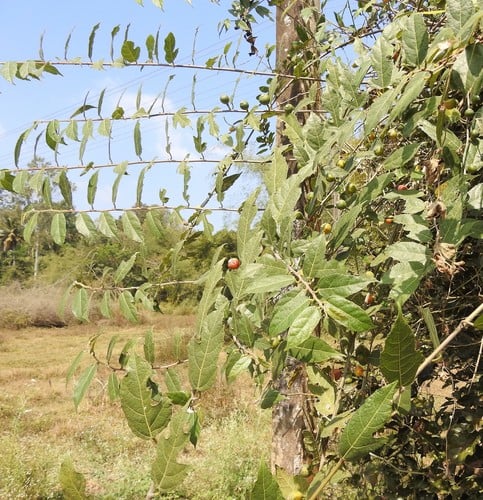
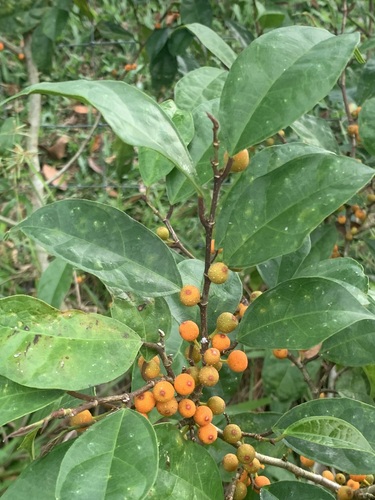
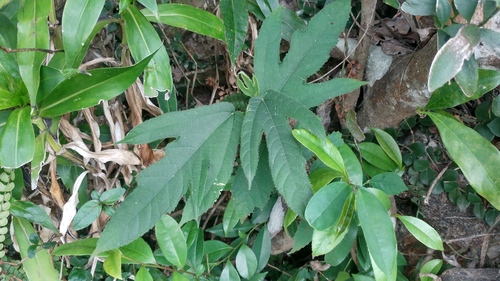
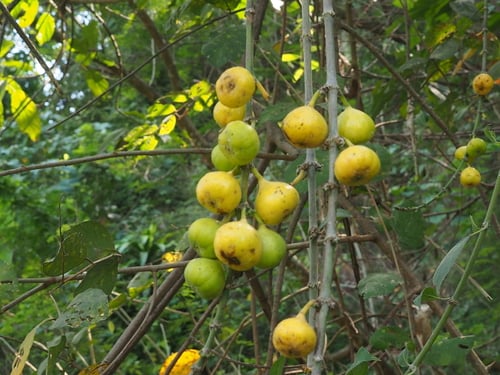
A tree. It grows 15-45 m high. The crown is sparse. The trunk is upright and 40-80 cm across. It can have thick buttresses. The bark of soft but thick and fibrous. It yields white latex when cut. The leaves are simple and opposite. They have 3 main veins. The leaves can have 3 lobes when young. The leaves are 12-18 cm long by 8-14 cm wide. The leaf stalk is 4-6 cm long. Male and female flowers are separate. The male flowers are in 5 cm long spikes and the female flowers in round heads. The female heads occur singly. The fruit is round and a compound fruit. It is 4-5 cm long by 4 cm wide. It has fleshy, sweet pulp. There are several flat seeds.
Edible Uses
Bagassa guianensis is a valuable timber species and is intensively exploited. It is used for construction, furniture, and boat-building. The infructescences are edible.
Traditional Uses
The pulp of the fruit is eaten raw. It is also used for drinks.
This uses section is brief — help expand it
Distribution
A tropical plant. It grows in the Amazon in dryland forest. In the Guianas it grows in upland and mountain forest.
Where It Grows
Amazon, Brazil, Ecuador, French Guiana, Guianas, Guyana, South America, Suriname,
Cultivation
Plants are grown from seed. Ripe fruit are put into plastic bags to soften them then the seeds removed in a sieve under running water. They are dried in the shade for 24 hours. Seed are planted fresh. Seeds germinate in a few weeks.
Propagation
Seed - best sown in a sunny position in a nursery seedbed as soon as it is ripe. A germination rate generally lower than 50% is usually achieved within a few weeks. Prick the seedlings out into individual containers once they are about 5 - 7cm tall.
Other Uses
The bark is fibrous and when cut yields large quantities of a sweet, sticky latex. The heartwood is yellow when first cut, often with darker streaks, becoming a lustrous golden brown to russet after seasoning and exposure; it is sharply demarcated from the narrow, 2 - 4cm wide band of pale yellow to yellowish white sapwood. The grain is medium to moderately coarse and usually interlocked, presenting a rather broad striped figure on the radial surface. Growth layers are indistinct. Odour and taste are not evident once seasoned. The wood is hard, heavy, elastic, very strong, very durable in resistance to both white-rot and brown-rot fungi and slightly resistant to damage by marine borers. It seasons somewhat slowly, with a high risk of distortion and slight risk of checking. Once dry it is stable in service. It is easy to saw; difficult to split radially; it takes a high lustrous finish and holds its place well after manufacture. It lends itself well to natural bends for boat and ship members. However, the wood is similar to hickory in hardness and requires more energy to machine than less dense woods. The wood is used locally for general building purposes, heavy construction, carpentry, furniture, an marine and boat construction. It is probably suitable for insulator pins, planking, decking and framing in boatbuilding, and for furniture and cabinetwork. Because of its high resilience, it may also be suitable for some types of sporting equipment.
Production
Plants grow quickly.
Other Information
It is cultivated.
Synonyms
Also Known As
Amaparana, Bacasse, Bagaceira, Bagassa, Bagasse, Bakassa, Gagasse, Garrote, Gele bagasse, Kaw-oedoe, Moral, Odon, Odou, Pakasa, Tatajuba, Tatajuva, Yawa hedan, Yawahu dan
References (11)
- Bircher, A. G. & Bircher, W. H., 2000, Encyclopedia of Fruit Trees and Edible Flowering Plants in Egypt and the Subtropics. AUC Press. p 52
- Cavalcante, P.B. 1991. Frutas comestíveis da Amazônia. Edições CEJUP.
- Fouqué, A. 1972. Espèces fruitières d'Amérique tropicale. Institut français de recherches fruitierès outre-mer (As Bagassa tilaeifolia)
- Grandtner, M. M. & Chevrette, J., 2013, Dictionary of Trees, Volume 2: South America: Nomenclature, Taxonomy and Ecology. Academic Press p 57
- Hedrick, U.P., 1919, (Ed.), Sturtevant's edible plants of the world. p 90
Show all 11 references Hide references
- Hist. pl. Guiane. suppl. 15: t. 376. 1775
- Lorenzi, H., 2002, Brazilian Trees. A Guide to the Identification and Cultivation of Brazilian Native Trees. Vol. 02 Nova Odessa, SP, Instituto Plantarum p 251
- Paz, F. S., et al, 2021, Edible Fruit Plant Species in the Amazon Forest Rely Mostly on Bees and Beetles as Pollinators. Journal of Economic Entomology, XX(XX), 2021, 1–13
- TodaFruta.com.br
- van Andel, T., 2000, Useful plants of Guyana. Non-timber forest products of the North-West District of Guyana. Part 2. A Field Guide. Tropenbos-Guyana Programme. p 291
- van Roosmalen, M.G.M., 1985, Fruits of the Guianan Flora. Utrecht Univ. & Wageningen Univ. p 297