Euphorbia tirucalli
L.
Rubber hedge
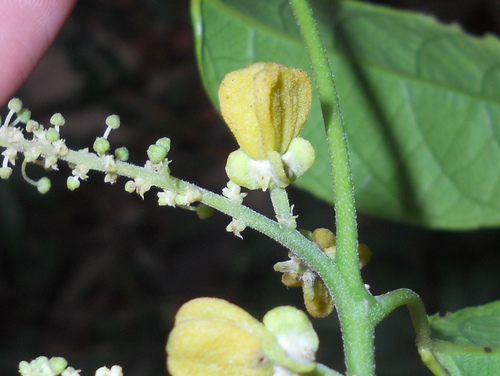
iNaturalist· cc-by
(c) Alan Manson, some rights reserved (CC BY), uploaded by Alan Manson
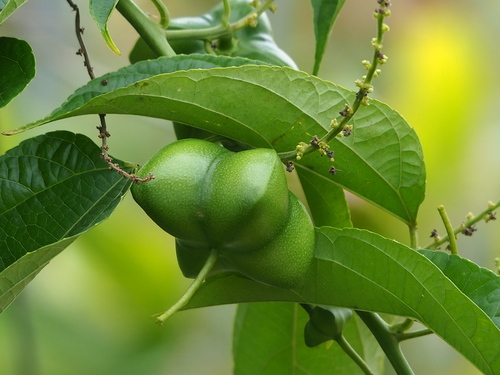
iNaturalist· cc-by-nc
(c) Alexey P. Seregin, some rights reserved (CC BY-NC), uploaded by Alexey P. Seregin
iNaturalist· cc-by-nc
(c) Stephane Philizot, some rights reserved (CC BY-NC), uploaded by Stephane Philizot
Summary
Source: WikipediaEuphorbia tirucalli (commonly known as Indian tree spurge, naked lady, pencil tree, pencil cactus, fire stick, aveloz or milk bush) is a tree native to Africa that grows in semi-arid tropical climates. A hydrocarbon plant, it produces a poisonous latex that can cause temporary blindness.
Description
A succulent shrub. It is branched and has an open crown. It does not have spines. It grows 2-6 m tall. The wood is moderately hard. The plant has an irritant white latex. There are only a few leaves.
Edible Uses
No edible use data is currently available for this plant.
Traditional Uses
Caution: It is poisonous. The leaves are used as a herbal tea.
This uses section is brief — help expand it
Medicinal Uses
Caution should be observed when preparing any medicinal product from this plant due to its high toxicity. Anecdotal evidence suggests the risk of lethal overdose is significant, particularly in children. Various active compounds have been identified: euphorbon, isolated from the needles, contains 4% caoutchouc; the latex yields 75–82% resin and 14–15% caoutchouc, and is rich in terpenes including ingenol and phorbol esters. Phorbol esters are highly irritating and tumour-promoting. Six terpenes have been isolated: cyclotirucaneol, cycloeuphordenol, tirucalicine, tirucaligine, euphorginol, and euphorcinol. The latex closely resembles the highly poisonous croton seed oil from Croton tiglium in composition and activity. Young branches can be roasted and chewed to relieve a sore throat. Ash from burned branches and stems is used to treat whooping cough, and also applied externally as a caustic to treat open abscesses. Pulped twigs are applied externally to treat oedema of the legs. Poultices from the stem are applied to help heal broken bones — a use in SE Asia derived from the Theory of Signatures, based on the jointed nature of the stems. A root and bud decoction is taken as a laxative and to treat coughs and pectoral pain. A poultice of roots or stems has been applied to nasal ulcerations, haemorrhoids, and swellings. A root decoction combined with other medicinal plants is taken for schistosomiasis and gonorrhoea. Boiled root juice acts as an emetic in cases of snakebite and is also used for female sterility. Heated root scrapings mixed with coconut oil are applied externally to the stomach to relieve stomach-ache. The caustic latex is vesicant, rubefacient, and a counter-irritant. It is purgative in small doses and emetic in larger quantities. Adults are given 2–3 drops at a time with food; a dose of 3–4 drops is used as a purge to treat ascites and generalised oedemas. In Africa, its purgative and emetic properties are employed to treat stomach complaints, constipation, intestinal worms, headache, asthma, epilepsy, and palpitations. A few drops of latex are reportedly sufficient to induce vomiting and are taken in milk as an antidote to poisoning or snakebite. Heated branches are chewed and the latex swallowed to relieve sore throat and dry cough, and also to induce labour during childbirth. In East Africa, the latex is taken internally for sexual impotence and sterility, and elsewhere as a sexual stimulant; it is also said to promote breast enlargement. Externally, the latex is used for skin complaints, itches, insect bites, rheumatism, toothache, and earache, and to raise blisters on syphilitic nodes and to remove warts, tumours, and cancers. It is also used for wound healing. The latex is widely used in Brazil to treat cancer, but in areas where it is commonly used, tumours of the nose are prevalent and thought to be related to this use.
Known Hazards
The plant is highly toxic. The latex is caustic, vesicant, and strongly irritating to skin and mucous membranes. Phorbol esters present in the latex are tumour-promoting. The latex's composition and activity closely resemble those of the highly poisonous croton seed oil from Croton tiglium. The risk of lethal overdose from medicinal use is considered high, particularly in children.
Distribution
It is a tropical plant. It grows in open deciduous woodland. It suits hot dry areas. It grows between sea level to 1,525 m altitude. In Sichuan and Yunnan.
Where It Grows
Africa, Angola*, Arabia, Asia, Botswana, Burkina Faso, Central Africa, China, Dominican Republic, East Africa, Ethiopia*, Haiti, Hawaii, India, Indonesia, Madagascar, Malawi, Maldives, Marquesas, Middle East, Mozambique, Namibia, Pacific, Pakistan, Sao Tome and Principe, SE Asia, Somalia, South Africa, Southern Africa, Sri Lanka, Sudan, Taiwan, Uganda, West Indies, Zambia, Zimbabwe,
Cultivation
Succeeds in subtropical to tropical regions at elevations from sea level to 2,000 metres. The plant is very well adapted to semi-arid conditions, but also occurs in both dry and moist forest, savannah and shrub land, and also withstands salt stress associated with coastal conditions. It grows best in areas where annual daytime temperatures are within the range 25 - 37°c, but can tolerate 12 - 41°c. Plants are not tolerant of frost. It prefers a mean annual rainfall in the range 400 - 800mm, but tolerates 250 - 1,000mm. The plant can grow in areas where the mean annual rainfall can range from 250 - 4,000mm. Requires a sunny position. Appears to grow on almost any soil type. Prefers a wide variety of well-drained, light-textured, neutral to acidic soils. Prefers a pH in the range 5.5 - 6.5, tolerating 4.5 - 7.5. Established plants are very drought tolerant. Plants are very tolerant of trimming and also coppice well when cut at 20 - 30cm height. Under semi arid conditions regrowth is excellent. A density of 10,000 - 20,000 plants per hectare is normal when grown as a fuel crop. When planted at a spacing of 1metre x 1metre it produced 120 tonnes/ha fresh material and 14 tonnes/ha dry matter after 1 year, yielding 40 - 88 kg of crude oil, 135 - 213 kg of sugar and 1.8 tonnes of bagasse. There have been plantings of E. Tirucalli in Okinawa which on a spacing of 120cm between bushes are expected to yield 11 - 22 barrels of oil per hectare each year. Plants are not resistant to fire. Plants usually produce male flowers. Female flowers or plants are much less common. Plants with bisexual flowers also occur, although the female flower apparently often aborts. Flowering Time: Late Winter/Early Spring Late Summer/Early Fall. Blooming Color: "Pale Yellow Inconspicuous/none". Spacing: 6-8 ft. (1.8-2.4 m). Drought-tolerant; suitable for xeriscaping. Suitable for growing in containers.
Propagation
Propagate from seed, or from cuttings which root easily. Cut fresh branches from a healthy plant — cuttings should be at least 10 cm long and left to dry for at least 24 hours before planting. For ornamental use, cuttings of 35–40 cm are typically taken; for hedging, cuttings of up to 1 metre can be used. Avoid direct contact with the milky sap as it can cause skin irritation. Plant at the onset of the rainy season in shallow trenches about 20 cm deep where water can collect.
Other Uses
Agroforestry uses include planting to protect sand dunes and bare soil in dry areas from wind and water erosion, and E. tirucalli fences can serve as erosion breaks. It is unsuitable for intercropping as it suppresses undergrowth including crops. It is effective in land reclamation programmes, being highly drought-resistant and efficient in photosynthesis through a unique physiology combining Crassulacean acid metabolism and the C3 pathway. During humid periods when leaves are present, this allows high CO2 uptake and elevated growth rates. Plantations have succeeded in some cases on arsenic mine spoil mounds at more than 5,000 ppm arsenic. It is extensively used as a hedge plant in rural East Africa, where its dense growth and caustic sap deter small animals and intruders. Although the latex deters browsing animals, sheep and goats are said to eat it in some areas. Hedges are easily established from cuttings planted in situ. The plant is a potential biomass crop. Its latex hydrocarbons are largely C30 triterpenoids which on cracking yield high-octane gasoline; an estimated 1–2 tonnes of crude oil per hectare per year can be obtained. The gross energy value of the biomass is 17,600 kJ/kg, and it can be converted into gas, liquid fuels, pellets, briquettes, and charcoal. The sap has strong fixative properties and, mixed with animal hair, is used to fasten knife-blades to handles and spearheads to shafts. The latex is piscicidal and insecticidal, showing strong activity against Colletotrichum capsici, Fusarium pallidoroseum, Botryodiplodia theobromae, Alternaria alternata, Penicillium citrinum, Phomopsis caricae-papayae, and Aspergillus niger, and is highly toxic to the parasitic nematodes Hoplolaimus indicus, Helicotylenchus indicus, and Tylenchus filiformis. The plant also functions as an effective repellent against mosquitoes and ants. The latex is an emulsion of approximately 30% terpenes (principally euphol) in water. During the Second World War the latex was investigated in South Africa as a rubber substitute, but proved unstable and unprofitable due to its high resin content. The latex contains light hydrocarbons of molecular weight around 20,000, and after water removal the residue is a liquid oil. Triterpenic alcohols have also been identified. The rubber extracted contains 14.3–15.7% caoutchouc and 75.8–82.1% resin (dry weight, from South African material). The resin can be used in varnishes where better materials are unavailable. Steam distillation yields a better product that has found use in India in linseed-oil varnishes giving a tack-free glossy finish. Oil from the latex was formerly used in the linoleum, oilskin, and leather-cloth industries. Methane can be produced by anaerobic fermentation of the latex. The wood is white, close-grained, and fairly hard; it is rarely attacked by insects and is used for toys, rafters, and veneers. The wood serves as fuel when better options are unavailable and yields charcoal suitable for gunpowder and fireworks manufacture.
Other Information
It is sold in local markets in China. It is cultivated.
Notes
Possibly edible but caution or treatment would be needed.
Synonyms
Also Known As
Dano, Eggamu murakka, Guang gun shu, Hejiyemukaka, Hundu kiruthona, Ingotsha, Ipupu, Kinchub, Lunsonga, Macussupu, Menjeve, Milk bush, Pencil plant, Patah tulang, Rubber euphorbia, Rusungwe
References (12)
- Flora of Pakistan. www.eFloras.org
- Flora Zambesiaca. http://apps.kew.org/efloras
- Fowler, D. G., 2007, Zambian Plants: Their Vernacular Names and Uses. Kew. p 26
- Li, D. et al, 2017, Ethnobotanical survey of herbal tea plants from the traditional markets in Chaoshan, China. Journal of Ethnopharmacology. 205 (2017) 195-206
- Molla, A., Ethiopian Plant Names. http://www.ethiopic.com/aplants.htm
Show all 12 references Hide references
- Plants of Haiti Smithsonian Institute http://botany.si.edu/antilles/West Indies
- Selvam, V., 2007, Trees and shrubs of the Maldives. RAP Publication No. 2007/12 p 88
- Sujanapal, P., & Sankaran, K. V., 2016, Common Plants of Maldives. FAO & Kerala FRI, p 127
- Sukarya, D. G., (Ed.) 2013, 3,500 Plant Species of the Botanic Gardens of Indonesia. LIPI p 1018, 1110
- Whitney, C. W., et al, 2017, Ethnobotany and Agrobiodiversity: Valuation of Plants in the Homegardens of Southwestern Uganda. Ethnobiology Letters 9(2):90–100
- World Checklist of Useful Plant Species 2020. Royal Botanic Gardens, Kew
- www.zimbabweflora.co.zw 2011