Blumeodendron kurzii
J. J. Smith
Kurz's medang tree
wikimedia· cc0
Wikimedia Commons - (Hook.f.) J.J.Sm.
wikimedia· cc0
Wikimedia Commons - (Hook.f.) J.J.Sm.
gbif· cc0
President and Fellows of Harvard College
Description
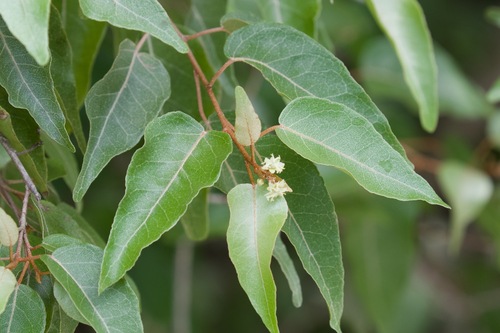
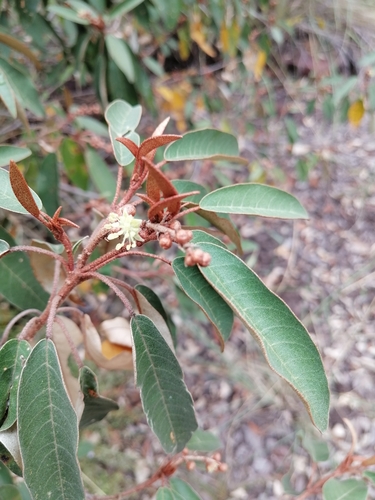
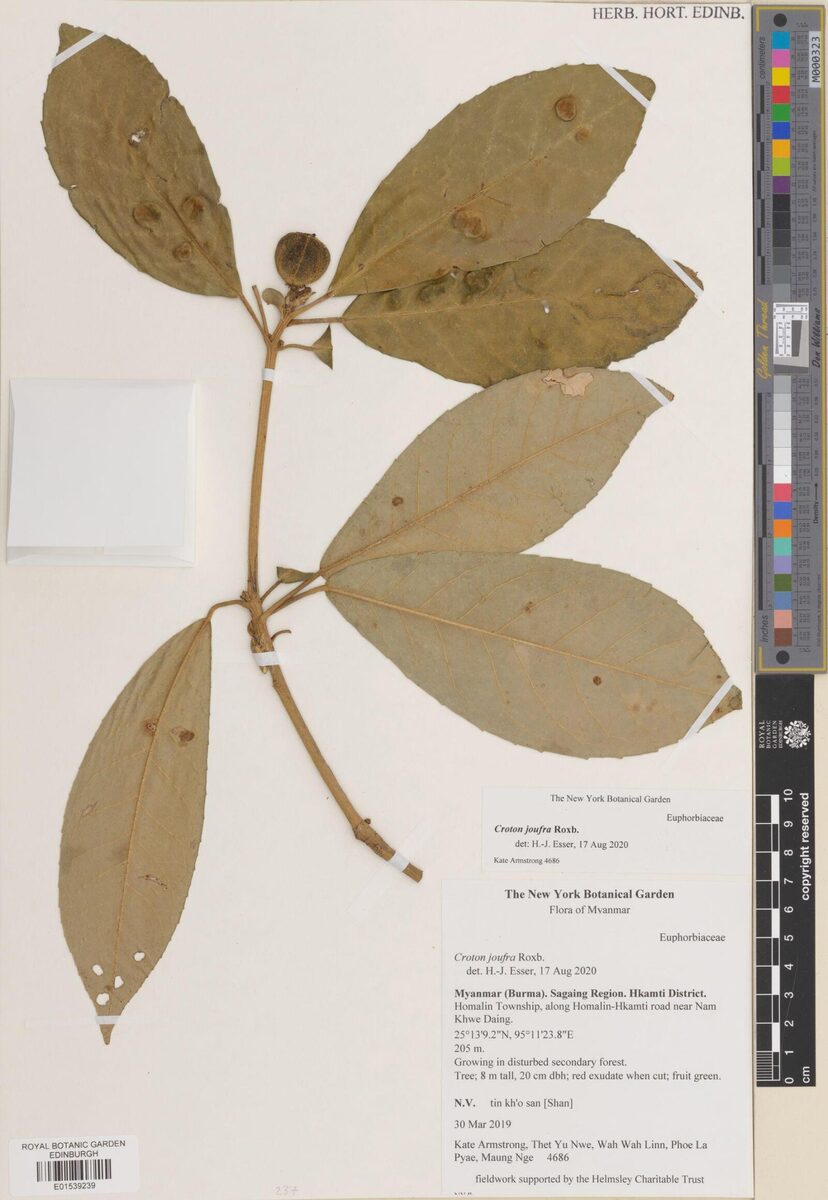
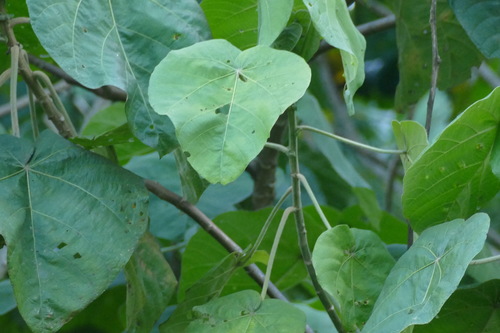
A tree. It grows 20-36 m high. The trunk can be 52 cm across. The branches are smooth. The leaves are narrowly oval and leathery. They are 20-25 cm long. The edges curve back. Male and female flowers are on separate trees. The flowers are small and purplish-red. The fruit are almost round. They are 5 cm across. The fruit are edible.
Edible Uses
Both the fruit and seeds are edible.
Distribution
A tropical plant. It grows in Dipterocarp forests up to 1,000 m above sea level.
Where It Grows
Andamans, Asia, India, Indonesia, Malaysia, Philippines, SE Asia, Thailand,
Cultivation
Plants can be grown from seed.
Synonyms
Also Known As
Medang lempong, Pohon medang kus, Tokbrai
References (6)
- Bircher, A. G. & Bircher, W. H., 2000, Encyclopedia of Fruit Trees and Edible Flowering Plants in Egypt and the Subtropics. AUC Press. p 60
- Burkill, I.H., 1966, A Dictionary of the Economic Products of the Malay Peninsula. Ministry of Agriculture and Cooperatives, Kuala Lumpur, Malaysia. Vol 1 (A-H) p 343
- Heyne, K., 1927 ed, Nutt. Plant. Ned. Ind. p 923
- Slik, F., www.asianplant.net
- Sukarya, D. G., (Ed.) 2013, 3,500 Plant Species of the Botanic Gardens of Indonesia. LIPI p 158
Show all 6 references Hide references
- World Checklist of Useful Plant Species 2020. Royal Botanic Gardens, Kew