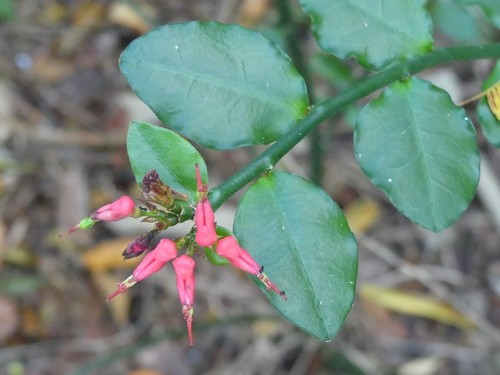
Baliospermum calycinum
Muell.-Arg.
gbif· cc-by
Royal Botanic Gardens, Kew
gbif· cc0
Royal Botanic Garden Edinburgh
gbif· cc0
Royal Botanic Garden Edinburgh
Description
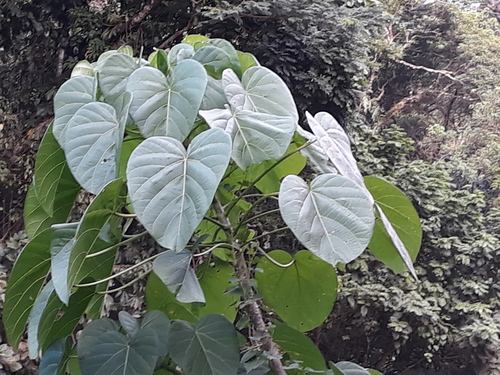
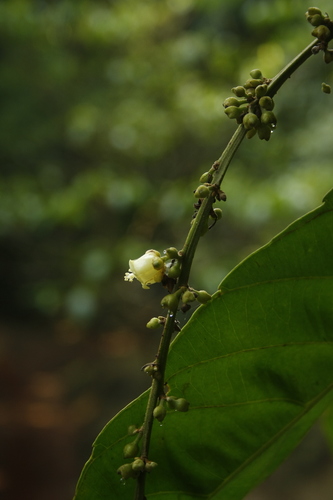
A shrub. It grows to 3 m tall. Young branches are hairy. The leaves are oblong and 9-16 cm long by 3-8 cm wide.
This description is brief — help expand it
Edible Uses
Leaves and flowers - cooked and used as a vegetable. Some caution should be exercised, the closely related species Baliospermum solanifolium is a drastic purgative, and this species is likely to contain the same or similar compounds.
Traditional Uses
The young shoots and leaves are cooked and used as a vegetable.
This uses section is brief — help expand it
Distribution
It is a subtropical plant. In southern China it grows in dense forest between 500-2,500 m above sea level.
Where It Grows
Asia, Bangladesh, Bhutan, China, Himalayas, India, Indochina, Myanmar, Nepal, Northeastern India, SE Asia, Thailand,
Cultivation
A dioecious species, both male and female forms need to be grown if seed is required.
Notes
There are 7 Baliospermum species.
Synonyms
Also Known As
Gilgal
References (4)
- Ambasta S.P. (Ed.), 2000, The Useful Plants of India. CSIR India. p 66 (As Baliospermum micranthum)
- Murtem, G. & Chaudhrey, P., 2016, An ethnobotanical note on wild edible plants of Upper Eastern Himalaya, India. Brazilian Journal of Biological Sciences, 2016, v. 3, no. 5, p. 63-81
- Singh, B., et al, 2012, Wild edible plants used by Garo tribes of Nokrek Biosphere Reserve in Meghalaya, India. Indian Journal of Traditional Knowledge. 11(1) pp 166-171 (As Baliospermum micranthum)
- Srivastava, R. C., 2009, Traditional knowledge of Adi tribe of Arunachal Pradesh on plants. Indian Journal of Traditional Knowledge. 8(2): 146-153