Brassica napus var. napobrassica
(L.) Mill.
Swede, Rutabaga, Swedish turnip, Yellow turnip
gbif· cc-by-nc-sa
MBG
gbif· cc-by-nc
University of Mississippi, Thomas M. Pullen Herbarium (MISS-)
gbif· cc-by-nc-sa
MBG
Description
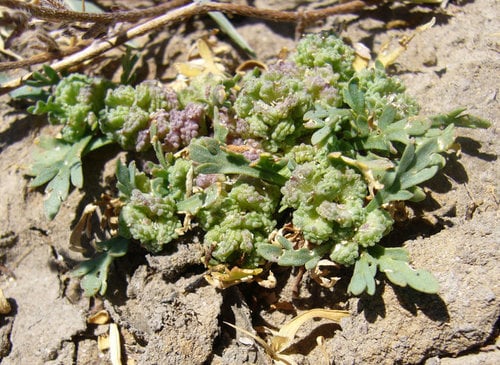
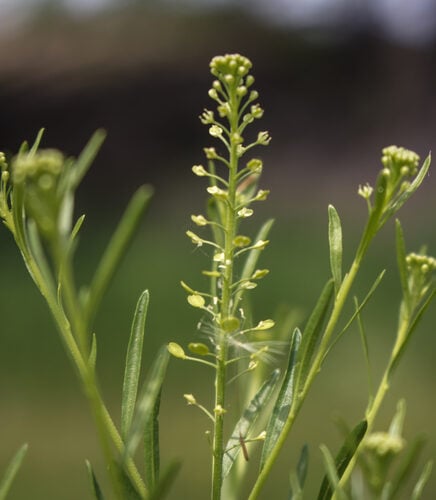
A cabbage family plant. The plant has a round tap root which mostly have yellow flesh. The outside is often of various colours. It has a "neck" near the ground level and this helps distinguish it from a turnip. The leaves have a waxy appearance.
Edible Uses
The round tubers are cooked and eaten as a vegetable, and the leaves can also be eaten cooked.
Traditional Uses
The tubers are cooked and eaten. The leaves can be eaten cooked.
This uses section is brief — help expand it
Distribution
It is a temperate plant. They are not common in the tropics. They do best in the highlands and in the dry season. It suits hardiness zones 8-11.
Where It Grows
Africa, Asia, Australia, Balkans, Britain, Canada, China, Cuba, East Africa, Europe, Finland, Isle of Man, Macedonia, Malawi, New Caledonia, North Africa, Pacific, Pakistan, Papua New Guinea, PNG, Philippines, Scandinavia, SE Asia, South Africa, Southern Africa, Sweden, Tasmania, USA, West Indies,
Cultivation
They are grown from seed.
Other Information
It is a commercially cultivated vegetable. Not a very popular vegetable in Papua New Guinea.
Notes
There are about 30 Brassica species and many cultivated varieties.
Nutrition
| Part | Moisture | kJ | kcal | Protein | Vit A | Vit C | Iron | Zinc |
|---|---|---|---|---|---|---|---|---|
| Roots - raw | 91.4 | 88 | 21 | 1.1 | — | 25 | 0.4 | 0.1 |
| Roots - boiled | 91.6 | 76 | 18 | 0.9 | — | 17 | 0.3 | 0.1 |
| Leaves | — | — | — | — | — | — | — | — |
Synonyms
Also Known As
Canadian turnip, Russian turnip
References (23)
- Bianchini, F., Corbetta, F., and Pistoia, M., 1975, Fruits of the Earth. Cassell. p 74 (As Brassica campestris var. napobrassica)
- Bircher, A. G. & Bircher, W. H., 2000, Encyclopedia of Fruit Trees and Edible Flowering Plants in Egypt and the Subtropics. AUC Press. p 64 (As Brassica napobrassica)
- Brouk, B., 1975, Plants Consumed by Man. Academic Press, London. p 139
- Cundall, P., (ed.), 2004, Gardening Australia: flora: the gardener's bible. ABC Books. p 255
- Facciola, S., 1998, Cornucopia 2: a Source Book of Edible Plants. Kampong Publications, p 53
Show all 23 references Hide references
- Flora of China. www.eFloras.org
- French, B.R., 1986, Food Plants of Papua New Guinea, A Compendium. Asia Pacific Science Foundation p 115
- Grubben, G. J. H. and Denton, O. A. (eds), 2004, Plant Resources of Tropical Africa 2. Vegetables. PROTA, Wageningen, Netherlands. p 128
- Hu, Shiu-ying, 2005, Food Plants of China. The Chinese University Press. p 409 (As Brassica napobrassica)
- Jardin, C., 1970, List of Foods Used In Africa, FAO Nutrition Information Document Series No 2.p 61
- Kays, S. J., and Dias, J. C. S., 1995, Common Names of Commercially Cultivated Vegetables of the World in 15 languages. Economic Botany, Vol. 49, No. 2, pp. 115-152
- Kiple, K.F. & Ornelas, K.C., (eds), 2000, The Cambridge World History of Food. CUP p 1845
- Miguel, E., et al, 1989, A checklist of the cultivated plants of Cuba. Kulturpflanze 37. 1989, 211-357
- Mossler, Handb. Gewachsk. ed. 3, 2:1220. 1833
- Plants for a Future database, The Field, Penpol, Lostwithiel, Cornwall, PL22 0NG, UK. http://www.scs.leeds.ac.uk/pfaf/
- Purseglove, J.W., 1968, Tropical Crops Dicotyledons, Longmans. p 92
- Schneider, E., 2001, Vegetables from Amaranth to Zucchini: The essential reference. HarperCollins. p 543
- Terra, G.J.A., 1973, Tropical Vegetables. Communication 54e Royal Tropical Institute, Amsterdam, p 31
- USDA, ARS, National Genetic Resources Program. Germplasm Resources Information Network - (GRIN). [Online Database] National Germplasm Resources Laboratory, Beltsville, Maryland. Available: www.ars-grin.gov/cgi-bin/npgs/html/econ.pl (10 April 2000)
- van Wyk, B., 2005, Food Plants of the World. An illustrated guide. Timber press. p 97
- Wiersema, J. H. & Leon, B., 2013, World Economic Plants. A Standard Reference CRC Press. 2nd Ed. p 113
- Williamson, J., 2005, Useful Plants of Malawi. 3rd. Edition. Mdadzi Book Trust. p 45
- Zhou Taiyan, Lu Lianli, Yang Guang, Ihsan A. Al-Shehbaz, BRASSICACEAE (CRUCIFERAE), Flora of China.