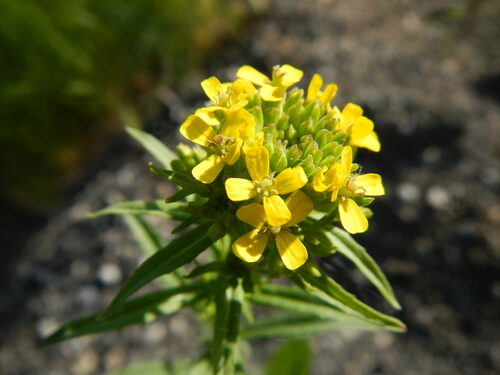
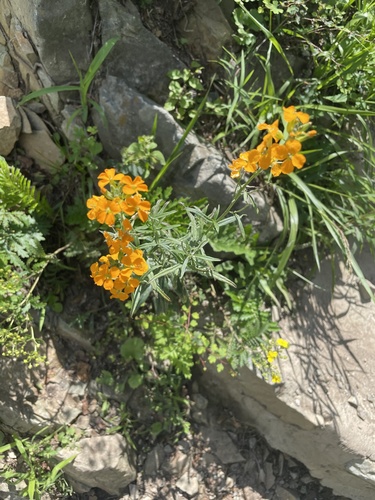
Descurainia antarctica
(E. Fourn.) O. E. Schultz.
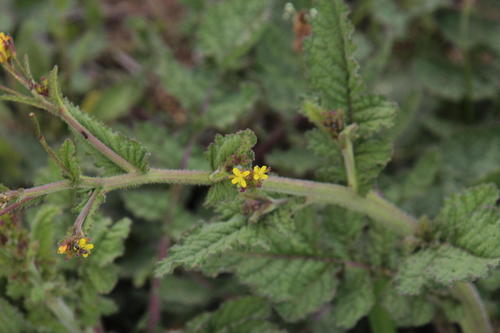
iNaturalist· cc-by-nc
(c) Damon Tighe, some rights reserved (CC BY-NC), uploaded by Damon Tighe
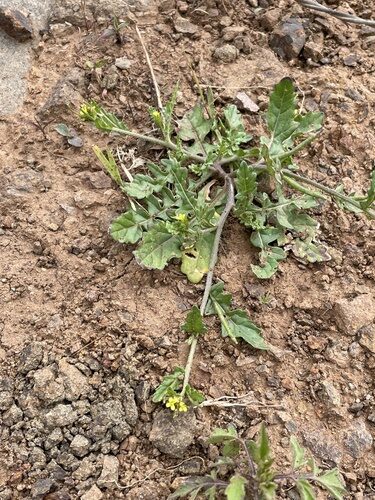
iNaturalist· cc-by-nc
(c) Damon Tighe, some rights reserved (CC BY-NC), uploaded by Damon Tighe
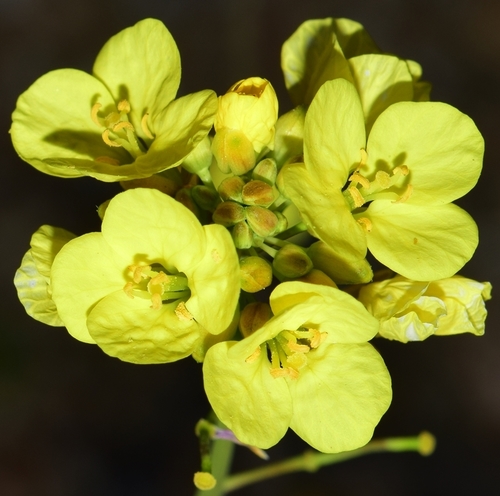
iNaturalist· cc-by-nc
(c) Damon Tighe, some rights reserved (CC BY-NC), uploaded by Damon Tighe
Summary
A low-growing annual reaching 10 cm tall with rapid growth. Seeds mature from August to September. The plant is hermaphroditic and self-fertile, thriving in well-drained light sandy or medium loamy soils across a wide pH range from mildly acidic to mildly alkaline, including saline soils. It tolerates semi-shade or full sun and adapts to both dry and moist conditions, making it suitable for maritime exposure.
Description
A cabbage family herb. It grows 15-60 cm tall. There are leaves at the base and on the stem. They are twice divided. They are 2-7 cm long. There are 3-7 lobes. The flowers are yellow. The fruit are narrow and 6-15 mm long by 1.6 mm wide. The seeds are 1 mm long by 0.5 mm wide.
Edible Uses
The seed can be eaten raw or cooked. It can also be ground into a meal and combined with cereal powders for making bread and similar preparations.
Medicinal Uses
None known
Distribution
It is a temperate plant. In Argentina it grows below 600 m above sea level.
Where It Grows
Africa, Argentina*, Chile, South America,
Propagation
Sow seed in spring directly in situ.
Other Uses
None known Special Uses
Synonyms
References (2)
- Leon-Lobos, P., et al, 2022, Patterns of Traditional and Modern Uses of Wild Edible Native Plants of Chile: Challenges and Future Perspectives. Plants (Basel) v 11 (6) Table S1
- Plants for a Future database, The Field, Penpol, Lostwithiel, Cornwall, PL22 0NG, UK. http://www.scs.leeds.ac.uk/pfaf/