Dentaria diphylla
Michx.
Crinkleroot
gbif· cc0
Tennessee Technological University, Hollister Herbarium (HTTU-)
gbif· cc0
Tennessee Technological University, Hollister Herbarium (HTTU-)
Description
Dentaria diphylla is a PERENNIAL growing to 0.3 m (1ft). See above for USDA hardiness. It is hardy to UK zone 4 and is not frost tender. It is in flower from May to June. The species is hermaphrodite (has both male and female organs) and is pollinated by Insects. Suitable for: light (sandy) and medium (loamy) soils. Suitable pH: mildly acid, neutral and basic (mildly alkaline) soils. It can grow in full shade (deep woodland) or semi-shade (light woodland). It prefers moist soil.
Edible Uses
Root - raw or cooked. It has a crisp texture and a pleasant pungent taste, rather like water cress or horseradish. It can be added to salads or used as a relish. The root has a pungent acrid taste when first harvested, the Indians cleaned the roots, heaped them on a blanket, covered them to exclude air and then left them to ferment for 4 - 5 days. After this the roots developed a sweet taste. Leaves - raw or cooked. The cooking water was changed once in order to remove the bitterness.
Medicinal Uses
Cardiac Carminative Febrifuge Miscellany Odontalgic Stomachic. The peppery root is used as a folk remedy in the treatment of toothache. It has also been chewed in the treatment of colds, an infusion drunk to treat gas and other stomach problems, and it has been made into a poultice for headaches. A tea made from the root is gargled in the treatment of sore throat, hoarseness etc. An infusion of the plant has been used to treat fevers in children. Combined with Acorus calamus root, it has been used in the treatment of heart diseases.
Distribution
Eastern N. America - Ontario to S. Carolina, Kentucky and Minnesota.
Where It Grows
NORTHERN AMERICA: Canada, Québec, Nova Scotia, Ontario, New Brunswick, United States, Connecticut, Indiana, Maine, Massachusetts, Michigan, New Hampshire, New Jersey, New York, Ohio, Pennsylvania, Rhode Island, Vermont, Illinois, Minnesota, Missouri, Wisconsin, Alabama, Arkansas, Georgia, Kentucky, North Carolina, South Carolina, Tennessee, Virginia,
Cultivation
An easily grown plant, preferring a rich light moist soil and a shady position. This species is hardy to about -20°c. An evergreen. Ephemeral emerging in spring and dying back by summer every year.
Propagation
Seed - sow spring in a cold frame. Germination usually takes place within 1 - 3 weeks at 15°c. When large enough to handle, prick the seedlings out into individual pots and grow them on in light shade in a greenhouse or cold frame for the first two years, planting them out when dormant in late summer. Division in early spring or after the plant dies down in the summer. Larger clumps can be replanted direct into their permanent positions, though it is best to pot up smaller clumps and grow them on in a cold frame until they are rooting well. Plant them out in the spring.
Other Uses
Miscellany. None known
Synonyms
More from Brassicaceae
Brassica juncea napiformis - (Pailleux.&Boiss.)Kitam.
Root Mustard
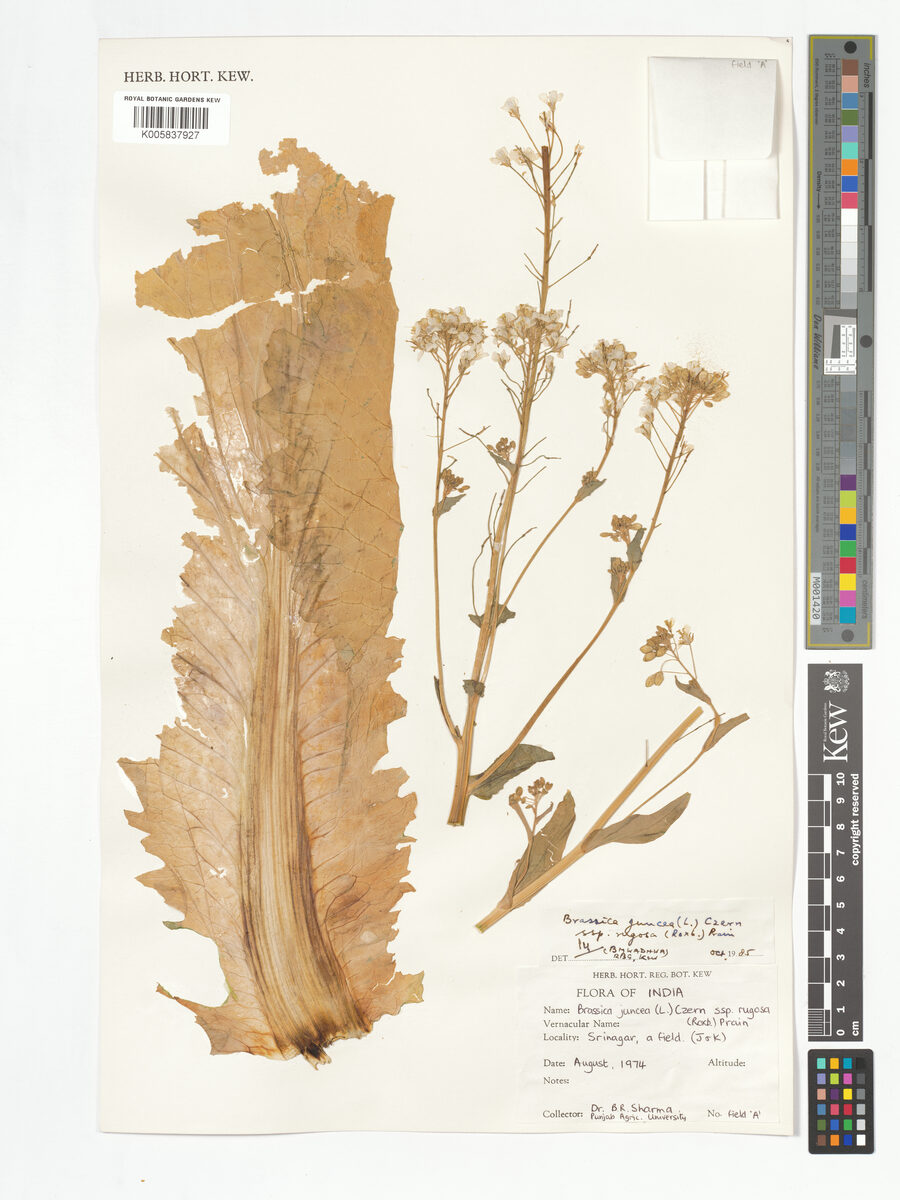
Brassica juncea rugosa - (Roxb.)N.Tsen.&S.N.Lee.
Head Mustard
Brassica juncea strumata
Large Petiole Mustard
Brassica juncea tsatsai multiceps
Green In The Snow
Brassica juncea tsatsai tumida
Swollen-Stem Mustard
Brassica juncea tumida
Swollen-Stem Mustard