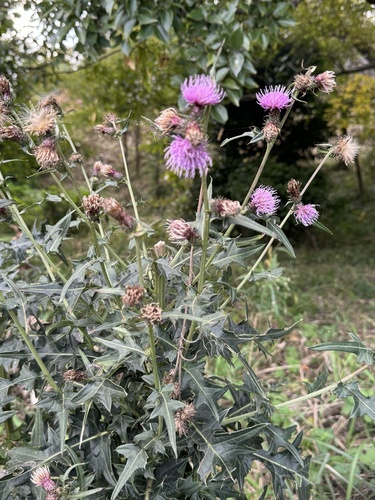
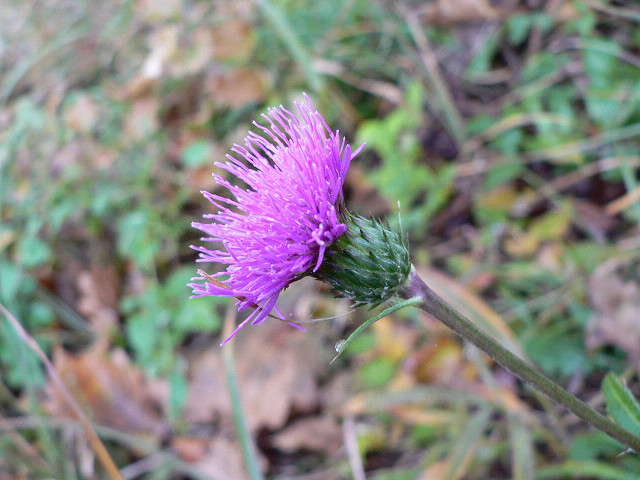
Farfugium japonicum
(L.) Kitamura
Leopard plant, Taiwan farfugium
iNaturalist· cc0
no rights reserved, uploaded by 葉子
iNaturalist· cc-by-nc-sa
(c) Kuan-Chieh (Chuck) Hung, some rights reserved (CC BY-NC-SA), uploaded by Kuan-Chieh (Chuck) Hung
iNaturalist· cc-by-nc
(c) jsulan, some rights reserved (CC BY-NC)
Summary
Source: WikipediaFarfugium japonicum (syn. Ligularia tussilaginea) is a species of flowering plant in the family Asteraceae, also known as leopard plant, green leopard plant or tractor seat plant. It is native to streams and seashores of Japan, where it is called tsuwabuki (石蕗).
Description
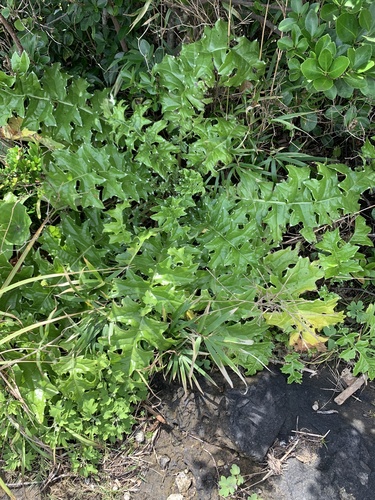
An evergreen herb. It keeps growing from year to year. The leaf stem is 30-40 cm long. The flower stalk is 30-75 cm high. The leaves are at the base near ground level and are kidney shaped. They are leathery and 15-20 cm long by 25 cm wide. They are thick and have a long leaf stalk. The flowers are yellow. The flower heads are 4-6 cm across.
Edible Uses
The leaf stems are edible when cooked. They should be boiled in water to remove bitterness, the outer peel stripped away, and then added to salads, soups, or similar dishes.
Traditional Uses
The young leaves are eaten. The leaf stalks are boiled in water to remove the harsh flavour, then peeled and used to add flavour to salads and other dishes. Caution: It contains chemicals that cause cancer and therefore needs treatment.
Medicinal Uses
The leaves are antidotal and are taken internally to treat fish poisoning and applied externally to treat lacquer poisoning. They are also used as a poultice on suppurating abscesses and pox.
Known Hazards
Farfugium japonicum contains tumorigenic pyrrolizidine alkaloids.
Distribution
A temperate plant. It grows in cliffs and rocky outcrops along the coast. It needs a humus rich moist soil. It is resistant to the salt spray.
Where It Grows
Asia, China, Japan, Korea, Taiwan,
Cultivation
It can be grown by seed or division of the clump.
Propagation
Sow seed in spring in a cold frame. Once seedlings are large enough to handle, prick them out into individual pots and grow on in a greenhouse through at least their first winter. Plant out into permanent positions in late spring or early summer, after the last expected frosts. The plant can also be propagated by division in spring.
Other Uses
None known.
Synonyms
Also Known As
Gao wu, Japanese silver leaf, Silveredge, Tsuwabuki, Wild butterbur
References (9)
- Acta Phytotax. Geobot. 8:268. 1939
- Chen, B. & Qiu, Z., Consumer's Attitudes towards Edible Wild Plants, Ishikawa Prefecture, Japan. p 23 www.hindawi.com/journals/ijfr/aip/872413.pdf
- Facciola, S., 1998, Cornucopia 2: a Source Book of Edible Plants. Kampong Publications, p 40 (As Ligularia kaempferi)
- Hirono, I., 1993, Edible Plants Containing Naturally Occurring Carcinogens in Japan. Jpn. J. Cancer Res. 84, 997-1006
- Hu, Shiu-ying, 2005, Food Plants of China. The Chinese University Press. p 730 (As Farfugium japonicum var. formosanum)
Show all 9 references Hide references
- Kays, S. J., and Dias, J. C. S., 1995, Common Names of Commercially Cultivated Vegetables of the World in 15 languages. Economic Botany, Vol. 49, No. 2, pp. 115-152
- Levy-Yamamori, R., & Taaffe, G., 2004, Garden Plants of Japan. Timber Press. p 319
- Lim, T. K., 2015, Edible Medicinal and Non Medicinal Plants. Volume 9, Modified Stems, Roots, Bulbs. Springer p 42 (As Farfugium japonicum var. formosanum)
- Tanaka, (As Ligularia kaempferi)