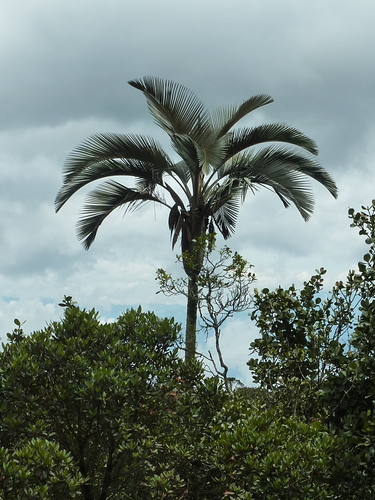
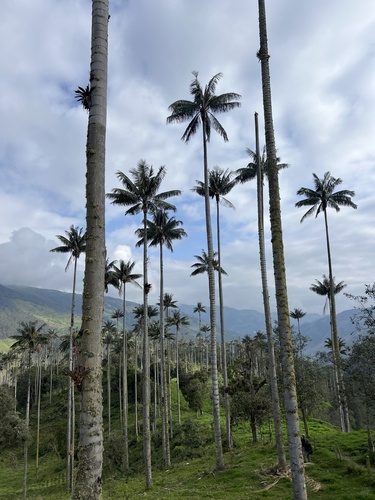
Borassus flabellifer
L.
Wine palm, Palmyra Palm
iNaturalist· cc-by-nc
(c) sugumaran, some rights reserved (CC BY-NC)
iNaturalist· cc-by-nc-sa
(c) Cerlin Ng, some rights reserved (CC BY-NC-SA)
iNaturalist· cc-by-nc
(c) Didier Levasseur, some rights reserved (CC BY-NC), uploaded by Didier Levasseur
Summary
Source: WikipediaBorassus flabellifer, commonly known as doub palm, palmyra palm, tala or tal palm, toddy palm, lontar palm, wine palm, or ice apple, is a fan palm native to South Asia (especially in Bangladesh, East India, and South India) and Southeast Asia. It is reportedly naturalized in Socotra.
Description
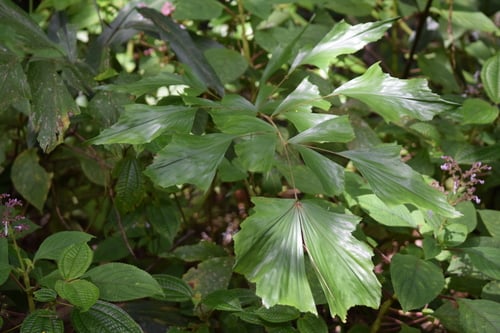
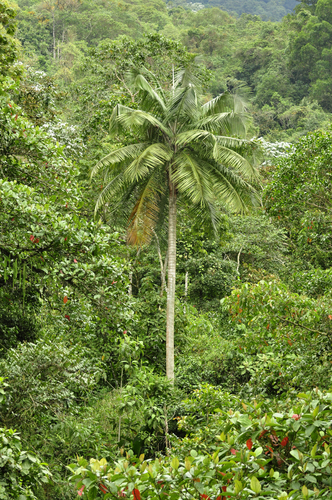
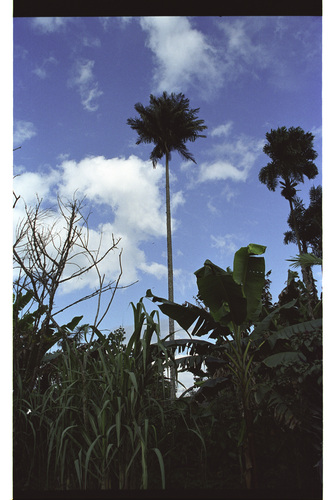
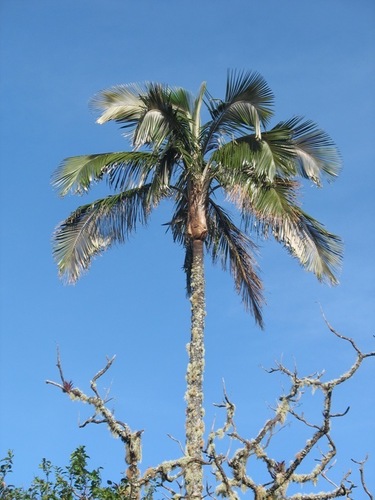
A small evergreen palm. It grows to 10-20 m tall. It can be 40 m high. It spreads to 5 m across. The stem is stout and it may be 1 m across. It is often swollen at the base. It has a crown of leaves shaped like the fingers on a hand or spreading out like a fan. There can be 30-40 of the fan like leaves at the crown. The leaves are large with short stout leaf stalks. There can be 80 slender leaflets which are pointed, folded and rich green. Younger trees are covered with dead leaves or leaf bases. Leaves can be 1-2 m across. The flowers occur in flower stalks up to 1.5 m long. The male and female flowers occur in different trees. The females spikes are larger and have a boat shaped spathe. The fruit are borne in bunches like coconuts. The fruit are 10-12.5 cm across and slightly flattened at the ends. They have dark purple skin. Green bracts occur at the base. Each fruit has 3 seeds. The flesh resembles the flesh of a coconut.
Edible Uses
Edible Parts: Flowers Fruit Leaves Oil Sap Seed Stem Edible Uses: Drink Oil Salt Sweetener Fruit - raw or cooked. The immature fruits are pickled. The tender flesh of young fruits is cooked in curry. The ripe fruit has a yellow edible pulp with a distinctive aroma. The mature fruit is soaked in water, after which the wiry fibers are extracted, the yellow pulp mixed with rice starch, this is then folded inside a banana leaf and later steam-cooked. The fruit is a globose to subglobose drupe, 15-20 cm in diameter, produced in large clusters on the tree. A sugar-rich sap is obtained from the inflorescence. It is obtained by first tying the developing inflorescence together to prevent it opening, then beating it daily for several days with a wooden mallet. After a few days, a slice is cut daily from the end of the inflorescence and, almost a week later, the sap begins to flow. This can continue for several months so long as a fresh slice is removed each day. Up to 20 litres of sap can be obtained each day from larger trees. The juice can be drunk, or concentrated by evaporation to form a sweet syrup or a solid palm sugar known as jaggery. The soft upper 10 metres of the trunk contains some starch, which may be harvested in times of food scarcity. Immature, jelly-like seeds. The young solid or gelatinous endosperm of the seeds is eaten fresh or in syrup. Sprouted seedlings - peeled and eaten raw or cooked. They can be sun-dried for later use. They may be slightly toxic, but are considered a delicacy in some areas. A salt is made from the leaves. Apical bud. Eating this bud effectively kills the plant since it is unable to produce side branches. Inflorescence - cooked. Added to soups and curries.
Traditional Uses
The flesh and the water of the fruit are edible. They can be eaten fresh or made into ice-cream. Edible starch can be extracted from the stem. The palm heart is edible. The palm can be tapped for sugary sap. This can be drunk, boiled and concentrated or fermented. The seeds are germinated and the young shoots eaten. The swollen storage leaf is eaten either as flour or boiled and dried. CAUTION: The palm hearts have been shown to be toxic to rats even when cooked.
Medicinal Uses
Anthelmintic Antiinflammatory Antitussive Diuretic Dysentery Laxative Mouthwash Skin Stimulant Tonic Innumerable traditional medicinal uses are known for all parts of the toddy palm. The young plant is said to relieve biliousness, dysentery and gonorrhea. Young roots are anthelmintic and diuretic. A decoction is given in certain respiratory diseases. Dried roots can also be smoked to heal nasal complaints. The ash of the flower is taken to relieve heartburn and enlarged spleen and liver. The bark decoction, with salt, is used as a mouth wash. A charcoal made of the bark serves as a dentifrice. Sap from the flower stalk is prized as a tonic, diuretic, stimulant, laxative and anti phlegmatic and amoebicide. Sugar made from this sap is said to counteract poisoning and it is prescribed in the treatment of liver disorders. When candied, it is a remedy for coughs and various pulmonary complaints. Fresh toddy, heated to promote fermentation, is bandaged onto all kinds of ulcers. The apical bud, leaf petioles, and dried male flower spikes all have diuretic activity. The pulp of the mature fruit relieves dermatitis. It is also useful as an anti-inflammatory and for dropsy and gastric conditions. Also has potential immuno-suppressive action. Constituents are: gum, fat and albuminoids.
Known Hazards
Plant has spines or sharp edges; use extreme caution when handling
Distribution
A tropical plant. It prefers a well drained soil. It needs a protected sunny position. It is drought and frost tender. Seed need to have a temperature of 24-29°C to grow. Trees need a temperature above 15-18°C. It does better in the drier tropics than in the humid tropics. It grows in seasonally wet and dry areas up to 500 m above sea level. Trees are very sensitive to cold. In Townsville palmetum. It suits hardiness zones 11-12.
Where It Grows
Andamans, Asia, Australia, Bangladesh*, Cambodia, China, Côte d'Ivoire, Cuba, East Africa, East Timor, Egypt, Gambia, Himalayas, India*, Indochina, Indonesia, Ivory Coast, Laos, Madagascar, Malaysia, Maldives, Mauritania, Myanmar, Nepal, Niger, Nigeria, North Africa, Northeastern India, Pacific, Pakistan, Papua New Guinea, PNG, Philippines, Sahel, SE Asia, Senegal, Socotra, South Africa, Southern Africa, Sri Lanka, Sudan, Thailand, Timor-Leste, Vietnam, West Africa, West Indies, West Timor,
Cultivation
Plants are grown from seed. Seed take 2-6 months to germinate. Seedlings are difficult to transplant so seed should be sown where they are to grow. To extract the sap, male flower stalks give more sap than female. The unopened flower stalk is tied with a string then banged with a mallet for short times over 3 days before the end being sliced off and the sap collected. A small slither is cut off the end each day to keep the sap flowing.
Propagation
Seed - pre-soak for 24 hours in warm water and sow in containers or in situ. The seed is difficult to germinate, often taking 12 months or more. Scarifying it prior to soaking may reduce germination time. When germination occurs, the massive cotyledon grows several metres down into the ground before the roots and leaves appear. Seeds should thus be planted in deep containers or into a permanent position in the ground as soon as growth begins to appear.
Other Uses
Basketry Brush Charcoal Containers Fencing Fibre Fuel Oil Paper String Thatching Wood Other uses rating: Medium (3/5). Other Uses The leaves have a wide range of uses, such as thatching for house roots and walls, weaving into baskets, mats and many other items. Thatch made from the leaves is said to last at least 2 years. The top young leaves are made into hats, boxes to store rice, baskets, fans, etc A number of different fibres can be obtained from the plant. A fibre obtained from the leaves is used to make string, rope, fencing etc. The fibres of young leaves can be woven into delicate patterns. The fibre obtained from the base of the petioles, or the sheathing leafstalks, is stiff, harsh and wiry. It is used to make brushes etc. Petioles are often can be split into fibre, to be used for weaving and matting. A fibre is obtained from the inner bark. The bark fibre can be used to make strong ropes. A fibre is obtained from the pericarp of the fruit. The petioles are often used as poles for fencing. The dried leaflets were at one time used as a paper to record Indian holy texts. The lowest 10 metres of the trunk has a hard and strong wood that is heavy, very durable and very resistant to termites, insect borers and decay fungi. It is good for constructing buildings, bridges etc. The somewhat softer middle part of the stem can be split into boards. The whole trunk can be made into a small boat capable of carrying at least three people. The wood and leaves are used as fuel. The wood can be made into charcoal.Other uses rating: Medium (3/5). Special Uses Carbon Farming Food Forest
Production
One flower stalk can yield 2 litres per day of sap. One person can tap 30 trees per day. Each flowering stalk will yield for about 3 months. Tapping normally begins when a palm is 20 years old but then may continue for 30 years. A single palm can yield 100,000 litres of palm wine over a 40 year lifespan. The fruit matures in 120 days.
Other Information
The fruit are sold in markets. It is not known if it is used for food in Papua New Guinea. The young seeds are preserved in heavy sugar syrup and sold in jars or cans. It is very important in some countries. It is cultivated.
Notes
There are 7-10 Borassus species.
Nutrition
| Part | Moisture | kJ | kcal | Protein | Vit A | Vit C | Iron | Zinc |
|---|---|---|---|---|---|---|---|---|
| Sap - thickened | 5.5 | 1594 | 375 | 0.7 | — | — | 1.6 | 0.3 |
| Palm heart | 69.5 | 431 | 103 | 2.7 | — | — | — | — |
| Seed - Sprouts | 69.5 | 431 | 103 | 2.7 | — | — | — | — |
| Seed immature | 82.3 | 297 | 71 | 0.9 | — | — | — | — |
| Fruit | 89.4 | 139 | 39 | 0.7 | 208 | 35.1 | 1.7 | 0.3 |
| Stem starch | — | — | — | — | — | — | — | — |
Synonyms
Also Known As
Acadiru, Bak taan, Doub palm, Ental, Etal, Giginya, Htan, Kaakala, Karatalamu, Karumpana, Kerigi, Lontar palm, Mak tan kok, Pana, Panai, Panankai, Panna-maram, Pannei, Pohon siwalan, Kok tan, Nungu, Palem lontar, Palem siwalan, Taad, Taal, Taan, Tad-mar, Tad, Tadi, Tadichettu, Tal, Tala palm, Tale, Talgaha, Tali, Tanta note, Tar, Tatichettu, Than, Thnot, Toddy palm, Yod taan
References (93)
- Ambasta, S.P. (Ed.), 2000, The Useful Plants of India. CSIR India. p 77
- Anderson, E. F., 1993, Plants and people of the Golden Triangle. Dioscorides Press. p 204
- Arinathan, V., et al, 2007, Wild edibles used by Palliyars of the western Ghats, Tamil Nadu. Indian Journal of Traditional Knowledge. 6(1) pp 163-168
- Arora, R. K., 2014, Diversity in Underutilized Plant Species - An Asia-Pacific Perspective. Bioversity International. p 101
- Ashton, M. S., et al 1997, A Field Guide to the Common Trees and Shrubs of Sri Lanka. WHT Publications Ltd. p 78
Show all 93 references Hide references
- Bajpai, O., et al, 2015, Tree species of the Himalayan Terai region of Uttar Pradesh, India: a checklist. Check List 11(4): 1718
- Balick, M.J. and Beck, H.T., (Ed.), 1990, Useful palms of the World. A Synoptic Bibliography. Colombia p 79, 121, 189, 246, 315, 464, 511, 515, 562, 614,
- Balick, M.J. and Beck, H.T., (Ed.), 1990, Useful palms of the World. A Synoptic Bibliography. Colombia p 215, 216, (As Borassus sundaicus)
- Bandyopadhyay, S. et al, 2009, Wild edible plants of Koch Bihar district, West Bengal. Natural Products Radiance 8(1) 64-72
- Bandyopadhyay, S., et al, 2012, A Census of Wild Edible Plants from Howrah District, West Bengal, India. Proceedings of UGC sponsored National Seminar 2012
- Bayton, R. P., 2007, A Revision of Borassus L. (Arecaceae) Kew Bulletin, Vol. 62, No. 4, pp. 561-585
- Bircher, A. G. & Bircher, W. H., 2000, Encyclopedia of Fruit Trees and Edible Flowering Plants in Egypt and the Subtropics. AUC Press. p 61
- Blench, R., 2004, Fruits and Arboriculture in the Indo-Pacific Region. Indo-Pacific Prehistory Association Bulletin 24. (Taipei Papers Volume 2) p 35
- Bodkin, F., 1991, Encyclopedia Botanica. Cornstalk publishing, p 154
- Bole, P.V., & Yaghani, Y., 1985, Field Guide to the Common Trees of India. OUP p 85
- Brickell, C. (Ed.), 1999, The Royal Horticultural Society A-Z Encyclopedia of Garden Plants. Convent Garden Books. p 183
- Brouk, B., 1975, Plants Consumed by Man. Academic Press, London. p 203, 365
- Burkill, I.H., 1966, A Dictionary of the Economic Products of the Malay Peninsula. Ministry of Agriculture and Cooperatives, Kuala Lumpur, Malaysia. Vol 1 (A-H) p 350
- Chakraborty, S. & Chaturbedi, H. P., 2014, Some Wild Edible Fruits of Tripura- A Survey. Indian Journal of Applied research. (4) 9
- Chauhan, S. H., et al, 2018, Consumption patterns of wild edibles by the Vasavas: a case study from Gujarat, India. Journal of Ethnobiology and Ethnomedicine (2018) 14:57
- Chin, H.F., & Yong, H.S., 1996, Malaysian Fruits in Colour. Tropical press, Kuala Lumpur p 41
- Chowdery, T., et al, 2014, Wild edible plants of Uttar Dinajpur District, West Bengal. Life Science Leaflets. 47:pp 20-36 http://lifesciencesleaflets.ning.com
- Chowdhury, M. & Mukherjee, R., 2012, Wild Edible Plants Consumed by Local Communities of Maldah of West Bengal, India. Indian J.Sci.Res.3(2) : 163-170
- Coronel, R.E., 1982, Fruit Collections in the Philippines. IBPGR Newsletter p 9
- Cowie, I, 2006, A Survey of Flora and vegetation of the proposed Jaco-Tutuala-Lore National Park. Timor-Lests (East Timor) www.territorystories.nt/gov.au p 43
- Cruz-Garcia, G. S., & Price, L. L., 2011, Ethnobotanical investigation of 'wild' food plants used by rice farmers in Kalasin, Northeast Thailand. Journal of Ethnobiology and Ethnomedicine 7:33
- Cundall, P., (ed.), 2004, Gardening Australia: flora: the gardener's bible. ABC Books. p 243
- Cundall, P., (ed.), 2004, Gardening Australia: flora: the gardener's bible. ABC Books. p 243 (As Borassus sundaicus)
- Das, S. and De, B., 2013, Evaluation of Angiotension I-Converting Enzyme (ACE) inhibitory potential of some underutilized indigenous fruits of West Bengal using an in vitro model. Fruits, Vol. 68:499-506
- Dobriyal, M. J. R. & Dobriyal, R., 2014, Non Wood Forest Produce an Option for Ethnic Food and Nutritional Security in India. Int. J. of Usuf. Mngt. 15(1):17-37
- Dransfield, J., 1976, Palm sugar in East Madura. Principes 20(30):83-90 (As Borassus sundaicus)
- Etherington, K., & Imwold, D., (Eds), 2001, Botanica's Trees & Shrubs. The illustrated A-Z of over 8500 trees and shrubs. Random House, Australia. p 134
- Etherington, K., & Imwold, D., (Eds), 2001, Botanica's Trees & Shrubs. The illustrated A-Z of over 8500 trees and shrubs. Random House, Australia. p 134 (As Borassus sundaicus)
- Facciola, S., 1998, Cornucopia 2: a Source Book of Edible Plants. Kampong Publications, p 27
- Flora of Pakistan. www.eFloras.org
- Friday, J. B., 2005, Forestry and Agroforestry Trees of East Timor. http://www.ctahr.hawaii.edu/forestry/data/Timor/Timor trees.html
- GAMMIE, (As Borassus flabelliformis)
- Garba, A., Useful Plants in the Chad region of North-East Nigeria.
- GUPTA & KANODIA, (As Borassus flabelliformis)
- Gibbons, M., 1993, Palms. Compact study Guide and Identifier. Sandstone. p 22
- Gibbons, M., 2003, A pocket guide to Palms. Chartwell Books. p 52
- Haynes, J., & McLaughlin, J., 2000, Edible palms and Their Uses. University of Florida Fact sheet MCDE-00-50-1 p 4
- Hazarika, B. et al. (2020). An overview of the unexplored underutilized fruit crops of Assam, India. Journal of Applied and Natural Science, 12(3): 442 - 453
- Hearne, D.A., & Rance, S.J., 1975, Trees for Darwin and Northern Australia. AGPS, Canberra p 33,Pl 9
- Hedrick, U.P., 1919, (Ed.), Sturtevant's edible plants of the world. p 111
- Ibrahim, H. A., et al, 2012, Ethnobotanical Survey of the Wild Edible Food Plants Consumption among Local Communities in Kano State, North-Western, Nigeria, International Journal of Science and Technology. Vol. 2. No. 10 p 716
- Jacquat, C., 1990, Plants from the Markets of Thailand. D.K. Book House p 107
- Janick, J. & Paul, R. E. (Eds.), 2008, The Encyclopedia of Fruit & Nuts. CABI p 103
- Johnson, D.V., 1998, Tropical palms. Non-wood Forest products 10. FAO Rome. p 42, 46, 126
- Jones, D.L., 1994, Palms throughout the World. Smithtonian Institution, Washington. p 54, 144
- Jones, D.L., 2000, Palms of Australia 3rd edition. Reed/New Holland. p 124
- Kew Plants of the World Online
- Khan, D. & Shaukat, S.S., 2006, The Fruits of Pakistan: Diversity, Distribution, Trends of Production and Use. Int. J. Biol. Biotech., 3(3):463-499
- Kiple, K.F. & Ornelas, K.C., (eds), 2000, The Cambridge World History of Food. CUP p 1882
- Kiran, K. C., et al, 2019, Diversity and Seasonal Availability of Potential Wild Edible Plants from Vidarbha Region of Maharashtra State, India. Int.J.Curr.Microbiol.App.Sci (2019) 8(2): 1434-1446
- Kohila, A. & Kensa, V. M., 2019, Survey of Wild Edible Plants of Dhanakarkulam Panchayath, Tirunelveli District, Tamil Nadu, India. Kong. Res. J. 6(2): 20-27, 2019
- Krishen P., 2006, Trees of Delhi, A Field Guide. DK Books. p 318
- Kumar, S. A., Manus, D. & Mallika, M., 2018, Impact of non-timber forest products on Forest and in Livelihood Economy of the People of Adjoining Areas of Jalpaiguri Forest Division, West Bengal, India. Int. J. of Life Sciences, 2018; 6 (2):365-385
- Kuvar, S. D. & Shinde, R. D., 2019, Wild Edible Plants used by Kokni Tribe of Nasik District, Maharashtra. Journal of Global Biosciences. Volume 8, Number 2, 2019, pp. 5936-5945
- Martin, F.W. & Ruberte, R.M., 1979, Edible Leaves of the Tropics. Antillian College Press, Mayaguez, Puerto Rico. p 210
- Martin, F.W. & Ruberte, R.M., 1979, Edible Leaves of the Tropics. Antillian College Press, Mayaguez, Puerto Rico. p 210 (As Borassus sundaicus and Borassus tunicata)
- Martin, F. W., et al, 1987, Perennial Edible Fruits of the Tropics. USDA Handbook 642 p 46
- Menninger, E.A., 1977, Edible Nuts of the World. Horticultural Books. Florida p 129
- Miguel, E., et al, 1989, A checklist of the cultivated plants of Cuba. Kulturpflanze 37. 1989, 211-357
- Morton, J.F., 1988, Notes on Distribution, Propagation, and products of Borassus Palms. Economic Botany 42(3):420-441
- Phon, P., 2000, Plants used in Cambodia. © Pauline Dy Phon, Phnom Penh, Cambodia. p 99
- Prixar, S., et al, 2006, Species composition, distribution and management of trees in paddy fields in central Laos. p 22
- PROSEA (Plant Resources of South East Asia) handbook, Volume 9, 1996, Non seed carbohydrates.
- Purseglove, J.W., 1972, Tropical Crops. Monocotyledons. Longmans p 421
- Rajapaksha, U., 1998, Traditional Food Plants in Sri Lanka. HARTI, Sri Lanka. p 357
- Rashid, H. E., 1977, Geography of Bangladesh. Westview. p 297 (As Borassus flabelliformis)
- Reddy, B. M., 2012, Wild edible plants of Chandrapur district, Maharashtra, India. Indian Journal of Natural Products and Resources. 3(1) pp 110-117
- Riffle, R.L. & Craft, P., 2003, An Encyclopedia of Cultivated Palms. Timber Press. p 276
- Sahni, K.C., 2000, The Book of Indian Trees. Bombay Natural History Society. Oxford. p 182
- Sarvalingam, A., et al, 2014, Wild edible plant resources used by the Irulas of the Maruthamalai Hills, Southern Western Ghats, Coimbatore, Tamil Nadu. Indian Journal of Natural Products and Resources 5(2):198-201
- Setiya, A. V., et al, 2016, Exploration and documentation of some wild edible plants used by the aboriginals from Gadchiroli District (M.S.) India. International Advanced Research Journal in Science, Engineering and Technology. 3(7)
- SHORTT, (As Borassus flabelliformis)
- Smith, P.M., 1979, Sugar palm, in Simmonds, N.W., (ed), Crop Plant Evolution. Longmans. London. p 318
- Solomon, C., 2001, Encyclopedia of Asian Food. New Holland. p 365
- Sp. pl. 2:1187. 1753
- Sujarwo, W., et al, 2016, Traditional knowledge of wild and semi-wild edible plants used in Bali (Indonesia) to maintain biological and cultural diversity. Plant Biosystems, 2016, Vol. 150, No. 5, 971-976
- Sukarya, D. G., (Ed.) 2013, 3,500 Plant Species of the Botanic Gardens of Indonesia. LIPI p 760
- Swaminathan, M.S., and Kochnar, S.L., 2007, An Atlas of major Flowering Trees in India. Macmillan. p 275
- Tate, D., 1999, Tropical Fruit. Archipelago Press. Singapore. p 36
- Terra, G.J.A., 1973, Tropical Vegetables. Communication 54e Royal Tropical Institute, Amsterdam, p 29
- USDA, ARS, National Genetic Resources Program. Germplasm Resources Information Network - (GRIN). [Online Database] National Germplasm Resources Laboratory, Beltsville, Maryland. Available: www.ars-grin.gov/cgi-bin/npgs/html/econ.pl (10 April 2000)
- van Wyk, B., 2005, Food Plants of the World. An illustrated guide. Timber press. p 94
- WATT, (As Borassus flabelliformis)
- Wickens, G.E., 1995, Edible Nuts. FAO Non-wood forest products. FAO, Rome. p164
- Wiersema, J. H. & Leon, B., 2013, World Economic Plants. A Standard Reference CRC Press. 2nd Ed. p 107
- World Checklist of Useful Plant Species 2020. Royal Botanic Gardens, Kew
- www.worldagroforestrycentre.org/sea/products/afdbases/af
- Zeven, A. C. & de West, J. M. J., 1982, Dictionary of cultivated plants and their regions of diversity. Wageningen. p 78