Pinanga woodiana
Becc.
Irar
wikimedia· cc-by-sa
Wikimedia Commons (via Wikimedia Commons)
gbif· cc0
President and Fellows of Harvard College
gbif· cc0
President and Fellows of Harvard College
gbif· cc0
President and Fellows of Harvard College
Description
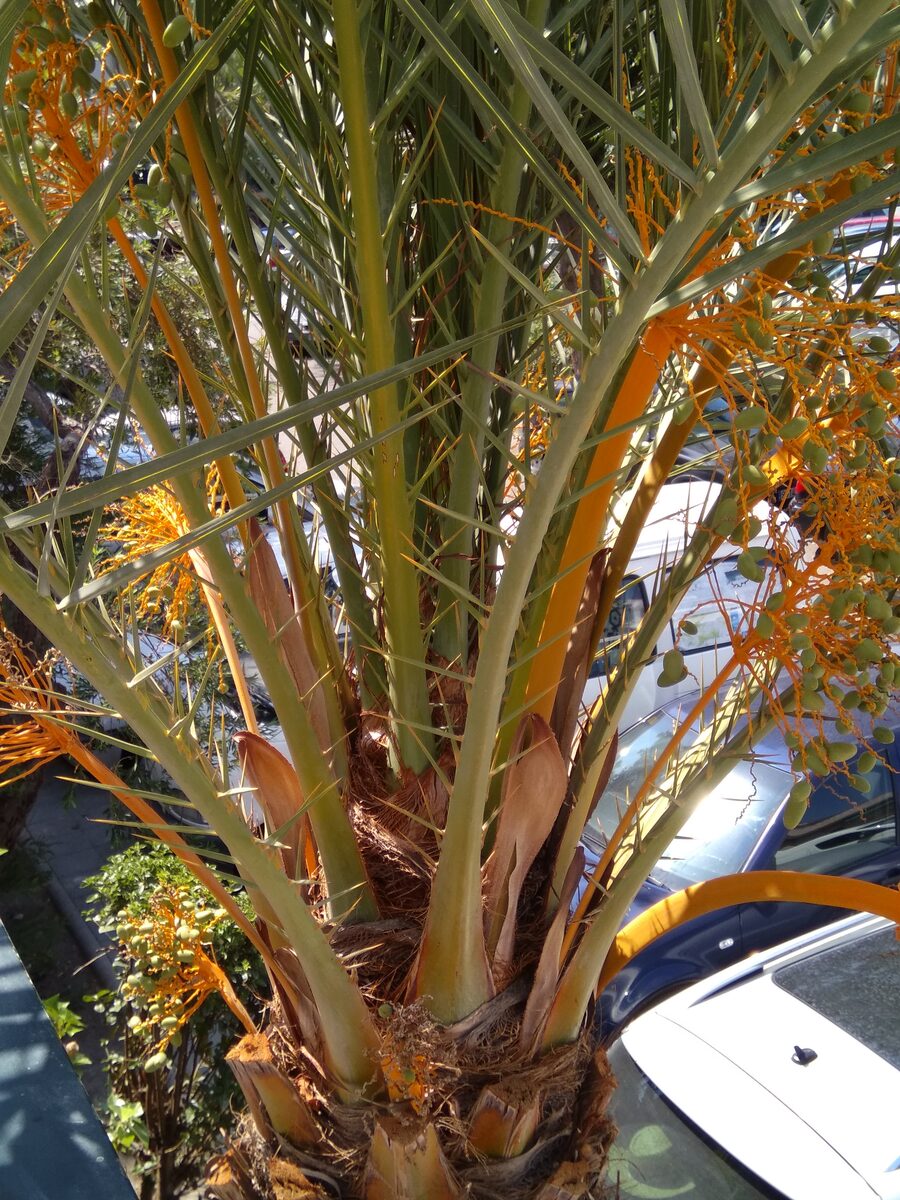
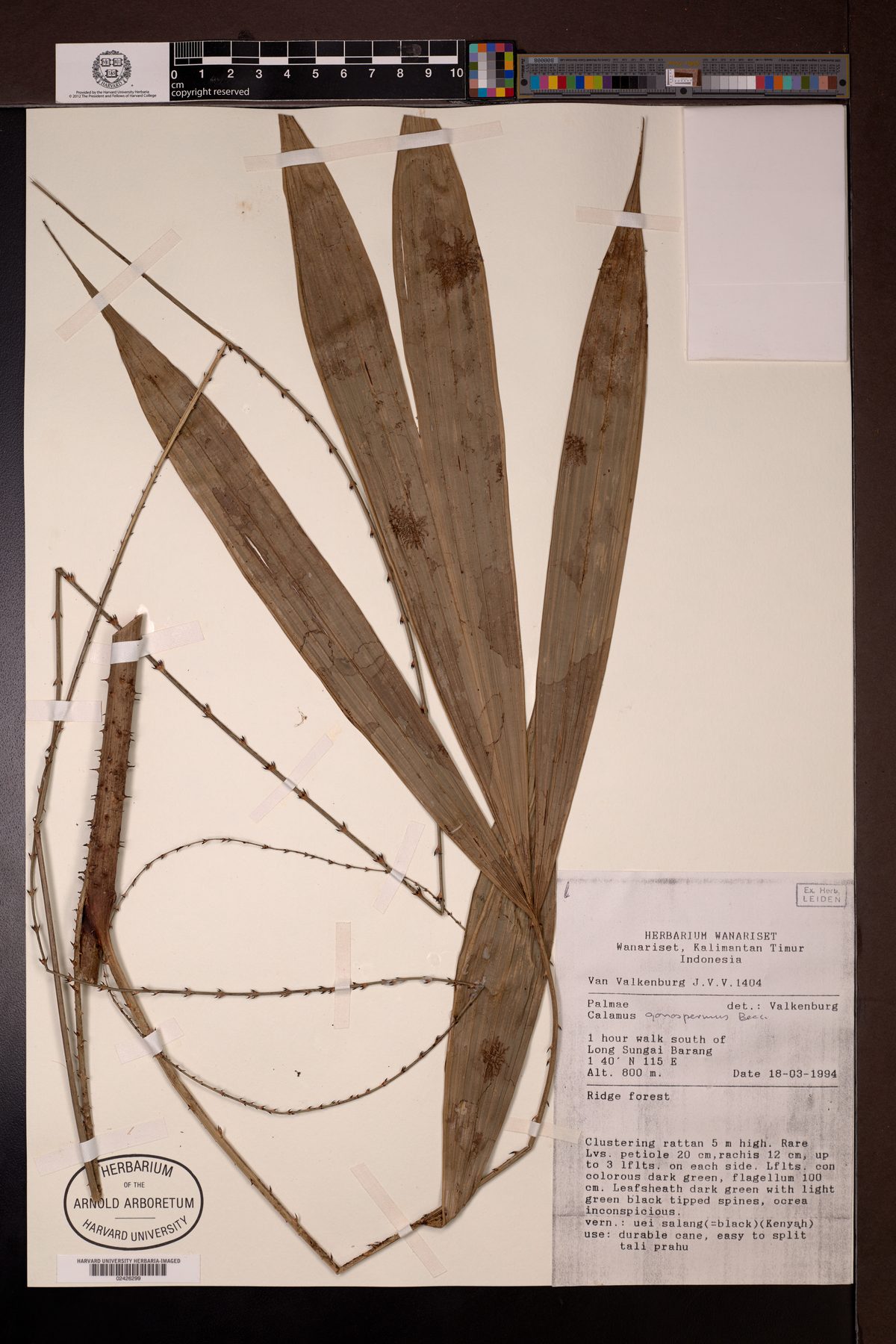
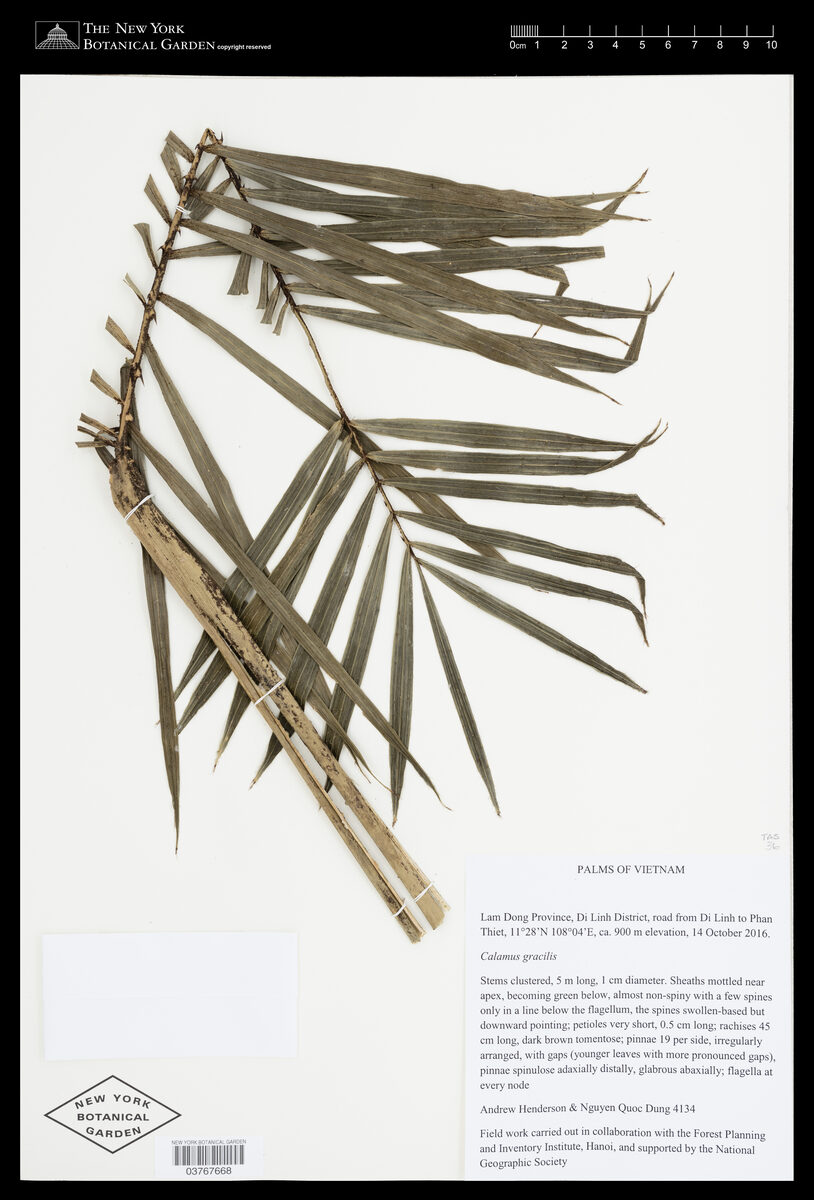
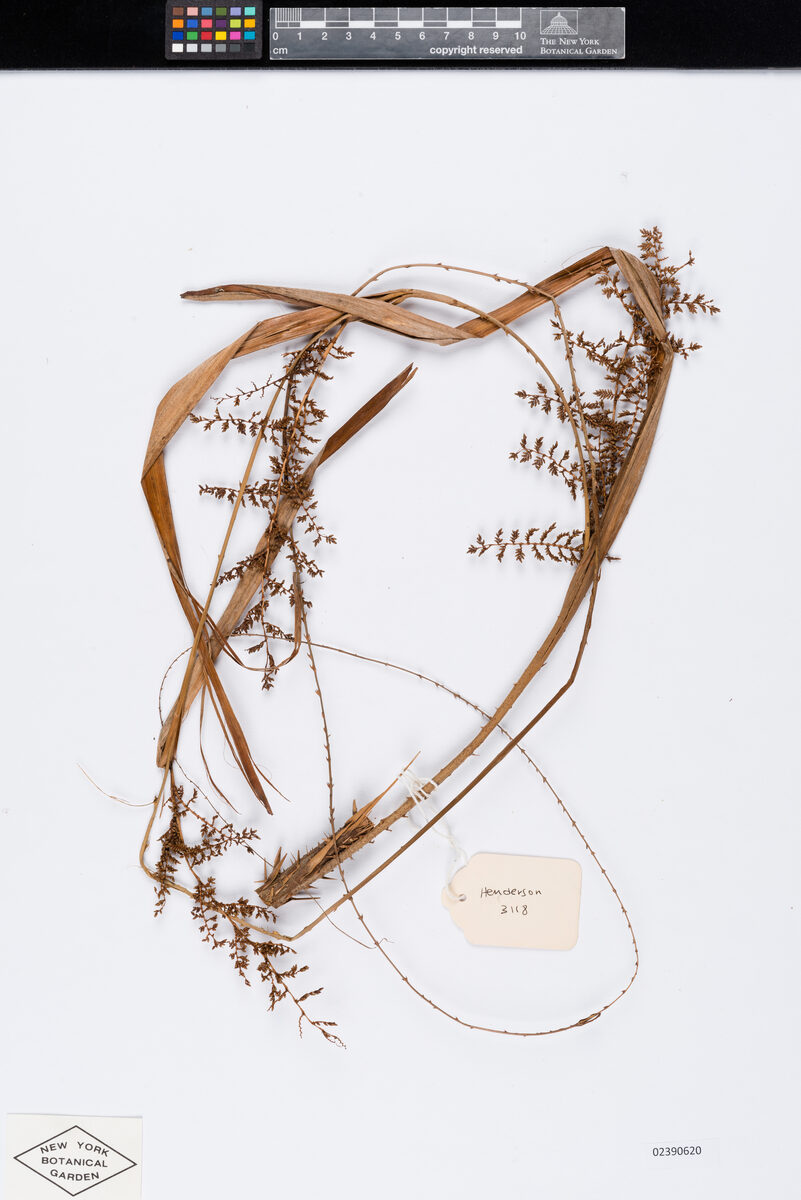
A small and slender palm. The trunk is ringed and grows to about 4 m tall. The leaves are about 2 m long. The leaves have about 50 segments which are equal distance apart at 6 to 7 cm on each side of the leaf axis. The leaf is sword shaped and 1 to 2-ribbed, straight, rigid and narrowing to a point. They are split midway into two lobes at the tip. The leaflets are 55 cm long by 4.5 cm wide. The flower arrangement is a spike of flowers along a central axis with several branches in a spiral. The fruit are in an ordered sequence of 3 on the lower part of the branches. They are small, being 12 to 15 mm by 7 to 8 mm. They are oval with oval seeds. The fruit ripen through red to dark purple.
Edible Uses
The palm bud is cooked and eaten. The palm heart (cabbage) is also edible.
Traditional Uses
The bud is cooked and eaten.
This uses section is brief — help expand it
Distribution
A tropical plant. They are distributed in primary forest at altitudes of 1000 to 1300 m in the Philippines. It is a tropical plant.
Where It Grows
Asia, Australia, Pacific, Philippines, SE Asia,
References (4)
- Jones, D.L., 1994, Palms throughout the World. Smithtonian Institution, Washington. p 310
- Jones, D.L., 2000, Palms of Australia 3rd edition. Reed/New Holland. p 206
- Monsalud, M.R., Tongacan, A.L., Lopez, F.R., & Lagrimas, M.Q., 1966, Edible Wild Plants in Philippine Forests. Philippine Journal of Science. p 520
- World Checklist of Useful Plant Species 2020. Royal Botanic Gardens, Kew