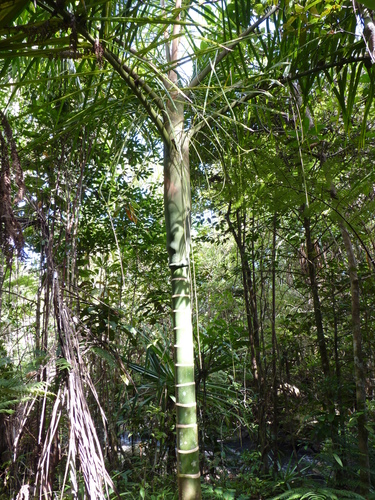
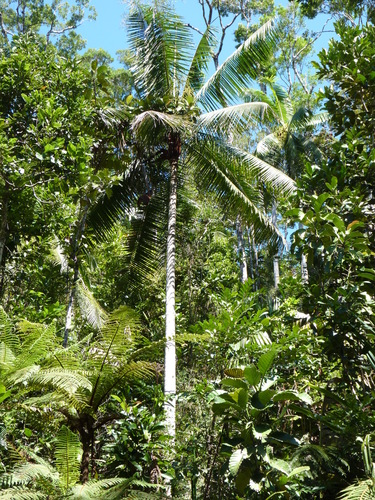
Plectocomia himalayana
Griffith
Patsha
iNaturalist· cc-by-nc
(c) yeshirinzin, some rights reserved (CC BY-NC)
iNaturalist· cc-by-nc-sa
(c) Phuentsho, some rights reserved (CC BY-NC-SA)
Description
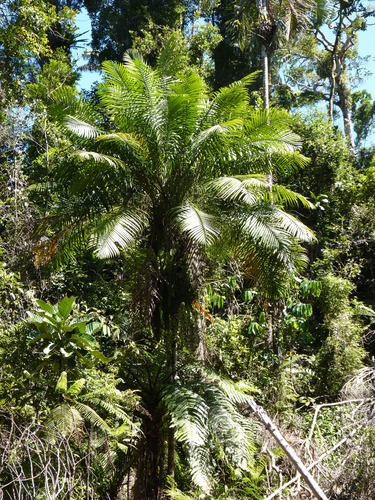
A rattan. It grows in clusters. The stems are 20 m long by 5-10 cm wide. The leaf sheaths are green and covered with white hairs. There are brown needle like spines 2.5 cm long. The leafy stalk i 1.5 m long and has 30 leaflets on each side. They are sword shaped with a fine tip. There are small spines along the edge. The leaflets are irregularly arranged in clusters of 2 or 3 and are spread in different planes.
Edible Uses
The young shoots are commonly eaten, particularly in Bhutan. The scales are removed and the inner pith is chopped and cooked as a vegetable.
Traditional Uses
The young shoots are used as a vegetable. The scales are removed and the inner pith chopped up and cooked.
This uses section is brief — help expand it
Distribution
It is a tropical and subtropical plant. It grows in mountain rain forests between 1,500-2,500 m above sea level in southern China. In Yunnan.
Where It Grows
Asia, Bhutan, China, Himalayas, India, Indochina, Laos, Nepal, SE Asia, Thailand,
Cultivation
Plectocomia himalayana is a plant of medium elevations favouring warm, moist tropical and subtropical conditions but able also to grow in potentially hostile environments with snow and frost. Usually found in the low light levels of moist forests, the plant can also tolerate relatively high light exposure. It is found in the wild on sandy-loam soils. A dioecious species, both male and female forms need to be grown if fruit and seed are required. A monocarpic species, it can grow for many years without flowering, then flowers prolifically before setting seed and dying.
Other Uses
The canes are woven into strong rope, or split into strips for tying fences and for making rough baskets. The canes can reach substantial proportions, large enough for consideration as a potential source of furniture material, if they are strong enough. The stems are too soft to be of much use.
Other Information
It is commonly eaten in Bhutan.
Also Known As
Kharkharay bet, Patsha, Phegkray bet, Tokri
References (4)
- Mukhia, P.K., et al, 2013, Wild plants as Non Wood Forest Products used by the rural community of Dagana, a southern foothill district of Bhutan, SAARC Journal, 27 pages
- Thapa, Laxmi, 2009, The Research Project on Edible Wild Plants of Bhutan and Their Associated traditional Knowledge. http:hdl.handle.net/10091/2919
- Tsherig, K., 2012, Edible Wild Plants of Bhutan and their contribution to Food and Nutrition Security. Ministry of Ag. and Forests, Bhutan. www.fao.org
- Uprety, Y., et al, 2016, Traditional use and management of NTFPs in Kangchenjunga Landscape: implications for conservation and livelihoods. Journal of Ethnobiology and Ethnomedicine (2016) 12:19