Lagarostrobos franklinii
(Hook. f.) Quinn
Huon pine
wikimedia· cc-by-sa
Wikimedia Commons - Securiger
wikimedia· cc-by
Wikimedia Commons - Yoav Daniel Bar-Ness
Description
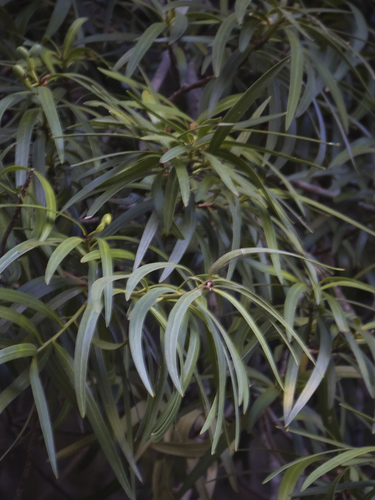
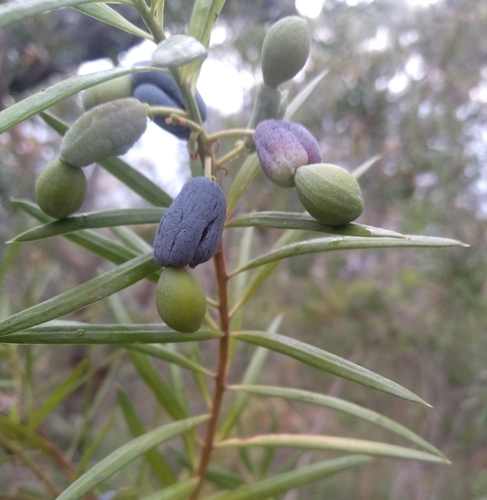
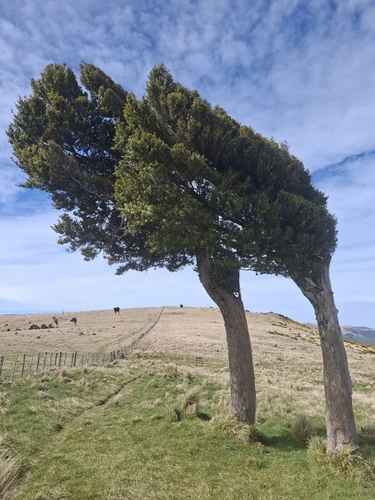
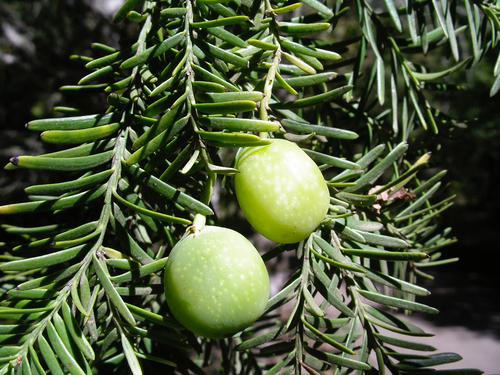
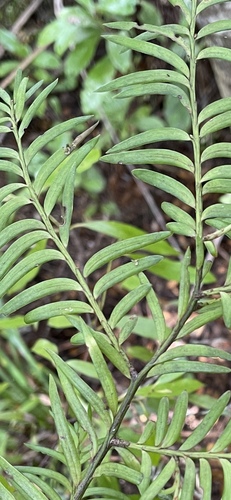
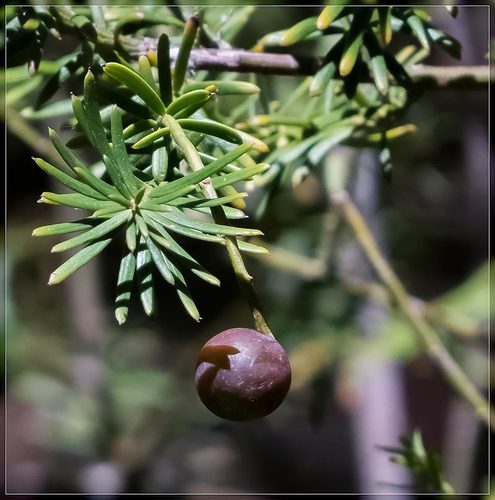
A tree. It is a pyramid shape and grows 20-30 m all. The leaves are very small and tightly clasp the stems. They overlap. They are light green and 1-2 mm long. Trees are separately male and female. The small cones are at the ends of branches. The female cones are at right angles to the stem.
Edible Uses
The wood is the source of Huon pinewood oil, an essential oil recommended for producing vanillin, which can be used as a flavouring in ice creams, confectionery, and beverages. The oil is typically obtained by steam distillation of the wood.
Traditional Uses
It is the source of an essential oil used to flavour ice cream, confectionery and drinks.
This uses section is brief — help expand it
Medicinal Uses
No medicinal uses are known for this plant.
Distribution
It is a temperate plant. It needs a cool climate and a moist, well drained soil. Arboretum Tasmania.
Where It Grows
Asia, Australia*, Malaysia, New Caledonia, New Zealand, Pacific, SE Asia, Tasmania*,
Cultivation
Plants can be grown from fresh seed, tip cuttings or by layering.
Propagation
Sow seed in spring in freely draining compost. Germination usually occurs within 1–3 months at 20°C. One account suggests the seed can be very slow to germinate and is best sown in a cold frame as soon as it is ripe; stored seed should be sown as early in the year as possible.
Other Uses
The essential oil is also used in medicinal soaps, toilet water, and as a preservative in casein paints. The wood is fairly hard, straight-grained, light, soft, strong, and aromatic. It is very durable, containing a strongly scented resin that repels insects, and is used for construction and furniture.
Production
It is very slow growing.
Synonyms
Also Known As
Macquarie pine
References (8)
- Austral. J. Bot. 30:316. 1982
- Facciola, S., 1998, Cornucopia 2: a Source Book of Edible Plants. Kampong Publications, p 184
- Ryan, S., 2008, Dicksonia. Rare Plants Manual. Hyland House. p 66
- Seidemann J., 2005, World Spice Plants. Economic Usage, Botany, Taxonomy. Springer. p 133 (As Dacrydium franklinii)
- Tanaka,
Show all 8 references Hide references
- Tasmanian Herbarium Vascular Plants list p 93
- Uphof,
- Whiting, J., et al, 2004, Tasmania's Natural Flora. Tasmania's natural Flora Editorial Committee, PO Box 194, Ulverstone, Tasmania, Australia, 7315. p 10