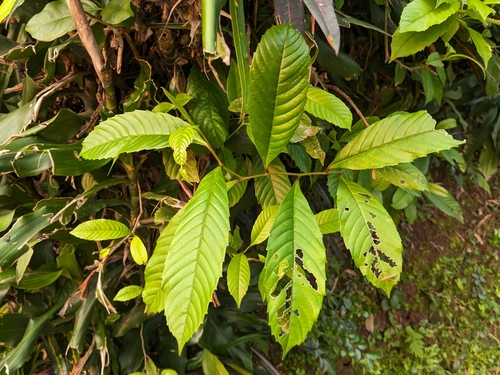
Curatella americana
L.
Chaparro
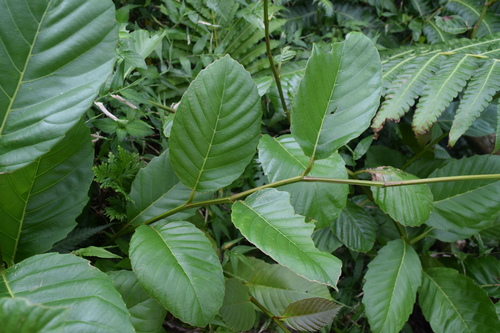
iNaturalist· cc-by-nc
(c) mateus macedo, some rights reserved (CC BY-NC), uploaded by mateus macedo
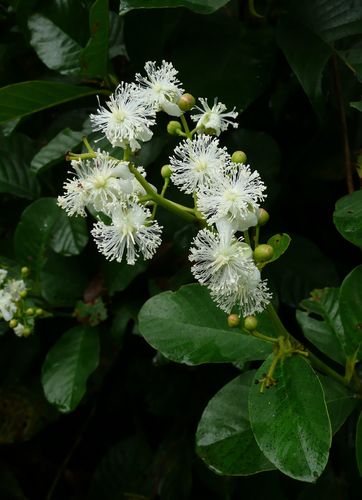
iNaturalist· cc-by-nc
(c) James K. Wetterer, some rights reserved (CC BY-NC)
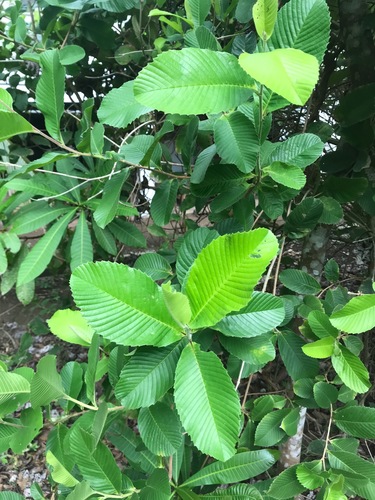
iNaturalist· cc-by-nc
(c) Martin LaBar, some rights reserved (CC BY-NC)
Description
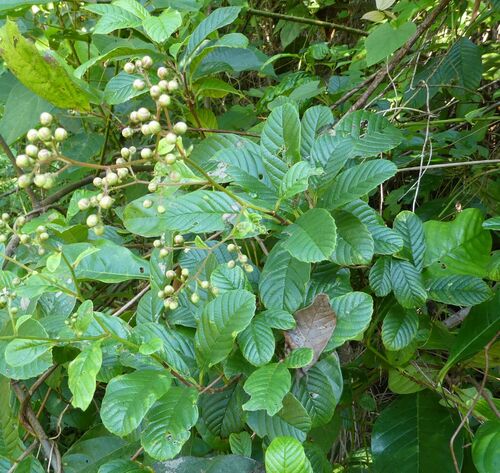
A small tree. It grows 3-7 m high. The trunk is twisted. The bark is cracked and scaly. It is grey-brown. The leaves are simple and alternate. They are 10-20 cm long. They have a sandpapery texture. The leaves have a wavy edge and can have rounded teeth. The flowers are white or pink. They occur in clusters. They have an unpleasant scent. The fruit occur in clusters and are 1-1.5 cm across. The fruit are hairy and contain two black seeds.
Edible Uses
The flesh of the fruit is eaten fresh. The seeds are toasted and used as a flavouring, particularly for chocolate.
Traditional Uses
The seed have been used to flavour chocolate. They are toasted. The flesh of the fruit is eaten.
This uses section is brief — help expand it
Medicinal Uses
The bark is sedative. A decoction of the macerated bark is drunk in order to prevent ulcers and to treat jaundice and hepatitis. An infusion of the leaves is used as an astringent.
Known Hazards
The fruits have glandular hairs that contain allergic principles. Handling the fruits has been known to cause severe skin irritations in some people.
Distribution
A tropical plant. It grows in subarid regions. It is in the savannas.
Where It Grows
Amazon, Americas, Belize, Bolivia, Brazil, Central America, Colombia, Costa Rica, Cuba, Dominican Republic, El Salvador, Guatemala, Guiana, Guianas, Guyana, Haiti, Honduras, Mexico, Nicaragua, North America, Panama, Peru, South America, Suriname, USA, Venezuela, West Indies,
Cultivation
Plants grow from seed. Fires stimulate the seeds to grow.
Propagation
Seed - best sown as soon as it is ripe in a sunny position in a nursery seedbed. A low germination rate can usually be expected, with the seed sprouting within 10 - 20 days. When the seedlings are 5 - 7cm tall, pot them up into individual containers. The seedlings grow slowly. The seed has a short viability of less than 4 months in storage.
Other Uses
The bark is used for tanning. The leaves contain much silica and have a hard, rough surface. They can be used as a substitute for sandpaper to clean or polish articles of wood or metal.. The heartwood is reddish-brown; the narrow band of sapwood somewhat lighter. The wood is cross-grained; coarse; moderately heavy to moderately light; hard to moderately soft; and very durable even when exposed to the elements. It is hard to work; difficult to split; and does not take a good polish. It is used for cabinet work, furniture making, making saddle frames, fence posts etc. The wood is used for fuel and is made into charcoal.
Synonyms
Also Known As
Chumico de palo, Juspi, Lixeira, Mimili, Raspaguacal, Sabanakasjoe, Sandpaper curatella, Sandpaper tree, YaHa
References (14)
- Bortolotto, I. M., et al, 2018, Lista preliminar das plantas alimenticias nativas de Mato Grosso do Sul, Brasil. Iheringia, Serie Botanica, Porto Alegre, 73 (supl.):101-116
- Condit, R., et al, 2011, Trees of Panama and Costa Rica. Princeton Field Guides. p 152
- Ekman Herbarium records Haiti
- Fouqué, A. 1972. Espèces fruitières d'Amérique tropicale. Institut français de recherches fruitierès outre-mer
- Grandtner, M. M., 2008, World Dictionary of Trees. Wood and Forest Science Department. Laval University, Quebec, Qc Canada. (Internet database http://www.WDT.QC.ca)
Show all 14 references Hide references
- Grandtner, M. M. & Chevrette, J., 2013, Dictionary of Trees, Volume 2: South America: Nomenclature, Taxonomy and Ecology. Academic Press p 184
- Lopez-Diago, D. & Garcia, N., 2021, Wild edible fruits of Colombia. Biota ColomBiana 22 (2) p 35
- Plants of Haiti Smithsonian Institute http://botany.si.edu/antilles/West Indies
- Roa, J. A. G. & Boada, D. S. G., 2018, Fundación para el Fortalecimiento de la Fruticultura y Plantas Alimenticias no Convencionales en Colombia.
- Russell, T., Cutler, C., & Walters, M., 2005, The Illustrated Encyclopedia of Trees of the Americas. Lorenz Books. p 193
- Segura, S., et al, 2018, The edible fruit species in Mexico. Genet Resour Crop Evol (2018) 65:1767–1793
- Syst. Ed. 10. 1079. 1759
- van Roosmalen, M.G.M., 1985, Fruits of the Guianan Flora. Utrecht Univ. & Wageningen Univ. p 105
- Zuchowski W., 2007, Tropical Plants of Costa Rica. A Zona Tropical Publication, Comstock Publishing. p 266