Dillenia obovata
(Blume) Hoogland
Burma simpoh, Stone dillenia tree
iNaturalist· cc-by-nc
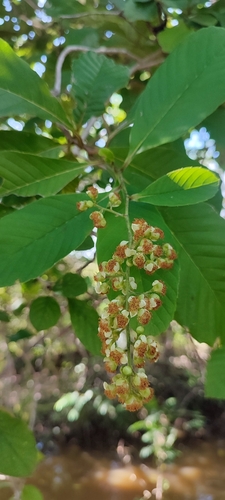
(c) e0200998jiayi18, some rights reserved (CC BY-NC), uploaded by e0200998jiayi18
iNaturalist· cc-by-nc
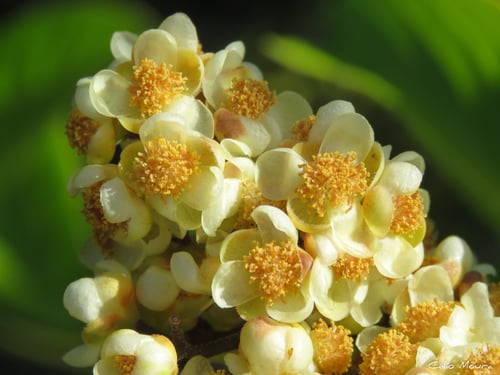
(c) Sakaoduean Chumnuan, some rights reserved (CC BY-NC)
Description
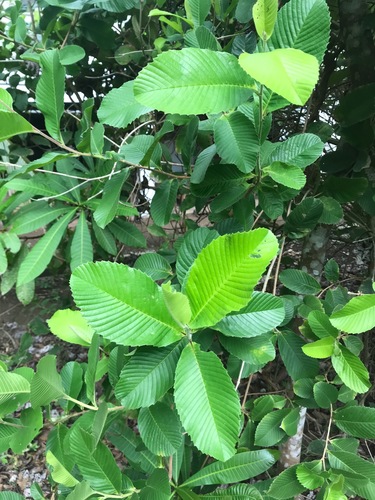
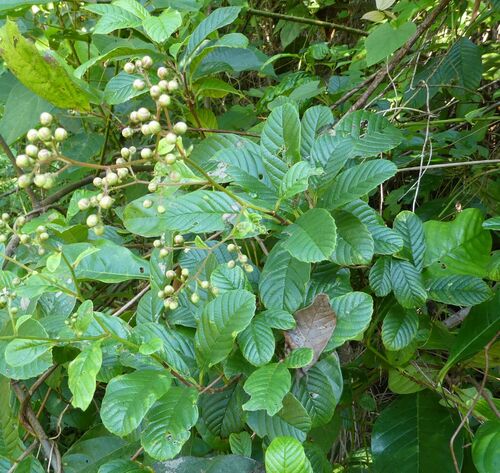
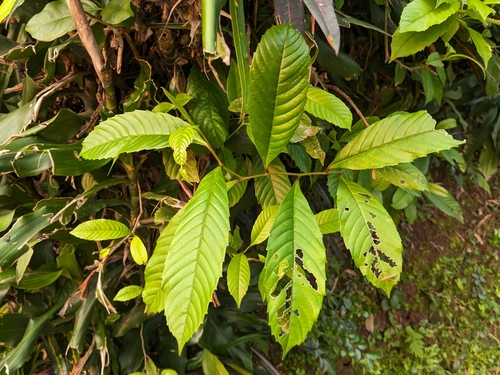
A tree 20-30 m tall. It loses its leaves during the year. The trunk is 70 cm thick. The leaves occur in rings and are deep green. The veins are easy to see. The leaves can be 30 cm long. The young leaves are a purplish-brown. The young twigs, leaves and flower buds have soft hairs. The flowers are 15 cm across. The fruit are oval and orange. They are 2.5-5 cm across. There are brown seeds in a clear pulp.
Edible Uses
The fruit are eaten in curry.
Traditional Uses
The fruit are eaten in curry.
This uses section is brief — help expand it
Distribution
A tropical plant. It grows in clear forests at low altitudes. It can grow up to 1800 m altitude. It is best in humus-rich, well-drained soils. It needs a protected, shaded position. It is damaged by drought and frost.
Where It Grows
Asia, Cambodia, Indochina, Indonesia, Laos, Malaysia, Myanmar, SE Asia, Singapore, Thailand, Vietnam,
Cultivation
The plant can be grown by seeds. They can also be grown by cuttings.
Other Uses
The wood is sometimes used in house construction.
Notes
There are about 60 Dillenia species.
Synonyms
Also Known As
Chhe thbal, Pohon sempur batu, Pohon sampur rimba, Simpuh beludu, Simpoh badang, Saan-yai, So trai, So xoan
References (6)
- Altschul, S.V.R., 1973, Drugs and Foods from Little-known Plants. Notes in Harvard University Herbaria. Harvard Univ. Press. Massachusetts. no. 2811
- Bodkin, F., 1991, Encyclopedia Botanica. Cornstalk publishing, p 343
- Engel, D.H., & Phummai, S., 2000, A Field Guide to Tropical Plants of Asia. Timber Press. p 58
- Morley, B. & Everard, B., 1970, Wild Flowers of the World. Ebury press. Plate 112
- Phon, P., 2000, Plants used in Cambodia. © Pauline Dy Phon, Phnom Penh, Cambodia. p 232
Show all 6 references Hide references
- Sukarya, D. G., (Ed.) 2013, 3,500 Plant Species of the Botanic Gardens of Indonesia. LIPI p 230