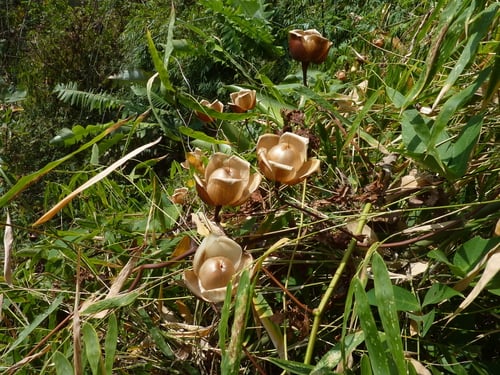
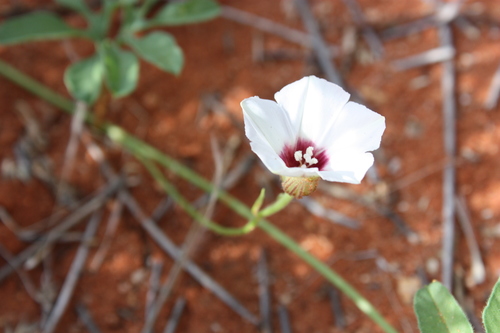
Ipomoea nil
(L.) Roth
Ivy morning glory, Japanese morning glory
iNaturalist· cc-by-nc-sa
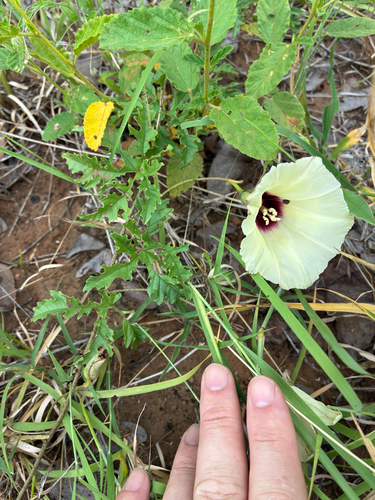
(c) Basílio Maciel, some rights reserved (CC BY-NC-SA), uploaded by Basílio Maciel
iNaturalist· cc-by
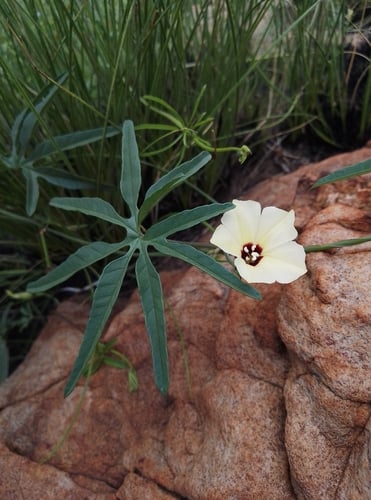
(c) Rodolfo Salinas Villarreal, some rights reserved (CC BY), uploaded by Rodolfo Salinas Villarreal
iNaturalist· cc-by-nc-sa
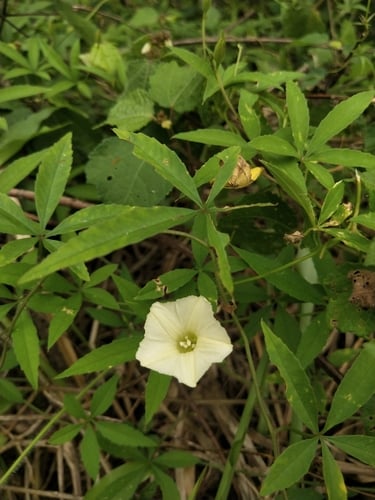
(c) Gustavo Fernando Durán, some rights reserved (CC BY-NC-SA), uploaded by Gustavo Fernando Durán
Summary
Source: WikipediaIpomoea nil is a species of Ipomoea morning glory known by several common names, including picotee morning glory, ivy morning glory, ivy-leaf morning glory, and Japanese morning glory (although it is not native to Japan). It is native to the tropical Americas, and has been introduced widely across the world.
Description
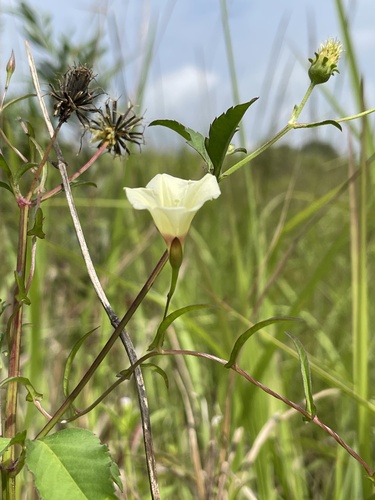
A climbing annual herb. The vines can be 5 m long. The stems are cylinder shaped and slender. The leaves are alternate. The leaves have 3 points. They are 3-8 cm long. The flowers can be blue, pink or red.
Edible Uses
No edible uses are known for this plant.
Traditional Uses
The fruit are eaten raw. The leaves are eaten as a vegetable.
This uses section is brief — help expand it
Medicinal Uses
The seed is anthelmintic, anticholinergic, antifungal, antispasmodic, antitumour, diuretic, and laxative. It is used in the treatment of oedema, oliguria, ascariasis, and constipation. In Korea, the seed is also used as a contraceptive. The seed contains small quantities of the hallucinogen LSD, which has been used medicinally in the treatment of various mental disorders. The pounded plant is used as a hair wash to rid the hair of lice.
Distribution
A tropical plant.
Where It Grows
Asia, Australia, Dominican Republic, Haiti, India, Indochina, Korea, Laos, Madagascar, Myanmar, Puerto Rico, SE Asia, Tropics, West Indies, West Timor,
Cultivation
The plant is not frost hardy, but can be grown outdoors as a tender annual in temperate zones. Requires a fertile well-drained loam in a sunny position. A very ornamental plant, there are several named varieties.
Propagation
Pre-soak seed for 12 hours in warm water or scarify it, then sow in individual pots in a greenhouse in early spring. Germination usually occurs within 1–3 weeks at 22°C. Plants are extremely resentful of root disturbance even when small, so should be potted up almost as soon as they germinate. Grow them on quickly in the greenhouse and plant out into permanent positions after the last expected frosts, considering cloche protection until they are growing away actively.
Other Uses
No other uses are known beyond its parasiticide properties noted under medicinal uses.
Synonyms
Also Known As
Nalichi bhaji, Neelakkalampa, Nilya, Picotee morning glory, Vahintsidy, White-edge morning glory.
References (7)
- Collectanea 1:124. 1787 ("1786"); Icon. pl. rar. 1: t. 36. 1787? ("1781-1786") (As Ipomoea hederacea)
- Hedrick, U.P., 1919, (Ed.), Sturtevant's edible plants of the world. p 358 (As Ipomoea hederacea)
- Jadhav, R., et al, 2015, Forest Foods of Northern Western Ghats: Mode of Consumption, Nutrition and Availability. Asian Agri-History Vol. 19, No. 4: 293-317
- Joseph, M. A. & Antony, V. T., 2014, Wild edible Convolvulacean members used by the ULLADA tribes of ALEPPEY DISTRICT, KERALA. Journal of Science Vol. 4 No. 7 p 425-427
- Kuvar, S. D. & Shinde, R. D., 2019, Wild Edible Plants used by Kokni Tribe of Nasik District, Maharashtra. Journal of Global Biosciences. Volume 8, Number 2, 2019, pp. 5936-5945
Show all 7 references Hide references
- Plants of Haiti Smithsonian Institute http://botany.si.edu/antilles/West Indies (As Ipomoea hederacea)
- World Checklist of Useful Plant Species 2020. Royal Botanic Gardens, Kew