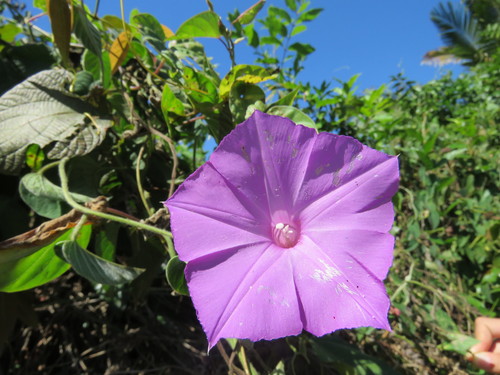
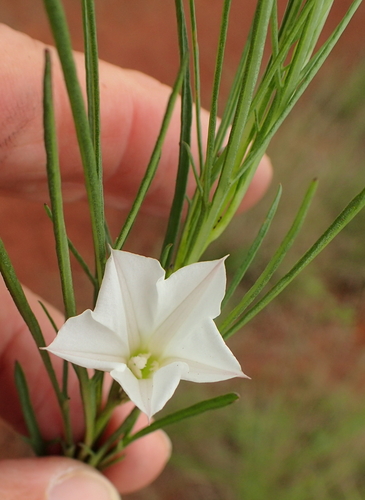
Merremia palmata
Hallier f.
Morning-glory
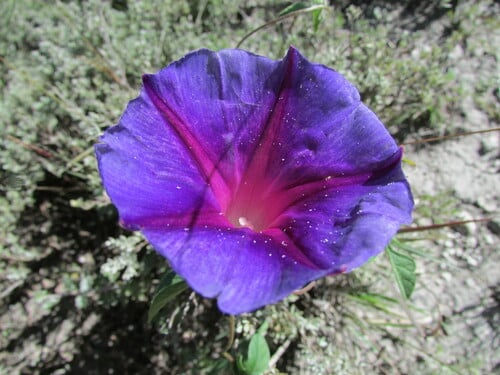
iNaturalist· cc-by-nc
(c) Matt Prinsloo, some rights reserved (CC BY-NC), uploaded by Matt Prinsloo
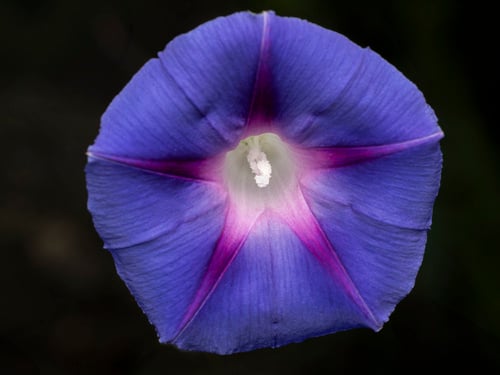
iNaturalist· cc-by-nc-sa
(c) David Hoare, some rights reserved (CC BY-NC-SA), uploaded by David Hoare
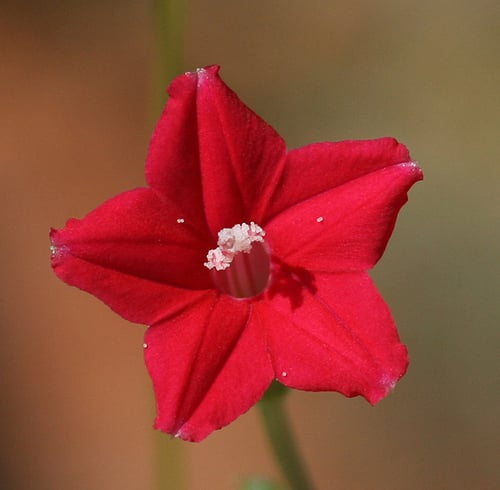
iNaturalist· cc-by-nc-nd
(c) Joseph Heymans, some rights reserved (CC BY-NC-ND), uploaded by Joseph Heymans
Description
A creeping herb. It keeps growing from year to year. It can lie along the ground or be twining. It can be 2.5 m long. It has a taproot. The leaves have leaflets in a ring spread out like fingers on a hand. The flowers are pale yellow with a red centre. They are funnel shaped and 2-3 cm long. The often occur singly in the axils of the leaves. The fruit is an oval capsule. There are 4 seeds.
Edible Uses
The leaves are cooked and eaten with the water changed several times to remove the sour taste. The roots are chewed raw for their water content.
Traditional Uses
The leaves are cooked and eaten. The water is changed several times to remove the sour taste. The roots are chewed raw for their water.
This uses section is brief — help expand it
Medicinal Uses
In the Indigenous system of Medicine, Ipomoea reniformis chois is also known as Merremia emarginata (Burm.f.) Hallier f. has been claimed to be useful for cough, headache, neuralgia, rheumatism, diuretic, inflammation, fever due to enlargement of liver and also in kidney diseases. The tribal people use this plant for deobstruent, diuretic, rheumatism, neuralgia, cancerous wounds, migraine, purgative, snake bites, ulcer, abscesses and glandular swelling.
Distribution
It is a subtropical plant. It grows in places with a marked dry season. It grows in well-drained sands and clays. It grows between 120-1,450 m above sea level. It can grow in arid places.
Where It Grows
Africa, Angola, Asia, Botswana, Central Africa, East Africa, India, Mozambique, Namibia, South Africa, Southern Africa, Zimbabwe,
Also Known As
Babi, Glora, Manyimba
References (3)
- Leger, S., 1997, A Description of Today's Use of Plants in West Bushmanland (Namibia). German Development Service. PO Box 220035, 14061 Berlin, Germany. http://www.sigridleger.de/book/
- Royal Botanic Gardens, Kew (1999). Survey of Economic Plants for Arid and Semi-Arid Lands (SEPASAL) database. Published on the Internet; http://www.rbgkew.org.uk/ceb/sepasal/internet [Accessed 15th April 2011]
- World Checklist of Useful Plant Species 2020. Royal Botanic Gardens, Kew