Merremia tuberosa
(L.) Rendle
Wood rose
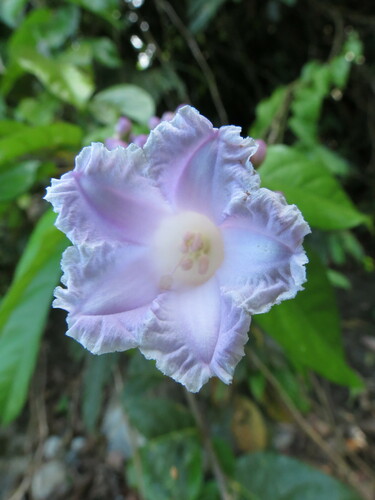
iNaturalist· cc-by-nc
(c) Jean-François Olivier, some rights reserved (CC BY-NC)
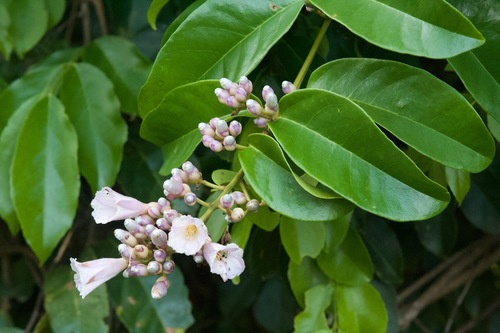
iNaturalist· cc-by-nc
(c) Mark Nofsinger, some rights reserved (CC BY-NC)
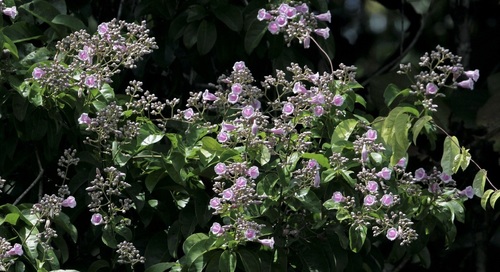
iNaturalist· cc-by-nc
(c) mvvklaus, some rights reserved (CC BY-NC)
Description
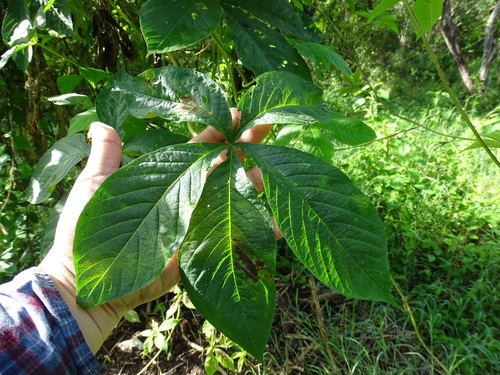
A creeper or woody vine. It can be climbing and twining. It grows 10-15 m long. It has milky sap. The stems are thick and cylinder shaped. The leaves are alternate and the blades are simple. They are 7-12 cm long by 6-11 cm long. They have 7 lobes arranged like fingers on a hand. The flower is yellow. The fruit are oval capsules. They are 1.5-2.5 cm long. There are 4 seeds in each fruit.
Edible Uses
The tuber is eaten and the seeds are dried, roasted, and ground to make a coffee-like drink.
Traditional Uses
The seeds are dried and then roasted and ground to make a coffee like drink.
This uses section is brief — help expand it
Medicinal Uses
The tuber is used as a drastic purgative. The plant has hallucinogenic properties.
Distribution
It is a tropical plant. In NE Queensland it grows from sea level to 300 m above sea level.
Where It Grows
Africa, Asia, Australia, Bahamas, Brazil, Central Africa, Congo DR, Dominican Republic, Hawaii, India, Mascarenes, Myanmar, Pacific, Puerto Rico, SE Asia, South America, Sri Lanka, West Indies,
Cultivation
Plants can be grown by seeds or cuttings.
Propagation
Seed - it can remain viable in the soil for many years.
Synonyms
Also Known As
Flor de palo, Spanish arbour-vine
References (3)
- Gape, L. & Sweeting, M., 2003, Bahamas Pine forest Resource Book. Bahamas National Trust p 28
- Latham, P & Mbuta, A., 2017, Useful Plants of Central Province, Democratic Republic of Congo. Volume 2. Salvation Army p 32
- www.colecionandofrutas.org