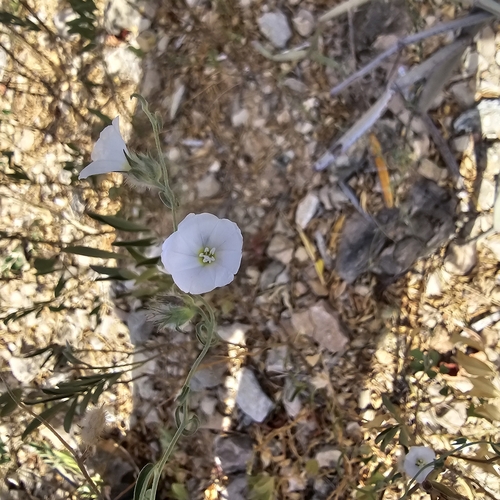
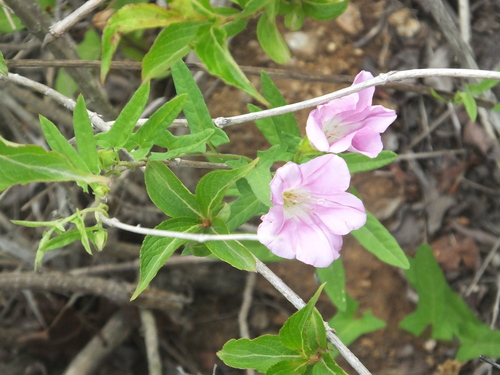
Merremia tridentata
(L.) Hallier f.
Convolvulaceae Edible: Leaves, Leaves - tea
iNaturalist· cc-by-nc
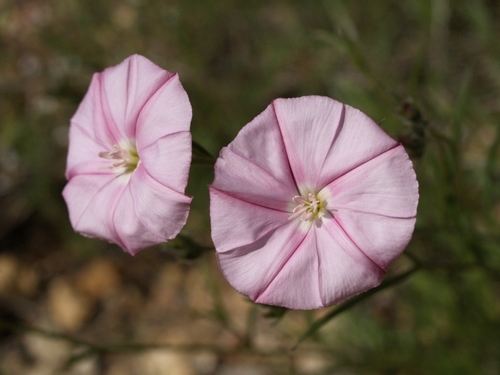
(c) mu9400, some rights reserved (CC BY-NC)
iNaturalist· cc-by-nc
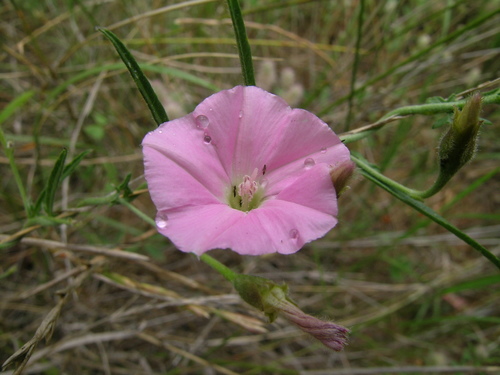
(c) mu9400, some rights reserved (CC BY-NC)
iNaturalist· cc-by-nc
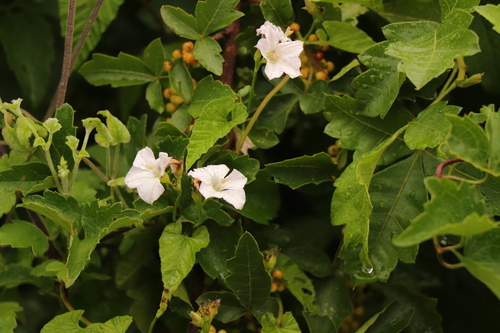
(c) mu9400, some rights reserved (CC BY-NC)
Description
A herb. It can be twining. It has stout root. The stems are wiry and 4 m long. The leaves are narrowly oblong. They are 3-8 cm long by 4-15 mm wide.
Edible Uses
The leaves are cooked as a vegetable or prepared as tea.
Traditional Uses
The leaves are cooked as a vegetable.
This uses section is brief — help expand it
Distribution
It is a tropical plant.
Where It Grows
Africa, Asia, China, India, Guinea-Bissau, Senegal, South Africa, Southern Africa, West Africa,
Other Information
It is sold in local markets in China.
Synonyms
Convolvulus tridentatus L.Merremia tridentata subsp. hastata (Hallier f.) Ooststr.Xenostegia tridentata (L.) D. F. Austin & Staplesand others
Also Known As
Feng chui teng, Lata, Thadaka dobbudu
References (5)
- Catarino, L. et al, 2019, Edible Leafy Vegetables from West Africa (Guinea-Bissau): Consumption, Trade and Food Potential. Foods 2019, 8, 493
- Kuhnlein, H. V., et al, 2009, Indigenous Peoples' food systems. FAO Rome p 192 (As Merremia tridentata var. hastata)
- Li, D. et al, 2017, Ethnobotanical survey of herbal tea plants from the traditional markets in Chaoshan, China. Journal of Ethnopharmacology. 205 (2017) 195-206 (As Xenostegia tridentata)
- Ruiters-Welcome, A. K., 2019, Food plants of southern Africa. Ph.D. thesis. Univ. of Johannesburg p 47
- Welcome, A. K. & Van Wyk, B.-E., 2019, An inventory and analysis of the food plants of southern Africa. South African Journal of Botany 122 (2019) 136–179 (As Xenostegia tridentata)