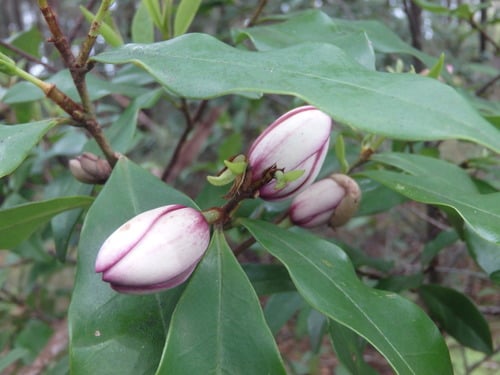
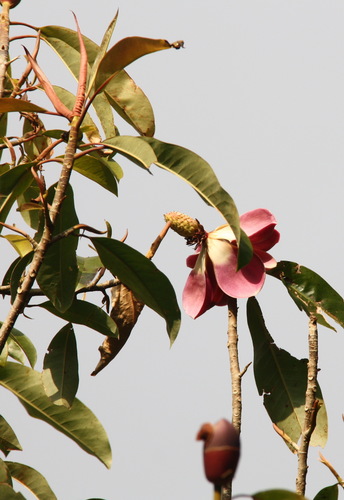
Magnolia denudata
Desroursseaux
Jade orchid, Lily tree
iNaturalist· cc-by-nc-sa
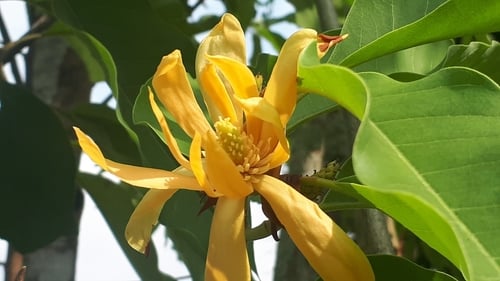
(c) Nuno Veríssimo P., some rights reserved (CC BY-NC-SA), uploaded by Nuno Veríssimo P.
iNaturalist· cc-by
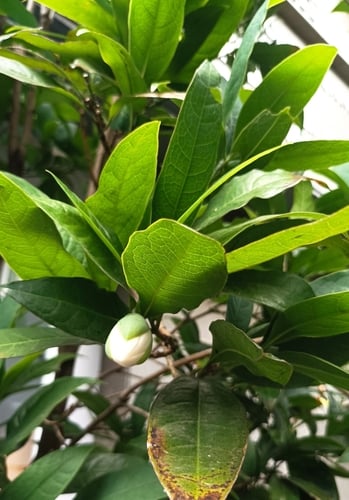
(c) Marco Mussita, some rights reserved (CC BY), uploaded by Marco Mussita
iNaturalist· cc-by-nc
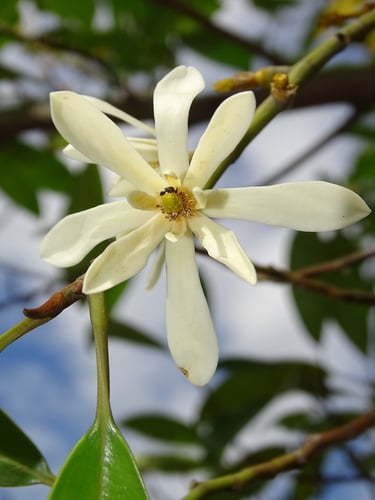
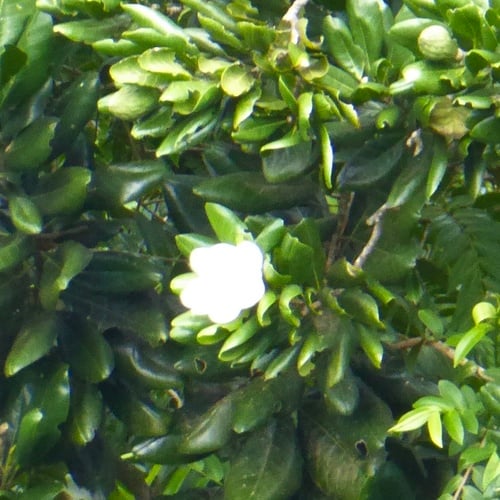
(c) j_arlecchino, some rights reserved (CC BY-NC)
Summary
Source: WikipediaMagnolia denudata, the lilytree or Yulan magnolia (simplified Chinese: 玉兰花; traditional Chinese: 玉蘭花; pinyin: yùlánhuā; lit. 'jade orchid/lily'), is native to central and eastern China. It has been cultivated in Chinese Buddhist temple gardens since 600 AD. Its flowers were regarded as a symbol of purity in the Tang dynasty and it was planted in the grounds of the emperor's palace. It is the official city flower of Shanghai.
Description
A deciduous shrub or tree. It grows 5-9 m high and spreads about 9 m wide. The leaves are large and leathery and blue-green. The flowers are white and have a smell. They are cup shaped. The flowers appear on bare wood before the leaves.
Edible Uses
The flowers are edible once the calyx has been removed; they are pickled and used to flavour rice.
Traditional Uses
The flower buds are pickled after the calyx is removed and used to flavour rice. They are also used for scenting tea. The fresh petals of the partly opened flower are dipped in batter, deep fried and served while hot as a delicacy.
Medicinal Uses
The flower buds and seeds are carminative and diaphoretic. The flower buds are also antifungal, astringent, cytotoxic, hypotensive, and a uterine stimulant. In Korea they are used to treat headaches, nasal obstruction, and sinusitis. In Chinese medicine, the buds are harvested in early spring, dried, and used to clear the nasal passages. The plant as a whole is anodyne and sedative.
Known Hazards
Flower buds are a uterine stimulant.
Distribution
It is a temperate plant. It cannot tolerate strong winds or heavy frosts. In China it grows between 500-1,000 m above sea level. It suits hardiness zones 6-9. Arboretum Tasmania. Melbourne Botanical garden. In Yunnan.
Where It Grows
Asia, Australia, China*, India, Indonesia, Korea, Pakistan, SE Asia, Tasmania,
Cultivation
Best grown in a warm position in a moderately rich free soil of an open texture. Succeeds in an acid or neutral peaty soil in sun or part shade. Tolerates alkaline soils so long as they are deep and rich in humus. The branches are brittle so a sheltered position is required. Very tolerant of atmospheric pollution. A very ornamental tree, it is hardy to about -20°c when dormant but plants can be excited into early growth by mild winters and the flowers are then liable to be killed by frost. The flowers, which begin to be produced when the plant is quite young, are deliciously scented. The fleshy roots are easily damaged and any transplanting is best done during a spell of mild moist weather in late spring.
Propagation
Sow seed as soon as it is ripe in a cold frame. Stored seed must be kept cold over winter and sown in late winter in a cold frame. Germination usually occurs in spring but can take 18 months. Prick seedlings into individual pots when large enough to handle and grow on in light shade in a cold frame or greenhouse for at least the first winter. They can be planted into permanent positions once they exceed 15cm in height, but should be well mulched and given some protection from winter cold for their first one or two winters outdoors. Layering can be done in early spring.
Other Uses
None known
Production
Plants flower within 3 years.
Notes
There are 128 Magnolia species. There are 15 species in tropical America. The flowers of most Magnolias are edible.
Synonyms
Also Known As
Haku-mokuren, Lili magnolia, Magnolia yulan, Yulan
References (12)
- Ambasta S.P. (Ed.), 2000, The Useful Plants of India. CSIR India. p 349
- Cundall, P., (ed.), 2004, Gardening Australia: flora: the gardener's bible. ABC Books. p 851
- Etherington, K., & Imwold, D., (Eds), 2001, Botanica's Trees & Shrubs. The illustrated A-Z of over 8500 trees and shrubs. Random House, Australia. p 454
- Facciola, S., 1998, Cornucopia 2: a Source Book of Edible Plants. Kampong Publications, p 145
- Flora of Pakistan. www.eFloras.org
Show all 12 references Hide references
- Hedrick, U.P., 1919, (Ed.), Sturtevant's edible plants of the world. p 397 (As Magnolia yulan)
- Hibbert, M., 2002, The Aussie Plant Finder 2002, Florilegium. p 189
- Hu, Shiu-ying, 2005, Food Plants of China. The Chinese University Press. p 395
- J. B. A. P. M. de Lamarck & L. A. J. Desrousseaux, Encycl. 3:675. 1792
- Liu, Yi-tao, & Long, Chun-Lin, 2002, Studies on Edible Flowers Consumed by Ethnic Groups in Yunnan. Acta Botanica Yunnanica. 24(1):41-56
- Ryan, S., 2008, Dicksonia. Rare Plants Manual. Hyland House. p 39
- Sukarya, D. G., (Ed.) 2013, 3,500 Plant Species of the Botanic Gardens of Indonesia. LIPI p 666