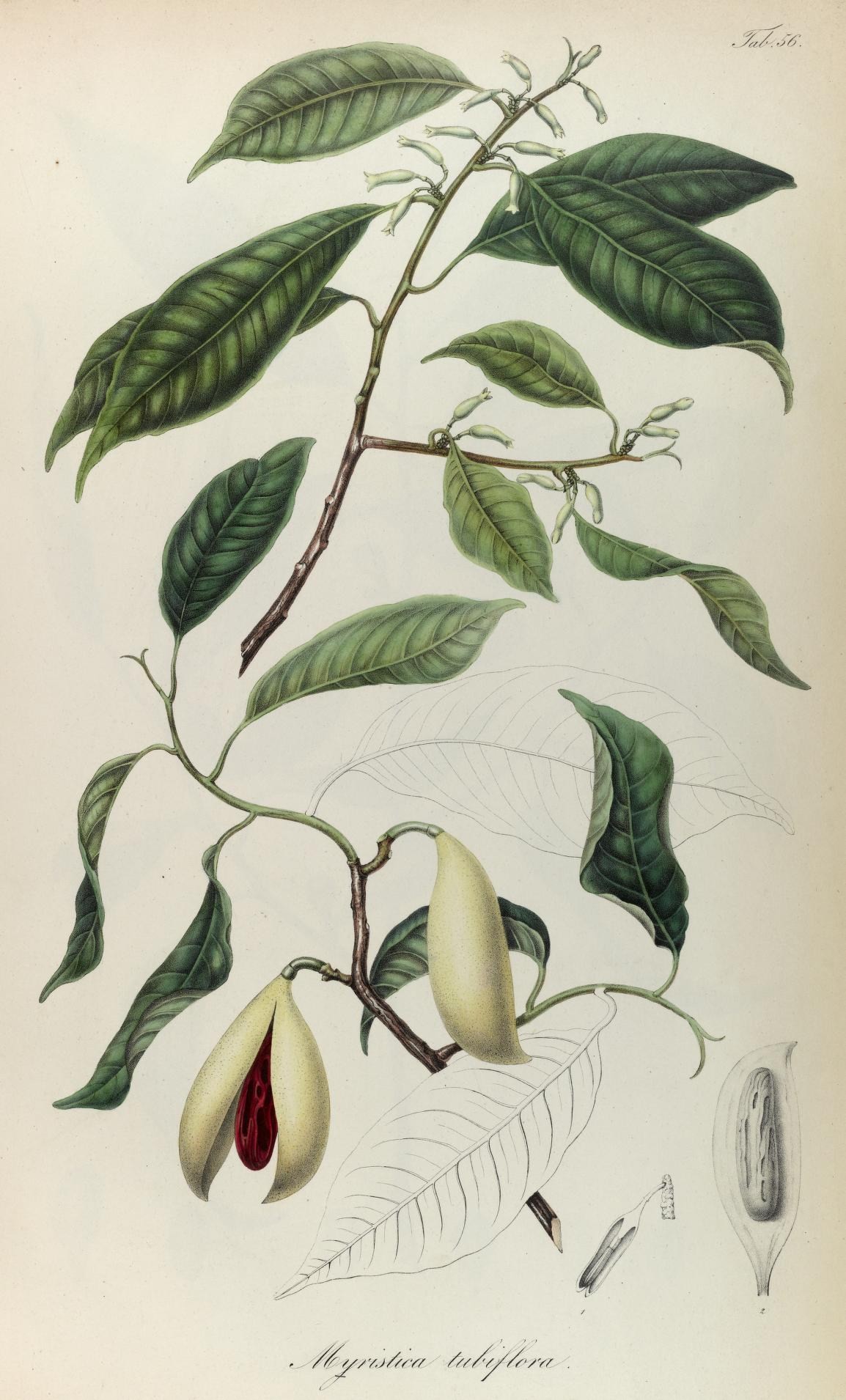
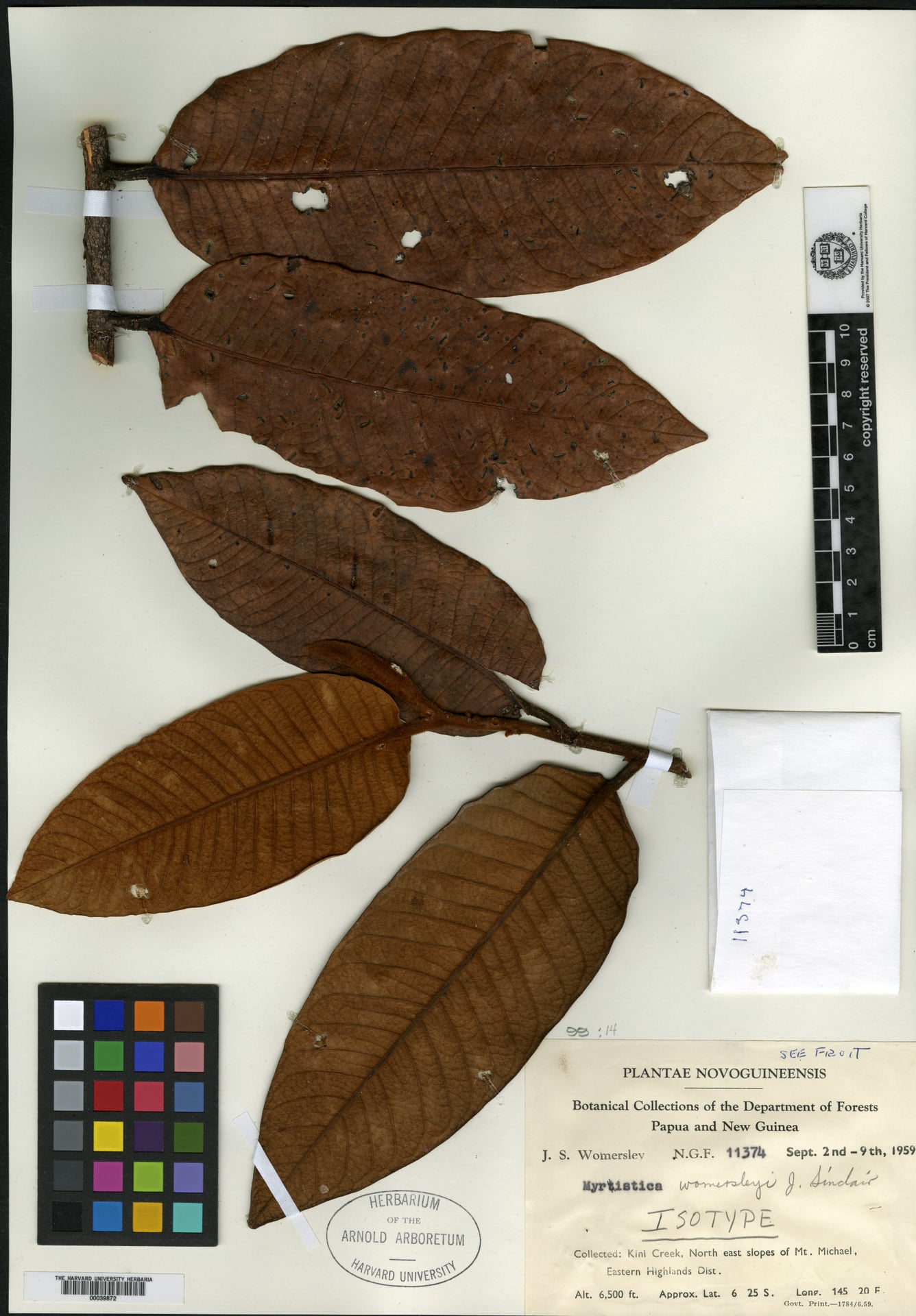
Myristica succedanea
Blume
Halmahera nutmeg, Onin nutmeg
gbif· cc-by
Royal Botanic Gardens, Kew
gbif· cc-by
Royal Botanic Gardens, Kew
Description
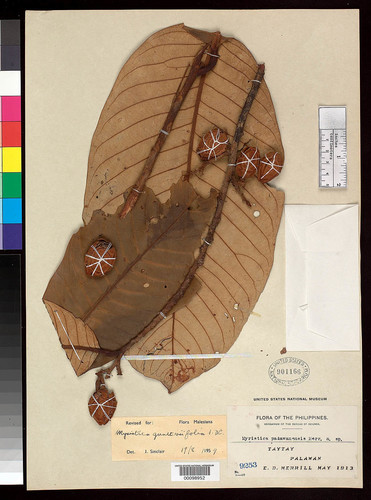
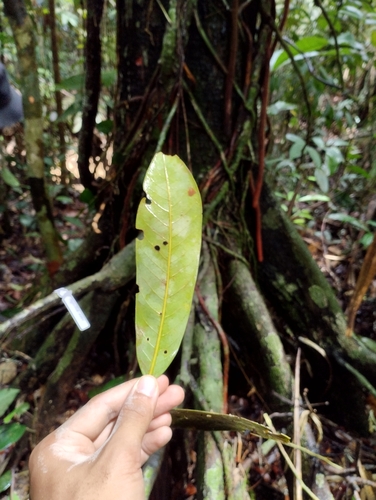
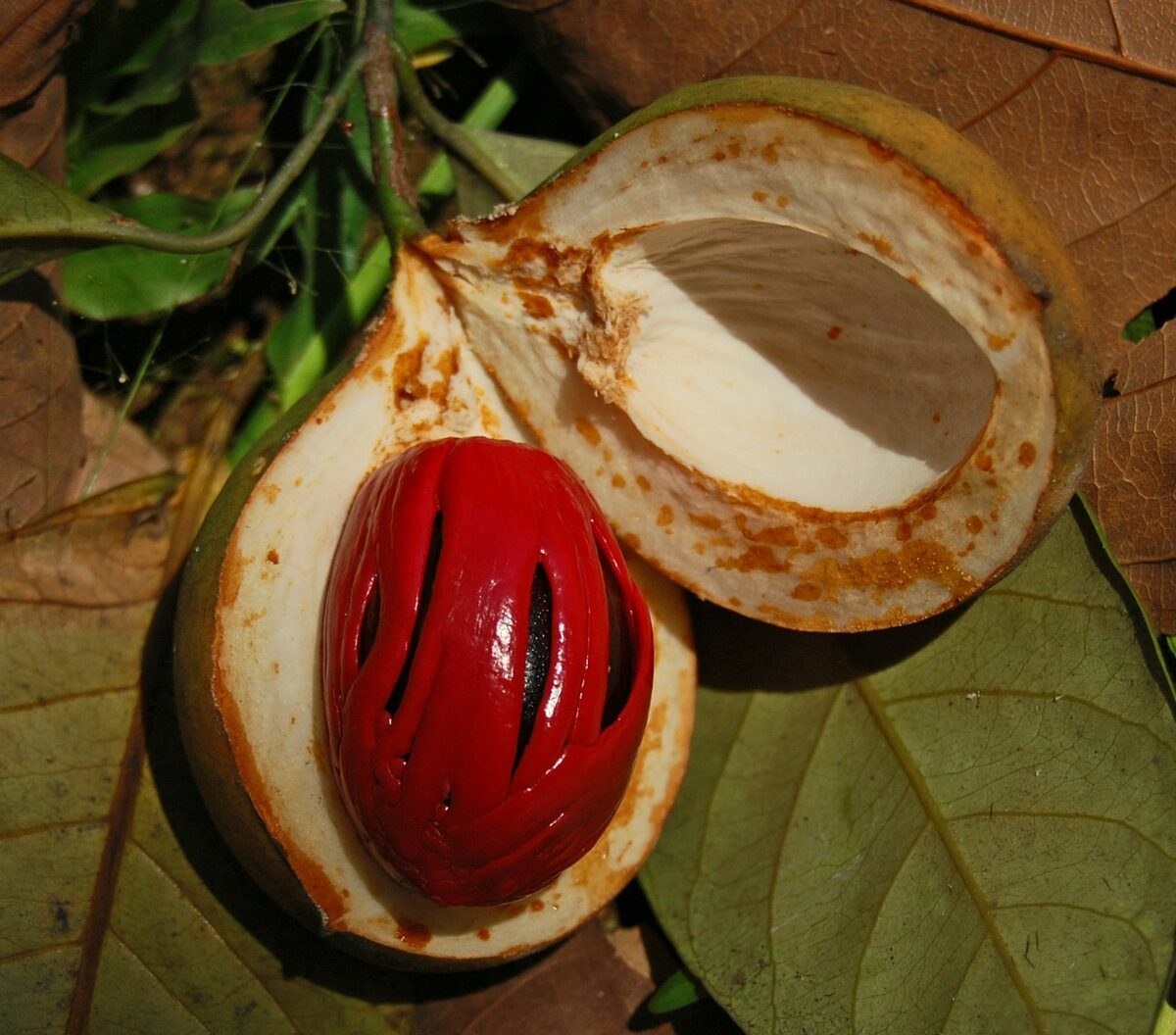
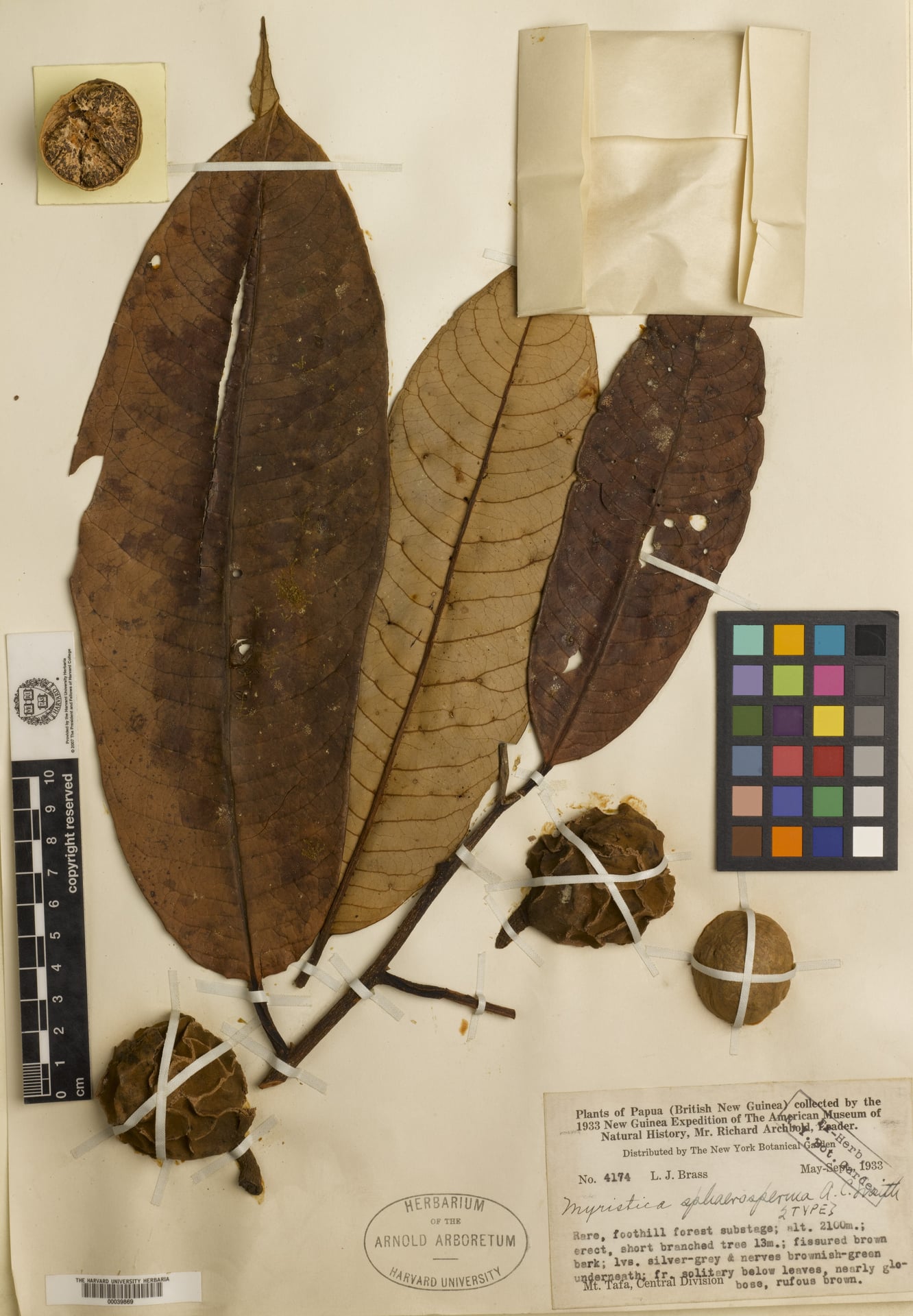
An evergreen tree. It grows 8-15 m tall. The small branches are stout. The leaves are 9-22 cm long by 4-11 cm wide. They are shiny and dark green on the top side and silvery underneath. The flowers are brown and have a scent. The fruit are 7 cm long by 4 cm wide and oval. The seeds are 3 cm long by 2.5 cm wide. They have a red aril of fleshy layer over them.
Edible Uses
The seeds and arils are aromatic. Although somewhat smaller, they have been used as a spice in a similar manner to nutmeg and mace. The small seeds have a very pleasant smell and are used in the same way as genuine nutmeg.
Distribution
A tropical plant. It grows in the Halmaheras. In grows in mountain forests and can be on limestone or sandy or clay soils. It grows in the Papua province of Indonesia.
Where It Grows
Asia, Indonesia, SE Asia,
Cultivation
Plants can be grown by seeds.
Propagation
Seed - dries out easily, loses its viability rapidly, and cannot be stored. It is best sown in a shaded position in a nursery seedbed - germination is usually fairly quick with the seed of most species sprouting within 2 - 17 weeks. Grow the young plants on in a shady position, planting them out in their permanent positions when large enough.
Other Uses
The red sap (kino), present in the bark of most species in this genus, can be used as a dye that gives a permanent brown stain. The tree has been tried as a rootstock for nutmeg (Myristica fragrans). We have no information on the wood for this species, but the following is the general information for the wood of trees in this genus:- The heartwood can be dark reddish brown to light yellow-brown or brown with occasional pink tinge and dark red-purple stripes; it is not clearly differentiated from the paler sapwood. A blood red core is found in some species. The grain is straight; the texture is rather fine to slightly coarse and even; somewhat lustrous; without characteristic odour or taste. Growth rings are distinct, demarcated by layers of terminal parenchyma. The wood is mostly soft or moderately hard and moderately heavy; it is not durable, but is easily treated with preservatives. The wood dries rather slowly but with little degrade, though thin stock tends to warp. It is easy to work with, but sometimes easily splitting; planning is easy, with a smooth to moderately smooth finish; drilling and turning are easy with a smooth finish; nailing properties are generally good with some tendency to splitting. A light hardwood, it is mainly used for light construction work, partitioning, flooring, wall-panelling, moulding and other types of interior finishing, and for making tool-handles, woodcrafts, match boxes and splints, packing cases, crates, and household utensils. It is also suitable for manifacturing plywood, rotary veneer and wrapping and writing papers.
Synonyms
Also Known As
Pohon pala halmahera, Pohon pala patani
References (3)
- Burkill, I.H., 1966, A Dictionary of the Economic Products of the Malay Peninsula. Ministry of Agriculture and Cooperatives, Kuala Lumpur, Malaysia. Vol 2 (I-Z) p 1548 (Also as Myristica schefferi)
- Sukarya, D. G., (Ed.) 2013, 3,500 Plant Species of the Botanic Gardens of Indonesia. LIPI p 409
- World Checklist of Useful Plant Species 2020. Royal Botanic Gardens, Kew