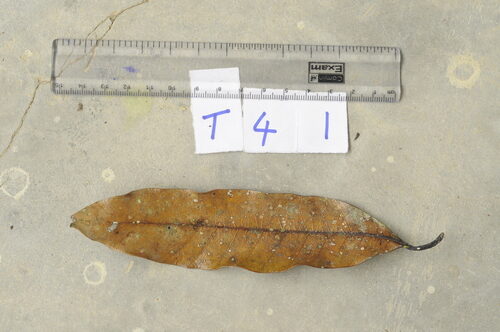
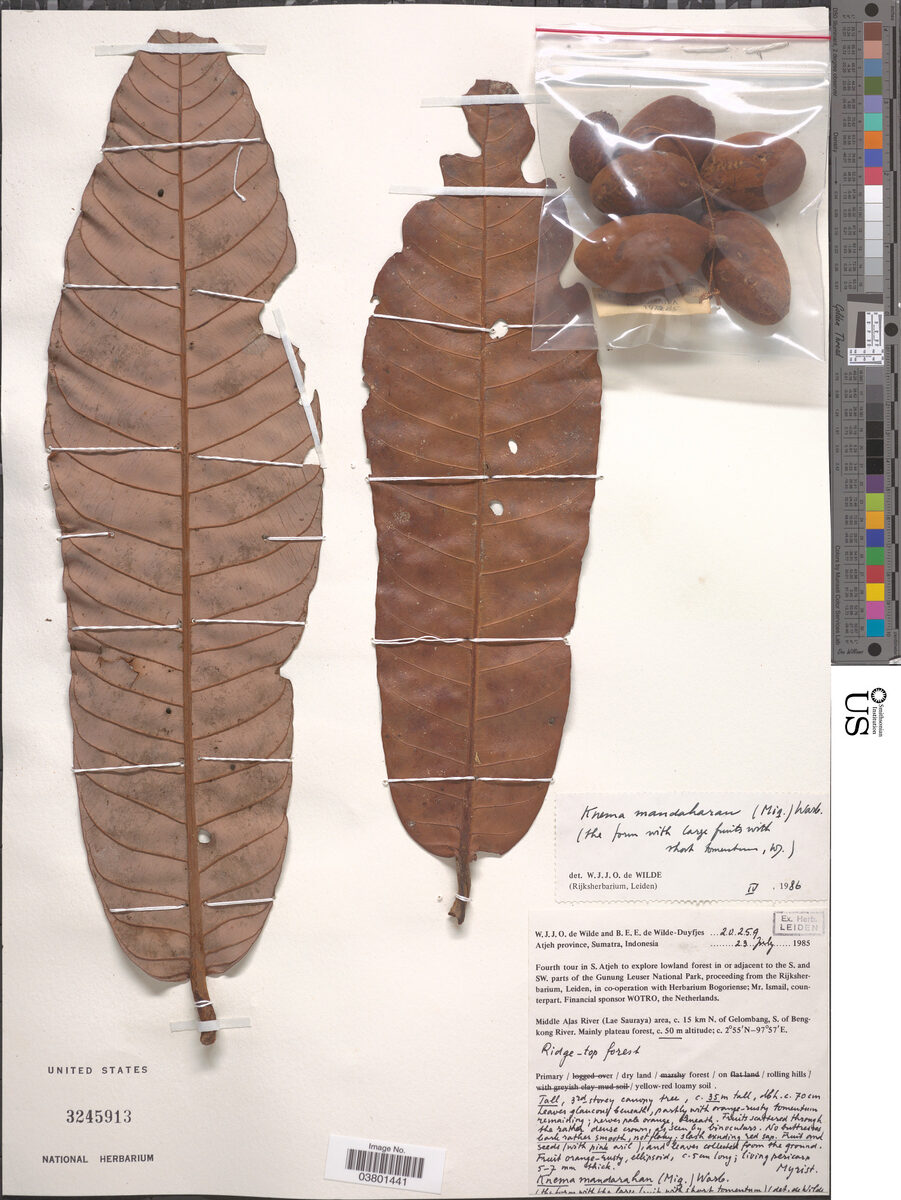
Knema laurina
(Blume) Warb.
Black wild nutmeg
iNaturalist· cc-by-nc-sa
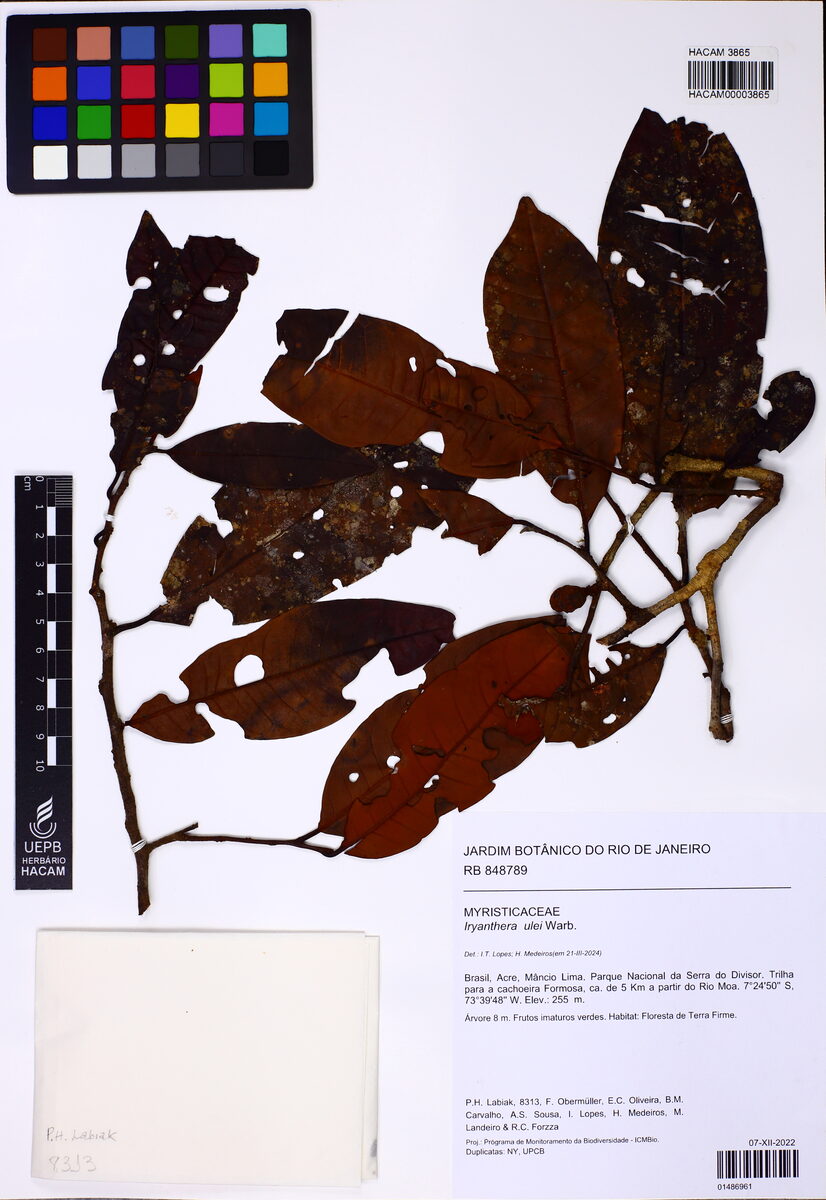
(c) Smithsonian Institution, National Museum of Natural History, Department of Botany, some rights reserved (CC BY-NC-SA)
iNaturalist· cc-by
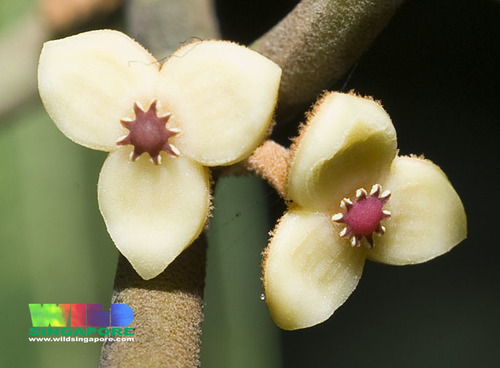
(c) scallions, some rights reserved (CC BY)
Summary
Source: WikipediaKnema laurina is a species of tree in the family Myristicaceae. It is native to Peninsular Thailand, Sumatra (incl. Simeulue, Siberut, Bangka), Peninsular Malaysia, Java, and Borneo.
Description
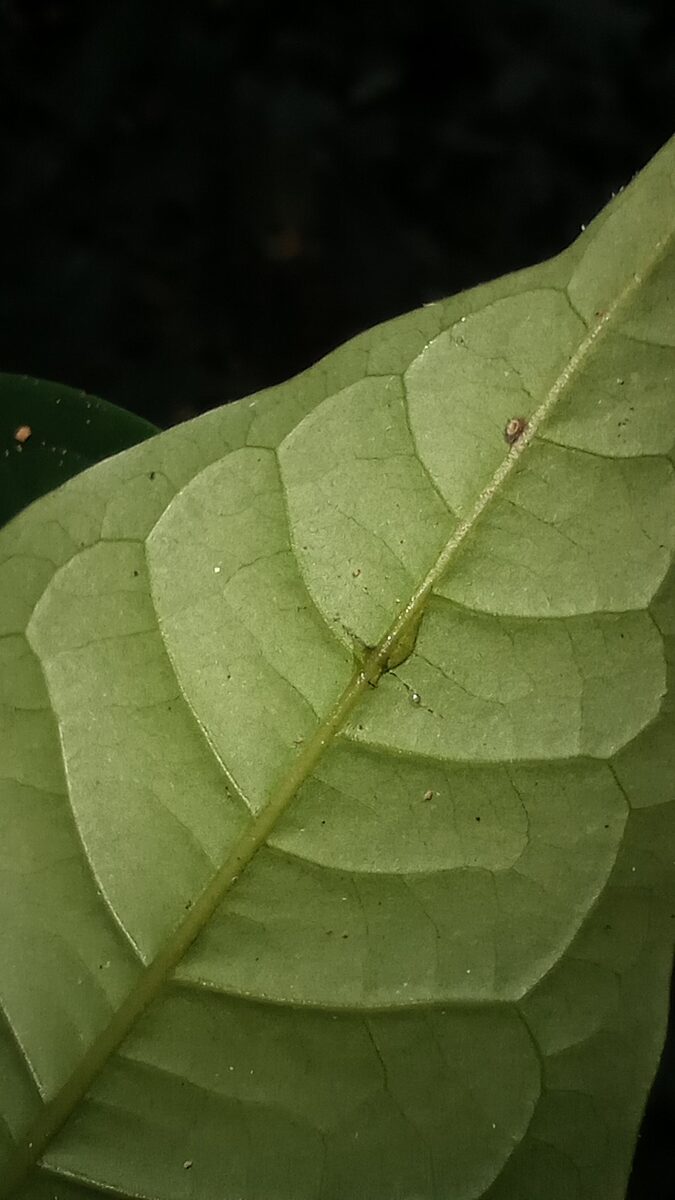
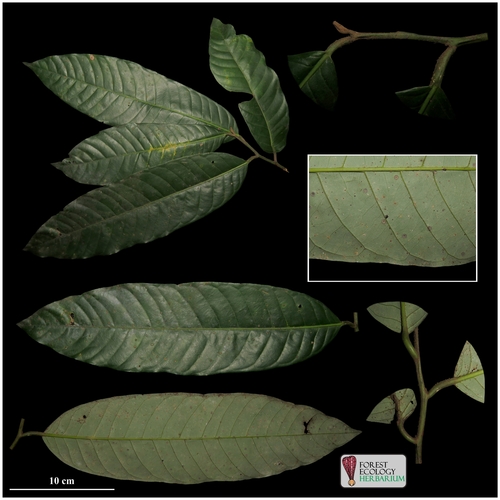
A tree. It grows 5-20 m tall. The leaves are narrowly oval or sword shaped with rusty hairs underneath. The fruit are about 2.5 cm long. The seeds have an aril ror fleshy layer around them.
Edible Uses
The ripe fruits are eaten raw or cooked.
Traditional Uses
The ripe fruit are eaten raw or cooked.
This uses section is brief — help expand it
Distribution
A tropical plant. It grows in forests on a range of soils. It grows up to 1,000 m above sea level.
Where It Grows
Asia, Indonesia, Malaysia, SE Asia, Thailand,
Cultivation
Plants can be grown by seeds,
Propagation
Seed - dries out easily, loses its viability rapidly, and cannot be stored. It is best sown in a shaded position in a nursery seedbed - germination is usually fairly quick with the seed of most species sprouting within 2 - 17 weeks. Grow the young plants on in a shady position, planting them out in their permanent positions when large enough.
Other Uses
The wood is used for light or temporary construction, house building, flooring, boat building, interior trim, wall panelling, packing cases.
Notes
There are 85-90 Knema species. They occur in south Asia.
Synonyms
Also Known As
Batang berdarah, Chendarah hitam, Dedarah, Derahan, Huru tangkalak, Kajeng rah, Ki mokla, Penarahan hitam, Pisang-pisang bulu, Pohon penarahan hitam, Tenol
References (7)
- Burkill, I.H., 1966, A Dictionary of the Economic Products of the Malay Peninsula. Ministry of Agriculture and Cooperatives, Kuala Lumpur, Malaysia. Vol 2 (I-Z) p 1304
- Heyne, K., 1927, p 649
- Heywood, V.H., Brummitt, R.K., Culham, A., and Seberg, O. 2007, Flowering Plant Families of the World. Royal Botanical Gardens, Kew. p 223 (Genus)
- Milow, P., et al, 2013, Malaysian species of plants with edible fruits or seeds and their evaluation. International Journal of Fruit Science. 14:1, 1-27
- Sukarya, D. G., (Ed.) 2013, 3,500 Plant Species of the Botanic Gardens of Indonesia. LIPI p 346
Show all 7 references Hide references
- Suwardi, A. B., et al, 2020, Wild edible fruits generate substantial income for local people of the Gunung Leuser National Park, Aceh Tamiang Region. Ethnobotany Research & Applications 20:11
- World Checklist of Useful Plant Species 2020. Royal Botanic Gardens, Kew