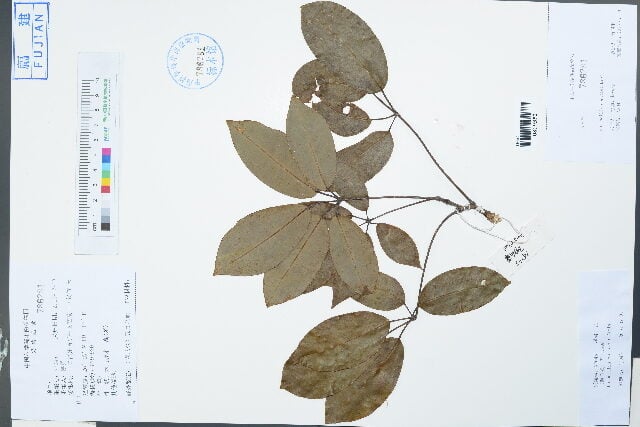
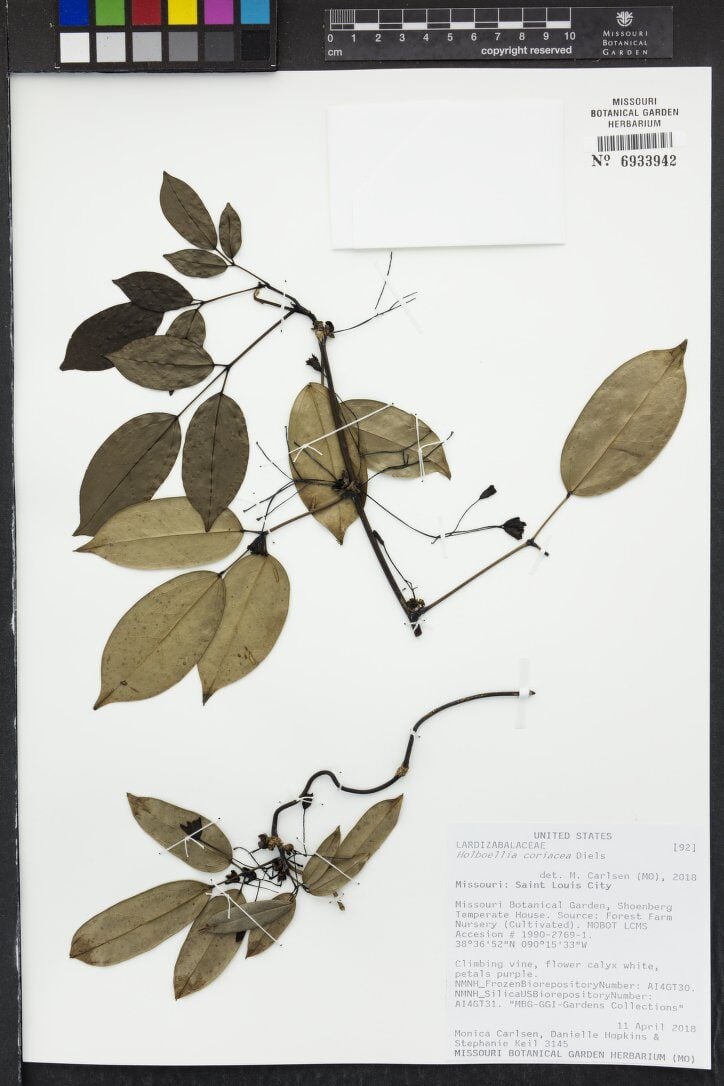
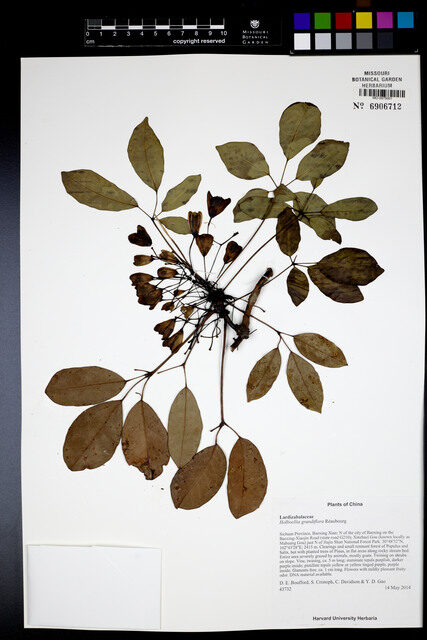
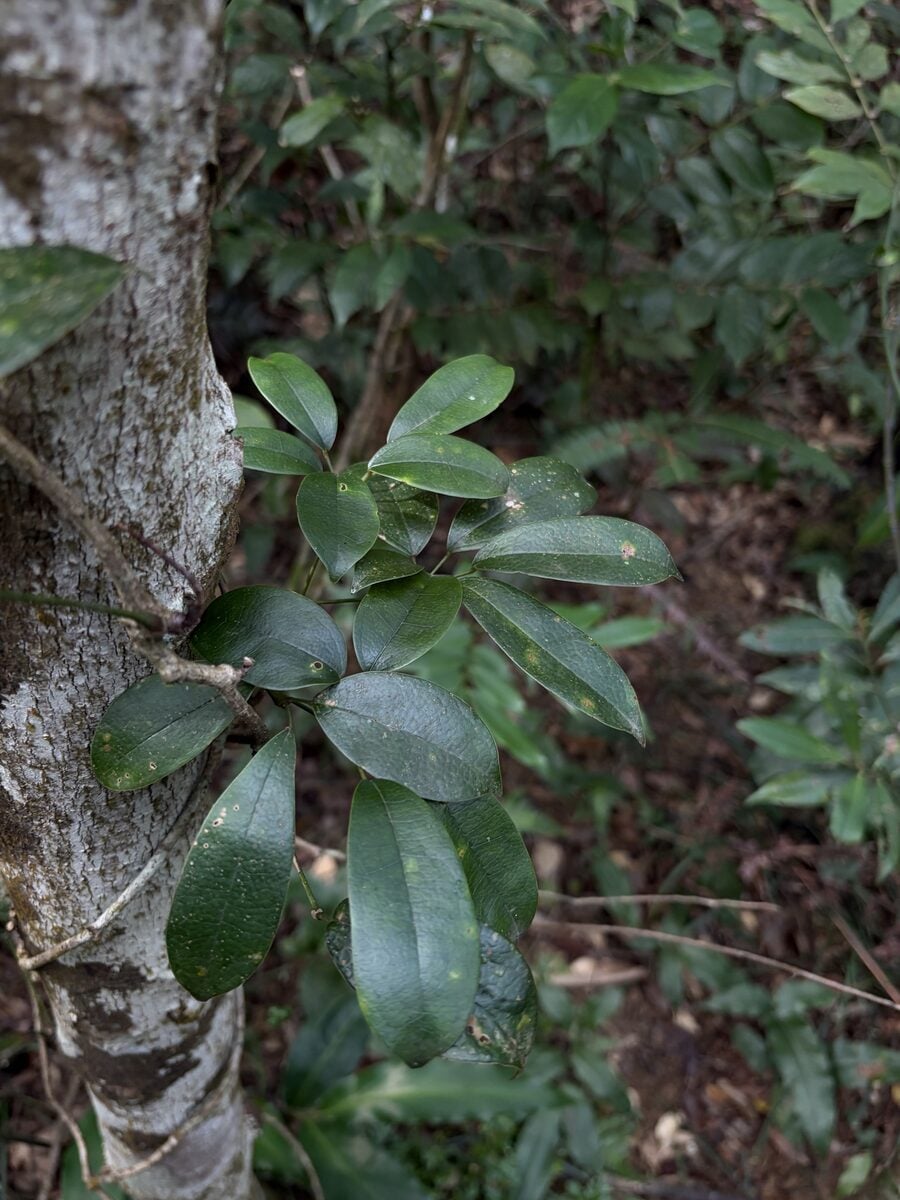
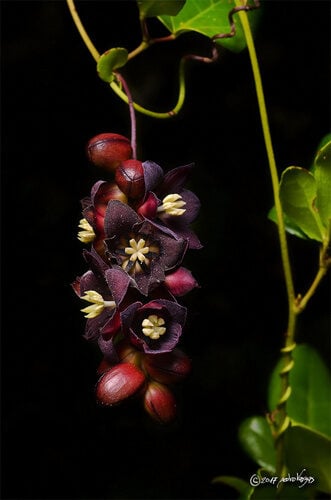
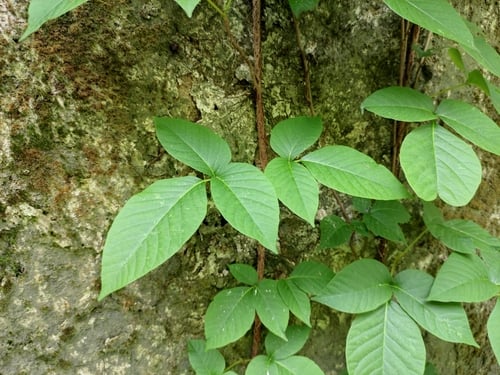
Stauntonia chinensis
DC.
Yaimogua
iNaturalist· cc-by-nc
(c) stevenlslin, some rights reserved (CC BY-NC)
iNaturalist· cc-by-nc
(c) 小铖/Smalltown, some rights reserved (CC BY-NC), uploaded by 小铖/Smalltown
Summary
Source: WikipediaStauntonia chinensis is a plant in the family Lardizabalaceae. It is endemic to China, where it is distributed in Yunnan, Guangxi, Guangdong, Zhejiang, Jiangxi, Fujian, Hunan, Anhui, Hong Kong, Guizhou and other places. It grows at an altitude of 500 meters to 1,300 meters above sea level and can be found in dense forests in mountainous areas, thickets on the hillside or sparse forests along the streams in valleys.
Description
A woody climber. The stems are green and have lines along them. The bark is pale grey. The leaves have 5-7 leaflets arranged like fingers on a hand. The leaflets are narrowly oval and 6-9 cm long by 2-4 cm wide. They are pale green underneath. Male and females flower are separate. The fruit are oblong and 7-10 cm long by 3-5 cm wide. The seeds are almost triangle shape.
Edible Uses
The fruit are eaten raw.
Traditional Uses
The fruit are eaten raw.
This uses section is brief — help expand it
Distribution
A subtropical plant. In Yunnan in China it grows between 1300-1800 m above sea level. It grows in subtropical broad-leaved evergreen forest. It suits hardiness zones 7-9.
Where It Grows
Asia, China,
Cultivation
Plants can be grown from seeds. Hand pollination improves fruit sett. Plants can be grown from cuttings using rooting hormone.
Production
In China plants flower April to May and fruit June to October.
Notes
There are 13 Stauntonia species.
Synonyms
References (2)
- Christenhusz, M. J. M., 2012, An overview of Lardizabalaceae. Curtis Botanical magazine 2012 vol. 29(3): pp 235-276
- Jin, Chen et al, 1999, Ethnobotanical studies on Wild Edible Fruits in Southern Yunnan: Folk Names: Nutritional Value and Uses. Economic Botany 53(1) pp 2-14