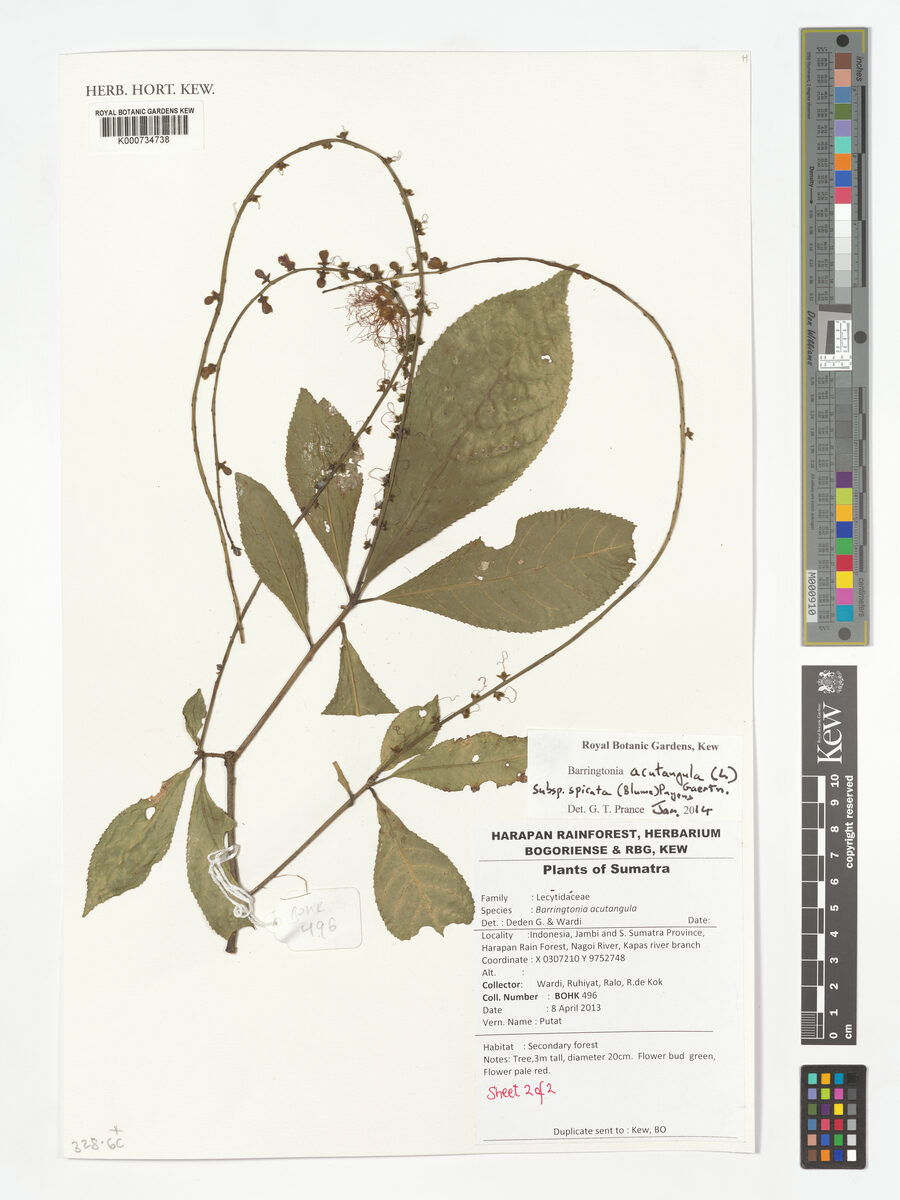
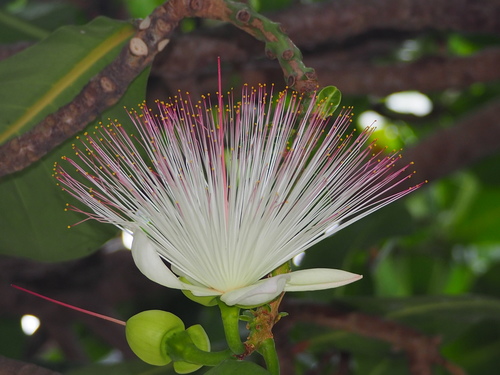
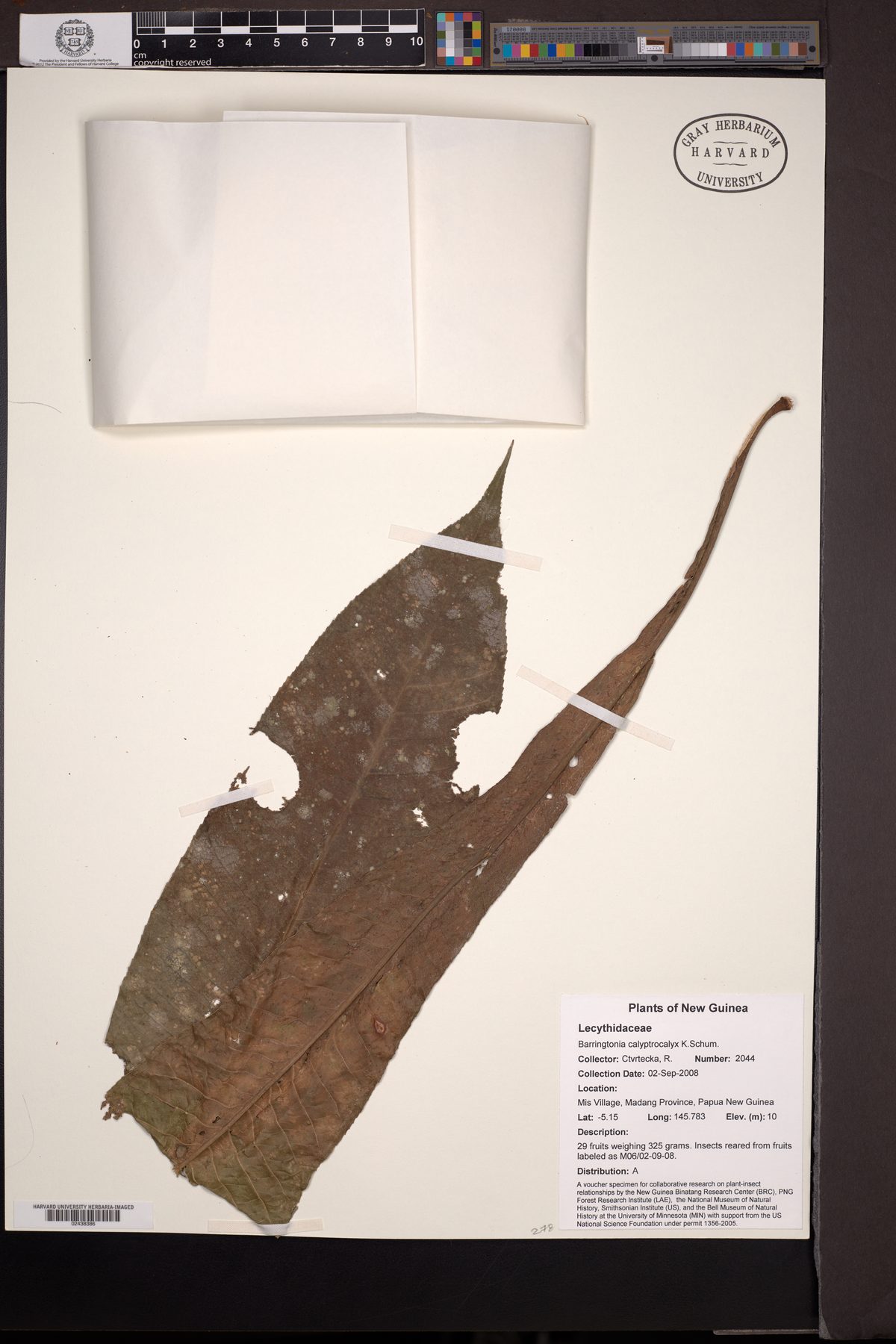
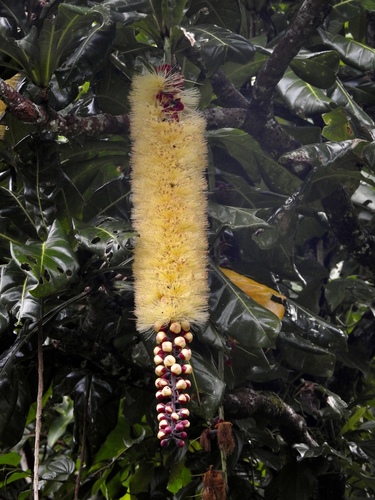
Barringtonia fusiformis
King
Putat padi, Putat gajah
iNaturalist· cc-by
(c) Jenny Saito, some rights reserved (CC BY), uploaded by Jenny Saito
iNaturalist· cc-by
(c) Jenny Saito, some rights reserved (CC BY), uploaded by Jenny Saito
Description
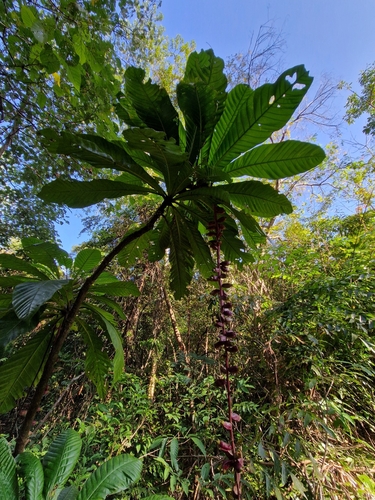
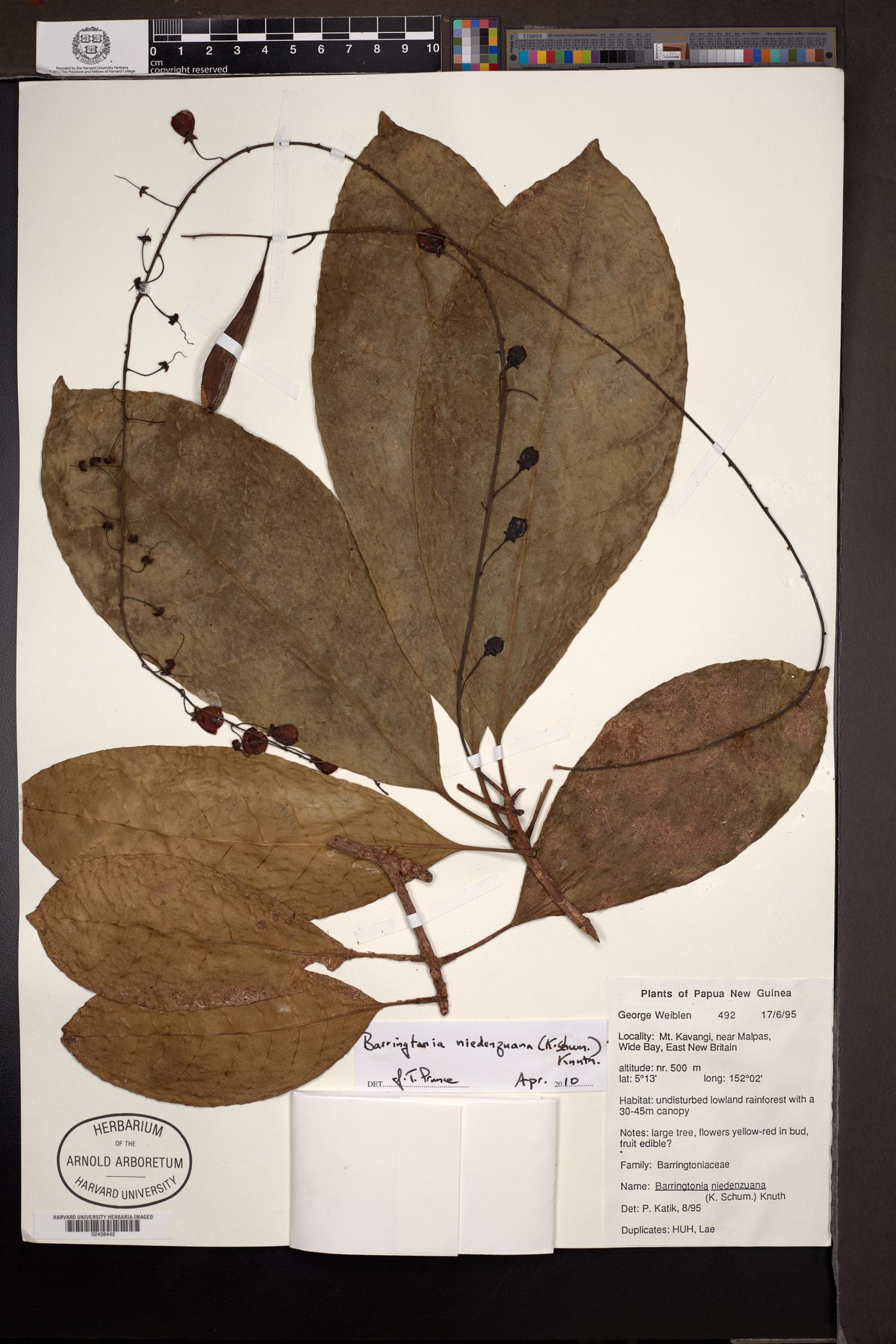
A small tree. It grows 5-7 m tall. The stem is 8-13 cm across. The leaves are thin and oblong. They do not have a leaf stalk. The flowers are a deep red. The fruit are a rich red colour. They are 6 cm long by 4 cm wide.
Edible Uses
The young leaves are eaten in chutneys.
Traditional Uses
The young leaves are eaten in chutneys.
This uses section is brief — help expand it
Distribution
A tropical plant. It grows in dense bamboo forest. It occurs between 160-230 m above sea level.
Where It Grows
Asia, Indonesia, Malaysia, SE Asia,
Propagation
Seed - best sown as soon as it is ripe.
Notes
There are about 40 Barringtonia species.
Also Known As
Poko
References (7)
- Bircher, A. G. & Bircher, W. H., 2000, Encyclopedia of Fruit Trees and Edible Flowering Plants in Egypt and the Subtropics. AUC Press. p 54
- Burkill, I.H., 1966, A Dictionary of the Economic Products of the Malay Peninsula. Ministry of Agriculture and Cooperatives, Kuala Lumpur, Malaysia. Vol 1 (A-H) p 307
- King, J. Asiat. Soc. Bengal, Pt. 2, Nat. Hist. 70:140
- Martin, F.W. & Ruberte, R.M., 1979, Edible Leaves of the Tropics. Antillian College Press, Mayaguez, Puerto Rico. p 197
- Prance, G. T. & Jongkind, C. H., 2015, A Revision of African Lecythidaceae. Kew Bulletin. 70:1-68
Show all 7 references Hide references
- PROSEA (Plant Resources of South East Asia) handbook, Volume 2, 1991, Edible fruits and nuts.
- World Checklist of Useful Plant Species 2020. Royal Botanic Gardens, Kew