Eschweilera subglandulosa
(Steud. ex O. Berg) Miers
Watercare
No photos yet for Eschweilera subglandulosa
Sign in to contribute a photoDescription
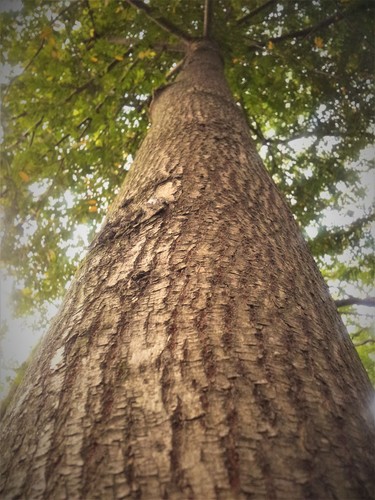
A tree. It grows 40 m tall. The trunk has small buttresses. The trunk can be 75 cm across.
This description is brief — help expand it
Edible Uses
The nuts are eaten raw after removing the shell.
Traditional Uses
The nuts are eaten raw after removing the shell.
This uses section is brief — help expand it
Distribution
A tropical plant.
Where It Grows
Brazil, Central America, Guiana, Guianas, Guyana, Peru, South America, Suriname, Trinidad, Venezuela, West Indies,
Cultivation
A plant of lowland areas in the tropics. It grows in areas where the mean annual temperature is in the region of 25°c and the mean annual rainfall is in the range 1,750 - 3,000mm. Succeeds in most soils except those that are excessively free-draining or waterlogged. Grows best in a position sheltered from strong winds.
Other Uses
The heartwood, when first cut, is greenish yellow to olive brown, turning a brownish buff upon drying - black streaks are occasionally present. The creamy-tan sapwood is 4 - 11cm wide, it is not well differentiated from the heartwood when freshly cut, but becomes more apparent when seasoned. The grain is straight; texture uniformly fine. The wood is extremely heavy, extremely hard, dense, tough and strong, though, except for shock resistance in which it is outstandingly high, the unseasoned (green) wood is average or below average in strength for a wood of its density. Bearing strength across the grain is particularly low. Unlike most tropical hardwoods, however, it improves substantially in strength during seasoning. Untreated wood is resistant to very resistant to decay, tests have shown a life expectancy of 15 - 30 years in permanent contact, with the soil, or 40 - 50 years when exposed to the elements. It is particularly noted for its high resistance to marine borers, there are records of wood 50 years old being perfectly sound and as hard as nail and quite untouched by teredo. The wood contains a high percentage of silica, up to 1.31% based on the ovendry weight of the wood. This makes it difficult to work. It is also difficult to glue but takes a good finish. Cutting edges are quickly dulled by the silica and the wood's inherent hardness, but when knives are kept sharp a slate-smooth surface is obtained. Rammer caps are required when driving manbarklak piling, because of the ease in which it splits. Because it has very good resistance to marine borers, the wood is especially suited for use in both temperate zone and tropics in marine construction, especially for marine piling. Good strength properties and high resistance to wear or abrasion make the timber well suited for ice sheathing for boats, factory flooring, shoe keels for landing boats and beaters and bed plates in pulp mill equipment. It is also used locally for house framing, mine lagging, railway ties, and posts. The timber is especially useful where good decay and termite resistance is essential.
Notes
There are 85 Eschweilera species.
Synonyms
Also Known As
Guatecare, Majaguillo, Manbarklak
References (3)
- Fouqué, A. 1972. Espèces fruitières d'Amérique tropicale. Institut français de recherches fruitierès outre-mer
- Menninger, E.A., 1977, Edible Nuts of the World. Horticultural Books. Florida p 35
- Mori, S. A. & G. T. Prance. 1990. Lecythidaceae - Part II. The zygomorphic-flowered New World genera (Couroupita, Corythophora, Bertholletia, Couratari, Eschweilera, & Lecythis). In: Organization for Flora Neotropica, ed., Fl. Neotrop. Monogr. 21(2):253–255.