Grias neuberthii
J. F. Macbride
Mango sacha
iNaturalist· cc-by
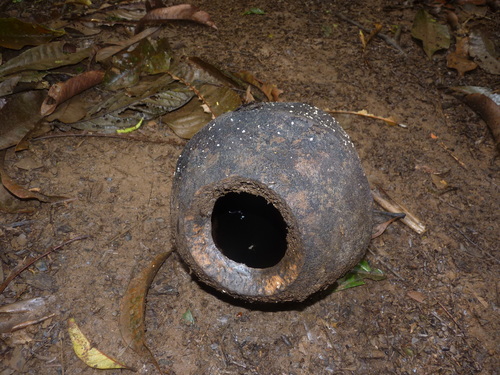
(c) Geoff Gallice, some rights reserved (CC BY)
iNaturalist· cc-by-nc
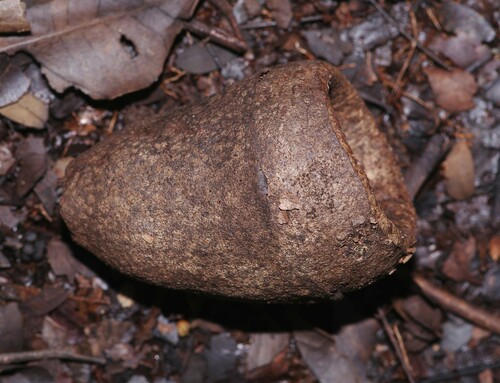
(c) Morten Ross, some rights reserved (CC BY-NC), uploaded by Morten Ross
iNaturalist· cc-by-nc
(c) Morten Ross, some rights reserved (CC BY-NC), uploaded by Morten Ross
Description
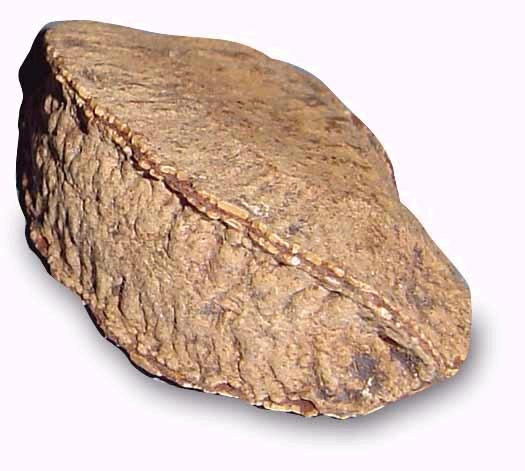
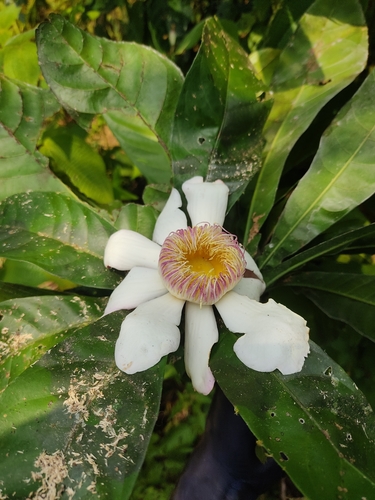
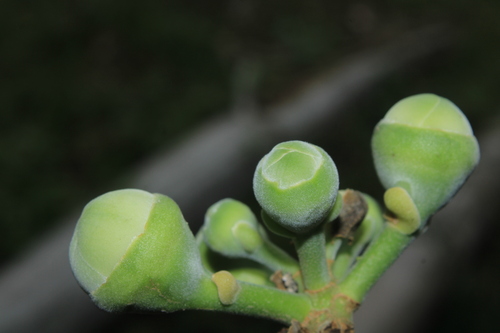
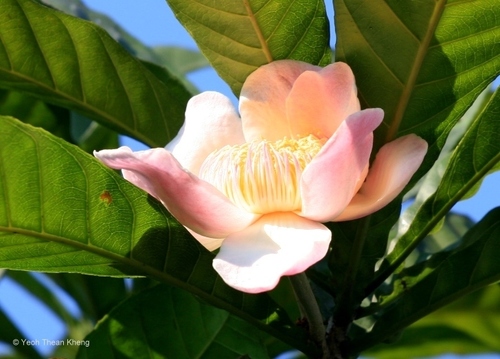
A tree. It grows 20 m high. The leaves are broadly sword shaped and 32-120 cm long by 12-22 cm wide. The fruit are spindle shape and taper at both ends. They are 4-12 cm long by 4-5 cm wide. They have 8-10 ribs as they dry out. The seeds are round in cross section. They are 3-7 cm long. The pulp of the fruit is orange-yellow.
Edible Uses
The rind of the fruit is edible when ripe. The fruit is highly valued as an emergency food by native peoples. It has a white, succulent pulp. The fruit is roasted and eaten.
Traditional Uses
The fruit are eaten after roasting. They are also eaten raw.
This uses section is brief — help expand it
Medicinal Uses
The cambium is used to induce vomiting as a treatment for malaria. It is also given at childbirth to induce vomiting, thereby reducing nausea and improving the appetite. The seed is used in the form of an enema as a treatment for dysentery. The pear-sized fruits are grated and mixed with water to prepare a purgative.
Known Hazards
The twigs are added to the mixture when curare is being prepared from Strychnos jobertiana.
Distribution
A tropical plant. It grows in floodplain forests and up to 1,000 m above sea level.
Where It Grows
Amazon, Australia, Brazil, Colombia*, Ecuador*, Peru*, South America,
Other Uses
The wood is a pale cream-colour when fresh, becoming light brown when dried, often stained dark gray or almost black. Texture is medium; grain straight or wavy; it has a slightly bitter taste. The wood is of medium weight. It is easy to work and takes a fairly smooth polish; checks in drying.
Production
Fruit are available for much of the year.
Other Information
It is a cultivated food plant. Fruit are sold in markets.
Notes
There are 7 Grias species. It is rich in Vitamin A containing 1.2 mg per 100g. It also has an oil that is rich in omega-3 fatty acid.
Synonyms
Also Known As
Apai, Be naka, Co'cora, Cocorro, Jaija'ocase, Kasi, Noenkawe, Nonkinkawe, Pepe guare, Piton, Pitun, Sacha mango, Ttetteccu'cho, Wenaka, Wenawe, Wingaca, Wingaka
References (17)
- Altschul, S.V.R., 1973, Drugs and Foods from Little-known Plants. Notes in Harvard University Herbaria. Harvard Univ. Press. Massachusetts. no. 3021
- Bendezu, Y. F., 2018, Arboles nativos de lad Region Ucayali. Instituto Nacional de Innovacion Agraria. p 181
- Etkin, N. L. (Ed.), 1994, Eating on the Wild Side, Univ. of Arizona. p 138, 156
- Field Mus. Nat. Hist., Bot. Ser. 11(1):30. 1931
- Flores, Y., 2018, Arboles nativos de la Region Ucayili. Estacion Experimental Agragia Pucallpa. Pucallpa Peru, 375 p. p 181
Show all 17 references Hide references
- Grandtner, M. M. & Chevrette, J., 2013, Dictionary of Trees, Volume 2: South America: Nomenclature, Taxonomy and Ecology. Academic Press p 270
- Hermandez Bermejo, J.E., and Leon, J. (Eds.), 1994, Neglected Crops. 1492 from a different perspective. FAO Plant Production and Protection Series No 26. FAO, Rome. p15
- Kermath, B. M., et al, 2014, Food Plants in the Americas: A survey of the domesticated, cultivated and wild plants used for Human food in North, Central and South America and the Caribbean. On line draft. p 398
- Lamont, S.R., et al, 1999, Species composition, and use of Homegardens among three Amazonian Villages. Economic Botany 53(3) pp 312-326
- Lopez-Diago, D. & Garcia, N., 2021, Wild edible fruits of Colombia. Biota ColomBiana 22 (2) p 40
- NYBG herbarium 'edible"
- Prance, G. T. and Scott A. Mori, 1979 Lecythidaceae: Part I: The Actinomorphic-Flowered New World Lecythidaceae (Asteranthos, Gustavia, Grias, Allantoma, & Cariniana): Flora Neotropica, Vol. 21, No. 1, Lecythidaceae: pp. 111
- Roa, J. A. G. & Boada, D. S. G., 2018, Fundación para el Fortalecimiento de la Fruticultura y Plantas Alimenticias no Convencionales en Colombia.
- Smith, N., Mori, S.A., et al, 2004, Flowering Plants of the Neotropics. Princeton. p 209
- Smith, N., et al, 2007, Amazon River Fruits. Flavors for Conservation. Missouri Botanical Gardens Press. p 134
- Torre, de la, L., et al, 2008, Enciclopedia de las Plantas Útiles del Ecuador. Herbario QCA. Pontificia Universidad Católica del Ecuador. p 403
- Vasquez, R. and Gentry, A. H., 1989, Use and Misuse of Forest-harvested Fruits in the Iquitos Area. Conservation Biology 3(4): 350f