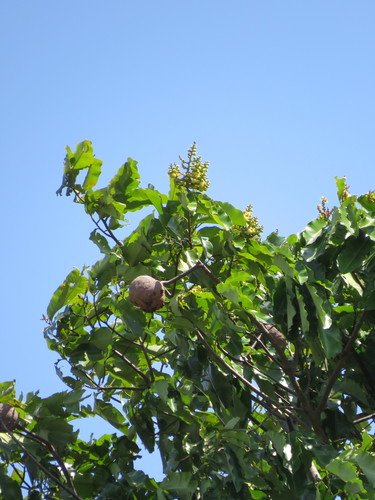
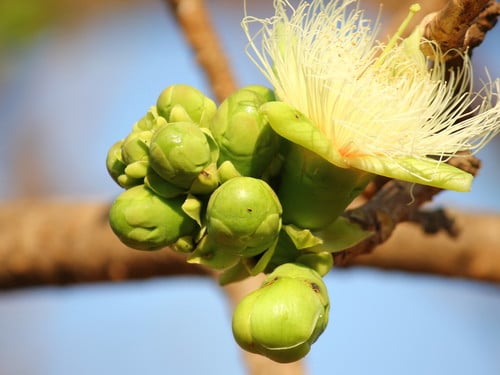
Grias haughtii
R. Knuth
Tapaculo
iNaturalist· cc-by-nd
(c) MatiasG, some rights reserved (CC BY-ND), uploaded by MatiasG
iNaturalist· cc-by-nc-nd
(c) Josh van der Meulen, some rights reserved (CC BY-NC-ND), uploaded by Josh van der Meulen
iNaturalist· cc-by-nc
(c) Jen Cross, some rights reserved (CC BY-NC), uploaded by Jen Cross
gbif· cc-by-nc
Field Museum of Natural History - Botany Department | NSF/Mellon - GPI
gbif· cc-by-nc
Rapid Reference Collection (RRC) | Field Museum of Natural History - Keller Science Action Center
gbif· cc-by-nc
Field Museum of Natural History - Botany Department | NSF/Mellon - GPI
Summary
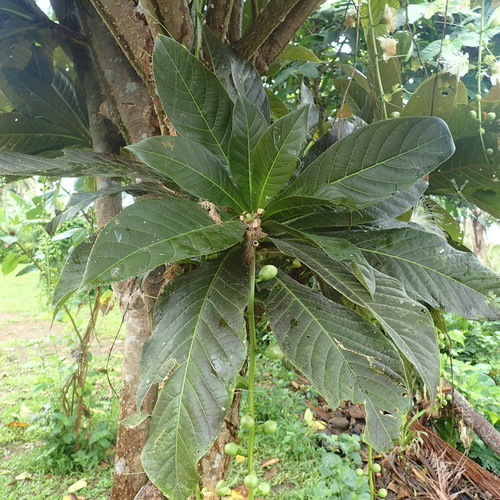
Source: WikipediaGrias haughtii is a species of woody plant in the Monkeypot family Lecythidaceae. It is found only in Colombia in non-flooded lowland forests. Its most remarkable feature is its leaves, which can be up to 5.5 feet (170 centimeters) in length by 16.5 inches (42 centimeters) in width. It also produces exceptionally large seeds, up to 2.7 inches (69 mm) in length by one inch (25 mm) in diameter.
Description
A tropical tree in the Lecythidaceae family that produces fruit.
This description is brief — help expand it
Edible Uses
The fruit is eaten raw or cooked in a syrup.
Traditional Uses
The fruit is eaten raw or cooked in a syrup.
This uses section is brief — help expand it
Distribution
A tropical plant.
Where It Grows
Colombia*, South America,
Notes
There are 7 Grias species.
Also Known As
Chupo, Coco esparrago, Mango salvaje, Paco
References (7)
- Galeano, G., 2000, Forest Use at the Pacific Coast of Choco, Colombia: A Quantitative Approach. Economic Botany, Vol. 54, No. 3, pp. 358-376
- Kermath, B. M., et al, 2014, Food Plants in the Americas: A survey of the domesticated, cultivated and wild plants used for Human food in North, Central and South America and the Caribbean. On line draft. p 398
- Lopez-Diago, D. & Garcia, N., 2021, Wild edible fruits of Colombia. Biota ColomBiana 22 (2) p 40
- Martin, F. W., et al, 1987, Perennial Edible Fruits of the Tropics. USDA Handbook 642 p 97
- Prance, G. T. and Scott A. Mori, 1979 Lecythidaceae: Part I: The Actinomorphic-Flowered New World Lecythidaceae (Asteranthos, Gustavia, Grias, Allantoma, & Cariniana): Flora Neotropica, Vol. 21, No. 1, Lecythidaceae: pp. 111
Show all 7 references Hide references
- Roa, J. A. G. & Boada, D. S. G., 2018, Fundación para el Fortalecimiento de la Fruticultura y Plantas Alimenticias no Convencionales en Colombia.
- Smith, N., Mori, S.A., et al, 2004, Flowering Plants of the Neotropics. Princeton. p 209