Barringtonia edulis
Seemann
Vutu kana, Cut nut
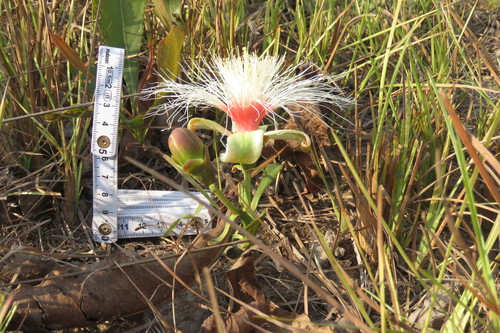
iNaturalist· cc-by-nc
(c) Noam Markus, some rights reserved (CC BY-NC), uploaded by Noam Markus
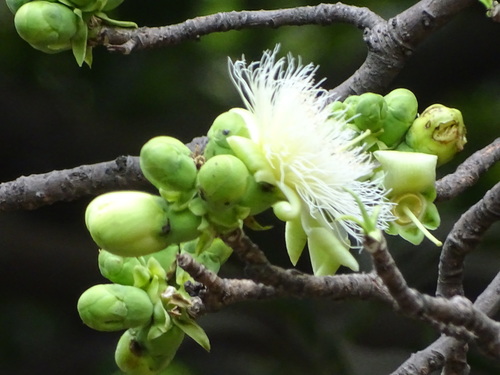
iNaturalist· cc-by-nc
(c) Christophe Buidin, some rights reserved (CC BY-NC), uploaded by Christophe Buidin
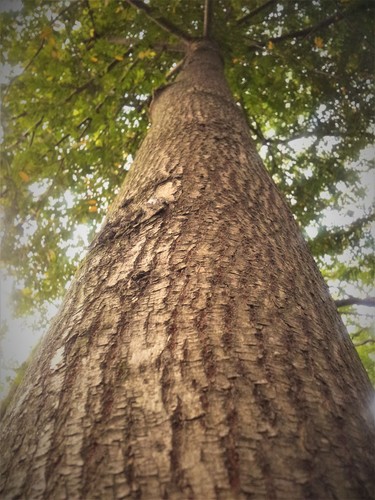
iNaturalist· cc-by
(c) Dominik Maximilián Ramík, some rights reserved (CC BY), uploaded by Dominik Maximilián Ramík
Summary
Source: WikipediaBarringtonia edulis is a species of tree with edible fruits from the southwestern Pacific region, being found on Fiji and Vanuatu. Common names include cut nut, pao nut, boxfruit tree, heart tree, and yum-yum tree. It was first described in 1866 by Berthold Carl Seeman. In Fiji, it is known as vutu (term also used for Barringtonia asiatica), vutukala, kutuvala and vana.
Description
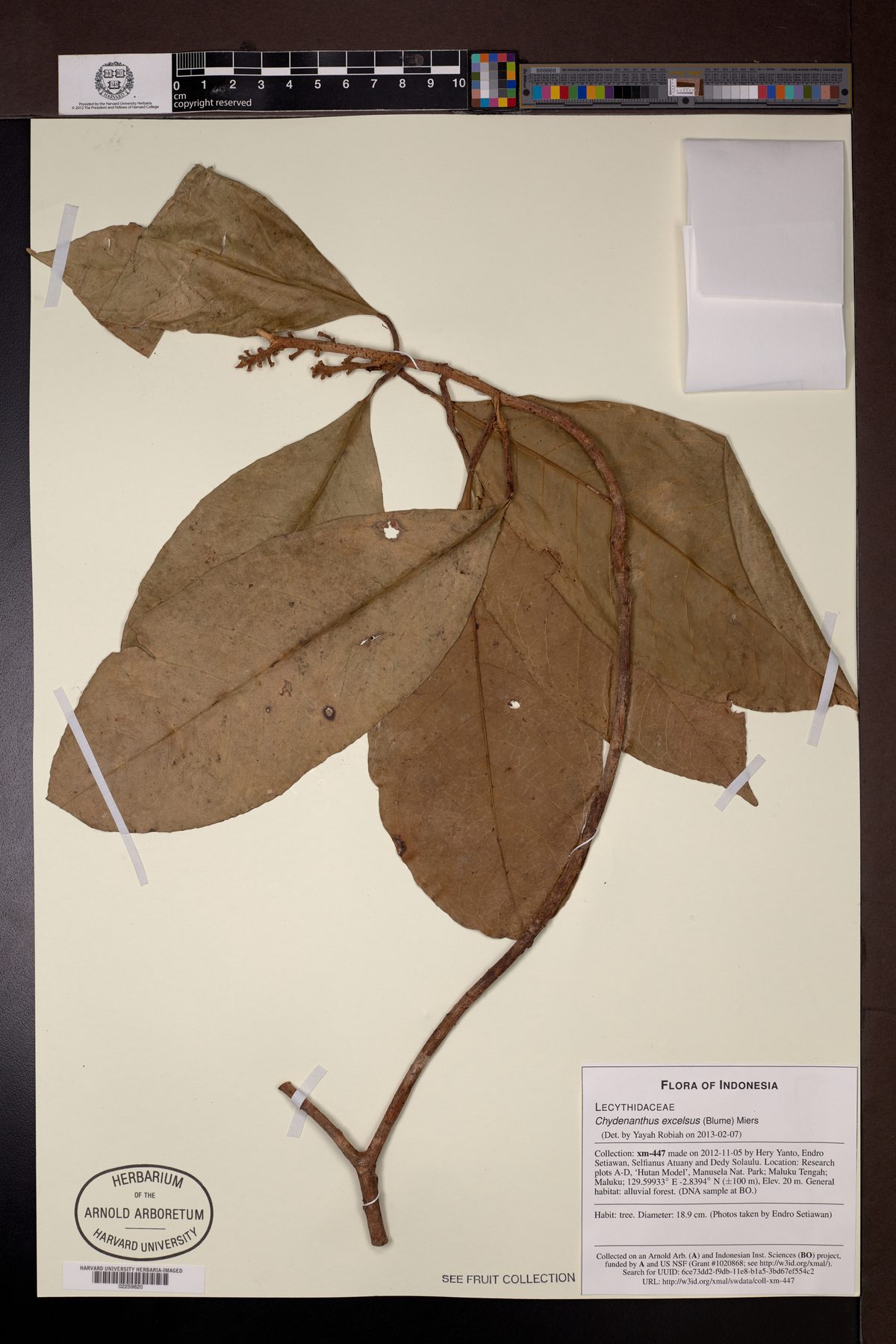
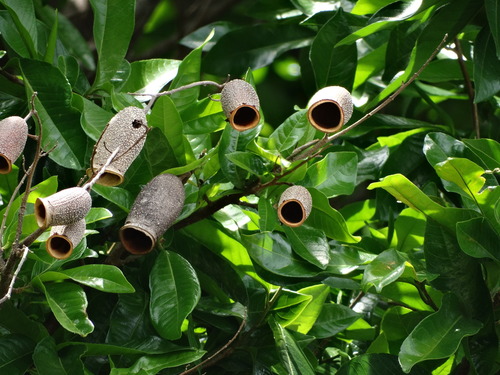
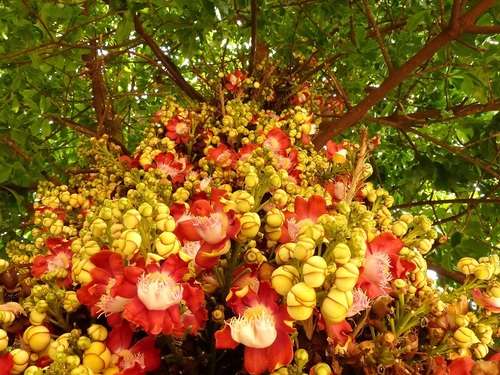
A small tree. It grows up to 15 m high. The trunk is 30 to 40 cm across. The bark is smooth and greyish brown. The leaves are glossy on both sides and are large. They are 17 to 45 cm long by 10 to 20 cm across. They are wedge shaped near the base, and wavy or with rounded edges, near the tip. The midrib and veins are raised on both leaf surfaces. The leaf stalk is about 1 cm long and there are 15 to 20 pairs of veins. This nut tree has flowers with stalks from a single unbranched stalk. These flower and nut stalks come from the end of the branch and hang down. The flower stalk can be up to 50 cm long and have about 40 flowers and nuts. The fruit can be 4 or 5 cm long and 2 cm across and when ripe the fruit skin colour is green. The seed kernel inside the hard shell can be 3 cm by 1 cm in size. This species is very similar to Barringtonia procera but this one has leaves with leaf stalks, the flowers are on stalks, the fruit is green when fresh and the fruit is more smooth and egg shaped.
Edible Uses
Edible Parts: Fruit Seed Edible Uses: Tea Seed - raw or cooked. A flavour like raw peanuts. The seed kernel inside the hard shell can be 3cm by 1cm in size. Fruit - raw or cooked. Insipid. Fruit of the Barringtonia edulis is a rare fruit. Suitable for snacks for children, a good source of energy.
Medicinal Uses
Abortifacient Stomachic The bark is used in the treatment of stomach ailments and gonorrhoea. A strong tea made from the bark is claimed to induce abortion and definitive sterility.
Distribution
A tropical plant. This species mainly occurs in Fiji. Other similar species occur in Solomon Islands, Papua New Guinea and other Pacific countries. It occurs in forest, woodland and grassland up to 400 m above sea level.
Where It Grows
Asia, Australia, Cook Islands, Fiji, Indonesia, Pacific*, Papua New Guinea, PNG, Rotuma, SE Asia, Society Islands, Solomon Islands, Vanuatu, Wallis & Futuna,
Cultivation
Succeeds in full sun and in partial shade.
Propagation
Seed - best sown as soon as it is ripe.
Other Uses
Fuel Wood The wood is light in weight. It is used for canoe paddles, casing, light construction. The wood is used as a quick-burning firewood. Attracts butterflies and hummingbirds Special Uses Attracts Wildlife Carbon Farming Food Forest
Production
The flowering and fruiting is mostly just before Christmas, from September to December.
Other Information
Other Barringtonia species are important nuts in Papua New Guinea.
Notes
There are about 40 Barringtonia species.
Nutrition
| Part | Moisture | kJ | kcal | Protein | Vit A | Vit C | Iron | Zinc |
|---|---|---|---|---|---|---|---|---|
| Nuts | 39 | 1097 | 262 | 9.7 | 3 | 7 | 2.4 | 2.3 |
Synonyms
Also Known As
Huel, Hufa'a, Katnut, Nevingen, Tchubo, Tubou, Uel, Vala, Vel, Vele, Velingeh, Vutu, Vutu kana, Vutu kata, Vutu ni veikau, Wan vel
References (35)
- Arora, R. K., 2014, Diversity in Underutilized Plant Species - An Asia-Pacific Perspective. Bioversity International. p 90
- Barrau, J., 1976, Subsistence Agriculture in Melanesia. Bernice P. Bishop Museu, Bulletin 219 Honolulu Hawaii. Kraus reprint. p 53
- Barwick, M., 2004, Tropical and Subtropical Trees. A Worldwide Encyclopedic Guide. Thames and Hudson p 45
- Bindon, P., 1996, Useful Bush Plants. Western Australian Museum. p 52
- Bircher, A. G. & Bircher, W. H., 2000, Encyclopedia of Fruit Trees and Edible Flowering Plants in Egypt and the Subtropics. AUC Press. p 54
Show all 35 references Hide references
- Blench, R., 2004, Fruits and Arboriculture in the Indo-Pacific Region. Indo-Pacific Prehistory Association Bulletin 24. (Taipei Papers Volume 2) p 35
- Borrell, O.W., 1989, An Annotated Checklist of the Flora of Kairiru Island, New Guinea. Marcellin College, Victoria Australia. p 57, 100+8 (Probably not B. edulis)
- Bradacs, G., 2008, Ethnobotanical Survey and Biological Screening of Medicinal Plants from Vanuatu. PhD thesis Frankurt University. p 101
- Cabalion, P. and Morat, P., 1983, Introduction le vegetation, la flore et aux noms vernaculaires de l'ile de Pentcoste (Vanuatu), In: Journal d'agriculture traditionnelle et de botanique appliquee JATBA Vol. 30, 3-4
- Clarke, W.C. & Thaman, R.R., 1993, Agroforestry in the Pacific Islands: Systems for sustainability. United Nations University Press. New York. p 224
- Cooper, W. and Cooper, W., 2004, Fruits of the Australian Tropical Rainforest. Nokomis Editions, Victoria, Australia. p 266 (As Barringtonia calyptrata)
- Evans, B. R, 1999, Edible nut Trees in Solomon Islands. A variety collection of Canarium, Terminalia and Barringtonia. ACIAR Technical Report No. 44 96pp
- Franklin, J., Keppel, G., & Whistler, W., 2008, The vegetation and flora of Lakeba, Nayau and Aiwa Islands, Central Lau Group, Fiji. Micronesica 40(1/2): 169–225, 2008
- French, B.R., 2010, Food Plants of Solomon Islands. A Compendium. Food Plants International Inc. p 168
- Global Plants JSTOR
- GTZ 1996, A Guide to some Indigenous Fijian Trees. GTZ Suva. p 217
- Henderson, C.P. and Hancock, I.R., 1988, A Guide to the Useful Plants of Solomon Islands. Res. Dept. Ministry of Agriculture and Lands, Honiara, Solomon Islands, p 62 (May not be edulis)
- Hedrick, U.P., 1919, (Ed.), Sturtevant's edible plants of the world. p 93
- Lebot, V. & Sam, C., Green desert or ‘all you can eat’? How diverse and edible was the flora of Vanuatu before human introductions?. Terra australis 52 p 410
- Massal, E. and Barrau, J., 1973, Food Plants of the South Sea Islands. SPC Technical Paper No 94. Nounea, New Caledonia. p 32
- Menninger, E.A., 1977, Edible Nuts of the World. Horticultural Books. Florida p 38
- Morley, B. & Everard, B., 1970, Wild Flowers of the World. Ebury press. Plate 148 (As Barringtonia samoense)
- NYBG Herbarium "edible"
- Payens, J.P.D.W., 1967, A monograph of the genus Barringtonia (Lecythidaceae) in Blumea Vol. XV No 2 1967, p 208
- Prance, G. T., 2013, A revision of Barringtonia (Lecythidaceae). Allertonia 12 : 1-164.
- Reis, S. V. and Lipp, F. L., 1982, New Plant Sources for Drugs and Foods from the New York Botanical Garden herbarium. Harvard. p 204
- Seeman, B., 1865-1873, Flora Vitiensis p 83
- Sotheeswaran, S., and Sharif, M. R. et al, 1994, Lipids from the seeds of seven Fijian plant species. Food Chemistry. 49:11-13
- Smith, A.C., 1981, Flora Vitiensis Nova: A New flora of Fiji, Hawai Botanical Gardens, USA Vol 2 p 597
- The Pacific Islands Food Composition Tables http://www.fao.org/docrep No F066
- United Nations University. Appendix One hundred Pacific Island agroforestry trees (2)
- Walter, A & Sam, C., 1995, Indigenous Nut Trees in Vanuatu: Ethnobotany and Variability. In South Pacific Indigenous Nuts. ACIAR Proceedings No 69. Canberra. p 57
- Walter, A. & Sam C., 2002, Fruits of Oceania. ACIAR Monograph No. 85. Canberra. p 111
- Wickens, G.E., 1995, Edible Nuts. FAO Non-wood forest products. FAO, Rome. p 139
- World Checklist of Useful Plant Species 2020. Royal Botanic Gardens, Kew