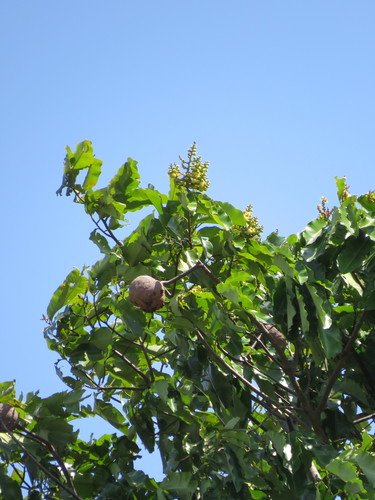
Barringtonia scortechinii
King
Putat gajah, Putat tuba, Putat hutan
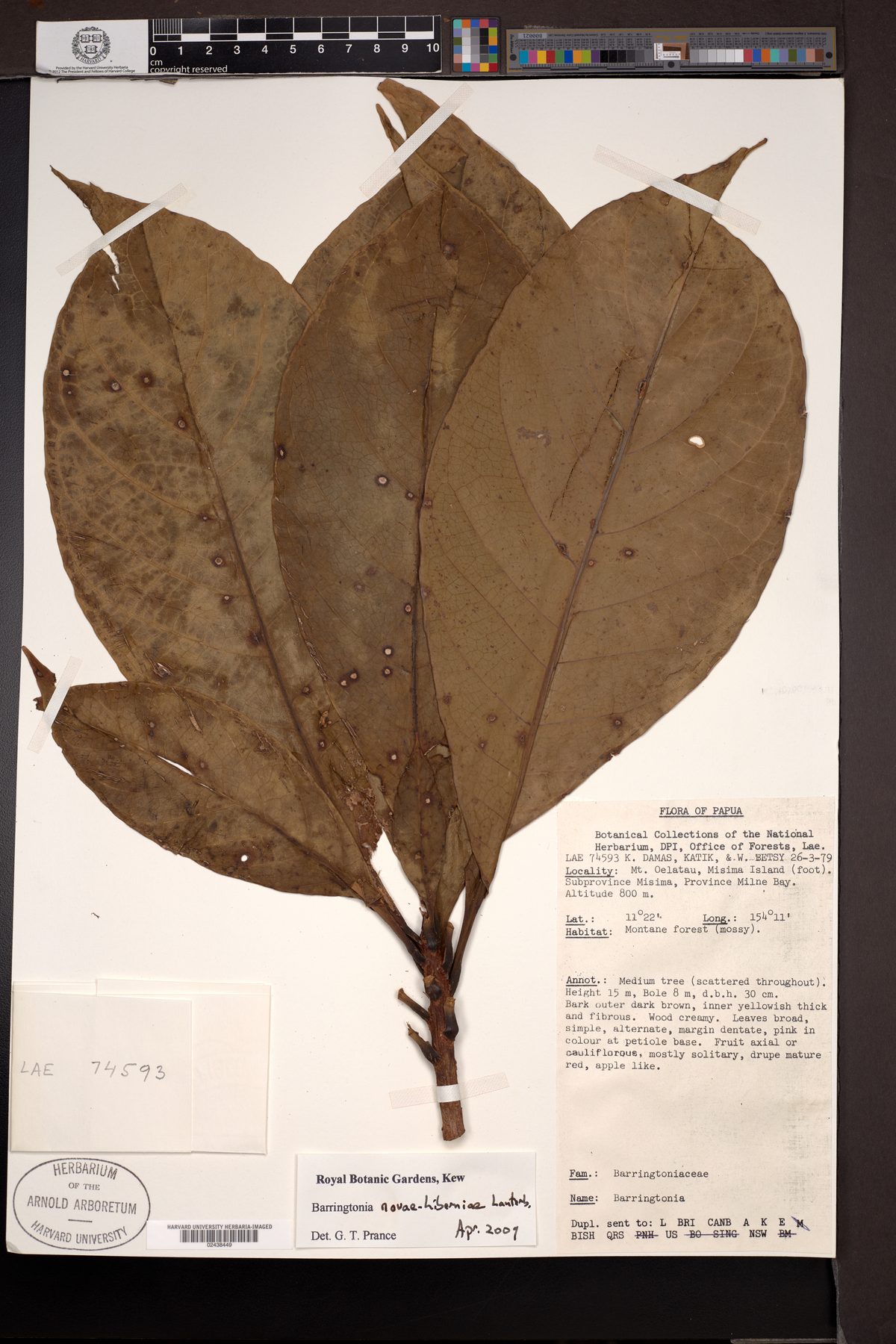
iNaturalist· cc-by-nc-sa
(c) Smithsonian Institution, National Museum of Natural History, Department of Botany, some rights reserved (CC BY-NC-SA)
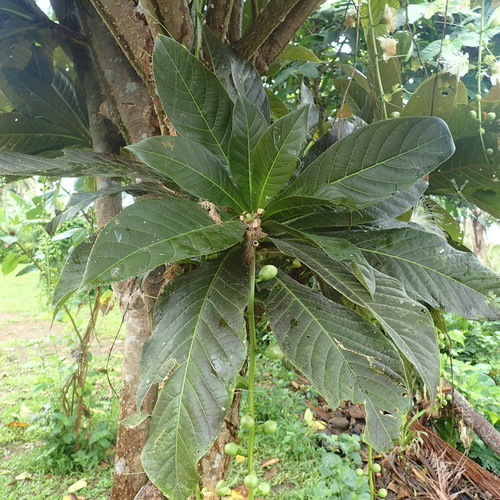
iNaturalist· cc-by-nc
(c) Rafidah Abdul Rahman, some rights reserved (CC BY-NC)
Summary
Source: WikipediaBarringtonia scortechinii is a species of flowering plant in the family Lecythidaceae. It grows as a tree up to 40 metres (130 ft) tall, with a trunk diameter of up to 40 centimetres (16 in). The bark is brown or red. Fruit is winged, up to 12 centimetres (4.7 in) long. Habitat is mixed dipterocarp forest from sea-level to 1,400 metres (4,600 ft) altitude. B. scortechinii is found in Thailand, Malaysia, Brunei and Indonesia.
Description
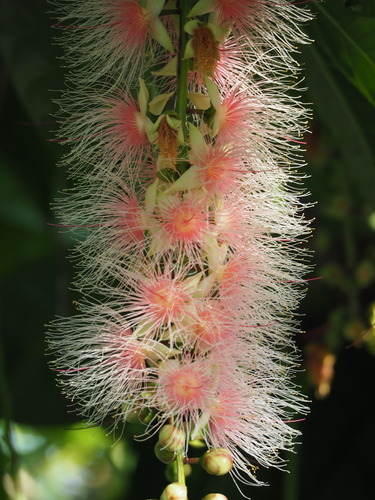
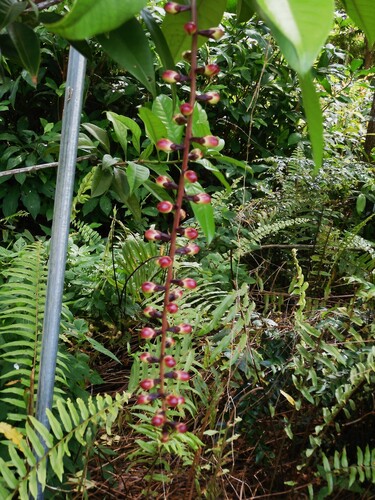
A spreading tree. It grows 7-20 m tall. It can be up to 40 m tall. The trunk can be 3-40 cm across. It can have buttresses 2 m high. The bark is scaly and with fine cracks along it. It is brown or red and peels off in small flakes. The leaves are slightly rough. They are glossy bright green. The leaf stalk is 5 cm long. The leaf blade is oval to oblong and 8-21 cm long by 5-8 cm wide. The flowers are on a long stalk that hangs down. It can be 70 cm long. There can be 65 flowers. They are like tubes with 3-4 lobes. They are greenish-white or pinkish-red. The fruit is oval and is a one seeded berry. It is 10-12 cm long by 3-5 cm wide. It has 8 ridges. It is green with a reddish tinge. The young fruit are 4 sided with distinct wings. The seed is oval and 5-6 cm long by 2 cm wide. They are yellow-white.
Edible Uses
The fruit is used as a flavouring in food. Used as a sambal - a relish made with vegetables or fruit and spices. Seed. The ovoid seed is up to 5 - 6cm long and 2cm wide.
Traditional Uses
The fruit are used to flavour food.
This uses section is brief — help expand it
Known Hazards
The seeds and bark are used as fish poison.
Distribution
A tropical plant. It grows in the forest at low altitudes. It can grow up to 1400 m altitude. It grows in swampy forests and near streams.
Where It Grows
Asia, Brunei, Indochina, Indonesia, Malaysia, Philippines, SE Asia, Thailand,
Cultivation
The plant can flower and produce fruit all year round.
Propagation
Seed - best sown as soon as it is ripe. About 75% of fresh seed germinates within 5 - 15 months.
Other Uses
The wood is used for timber.
Production
It flowers and fruits year round.
Notes
There are about 40 Barringtonia species. The seeds and bark are used as fish poison.
Synonyms
Also Known As
Jauh, Kopital, Langsat burung, Putat gajah, Putat tuba, Tampalang, Tempalang, Terakot
References (10)
- Bircher, A. G. & Bircher, W. H., 2000, Encyclopedia of Fruit Trees and Edible Flowering Plants in Egypt and the Subtropics. AUC Press. p 54
- Burkill, I.H., 1966, A Dictionary of the Economic Products of the Malay Peninsula. Ministry of Agriculture and Cooperatives, Kuala Lumpur, Malaysia. Vol 1 (A-H) p 309
- Menninger, E.A., 1977, Edible Nuts of the World. Horticultural Books. Florida p 38
- Milow, P., et al, 2013, Malaysian species of plants with edible fruits or seeds and their evaluation. International Journal of Fruit Science. 14:1, 1-27
- Prance, G. T. & Jongkind, C. H., 2015, A Revision of African Lecythidaceae. Kew Bulletin. 70:1-68
Show all 10 references Hide references
- PROSEA handbook Volume 13 Spices. p 247
- Seidemann J., 2005, World Spice Plants. Economic Usage, Botany, Taxonomy. Springer. p 63
- Slik, F., www.asianplant.net
- Wickens, G.E., 1995, Edible Nuts. FAO Non-wood forest products. FAO, Rome. p 139
- World Checklist of Useful Plant Species 2020. Royal Botanic Gardens, Kew